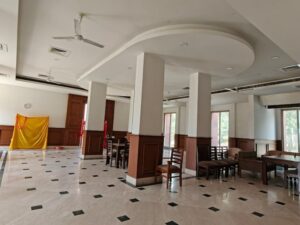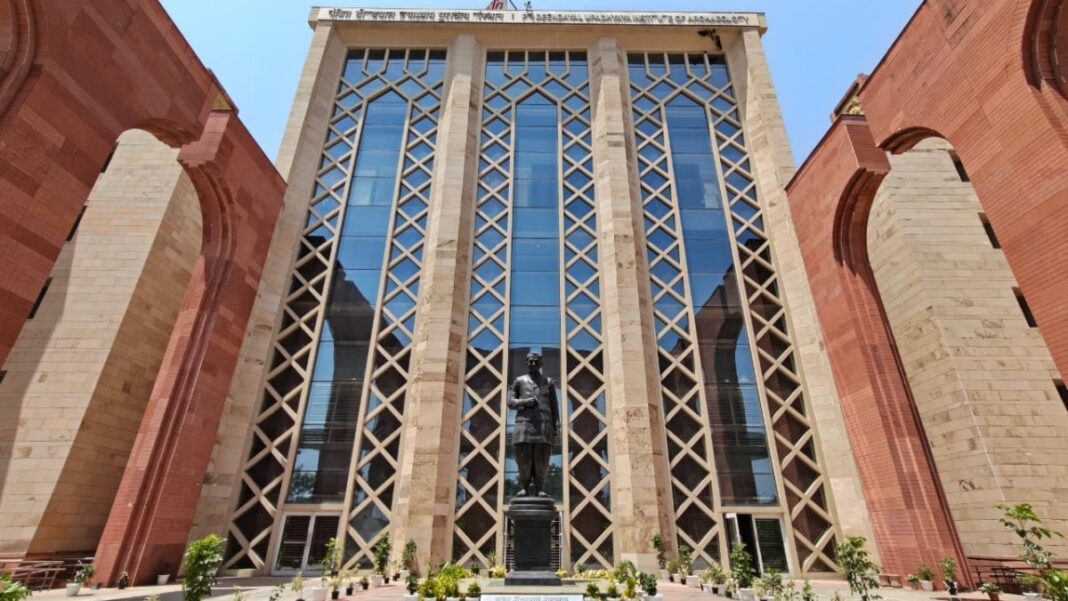
It was the middle of the week, a Wednesday, when I decided to take a campus tour of the Pandit Deendayal Upadhyaya Institute of Archaeology in Greater Noida, expecting that a 25-acre campus would be bustling with activity.
But to my surprise, it felt completely deserted. There were no people in sight, nor even any animals or greenery to lend the place a sense of life.
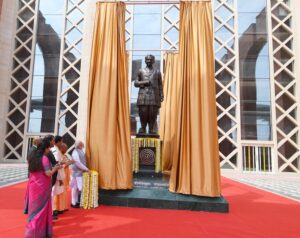
This was a campus inaugurated in 2019 by Prime Minister Modi, aimed at becoming one of India’s great institutes of archaeology.
The foundation stone of the institute building was laid by Union Home Minister Rajnath Singh on October 28, 2016, as part of the celebrations marking the 100th birth anniversary of Deendayal Upadhyaya.
On the day of the inauguration, PM Modi wrote on X, “The Pandit Deendayal Upadhyaya Institute of Archaeology is a wonderful attempt towards connecting our coming generations with our glorious past. Happy to have inaugurated this institute today.”
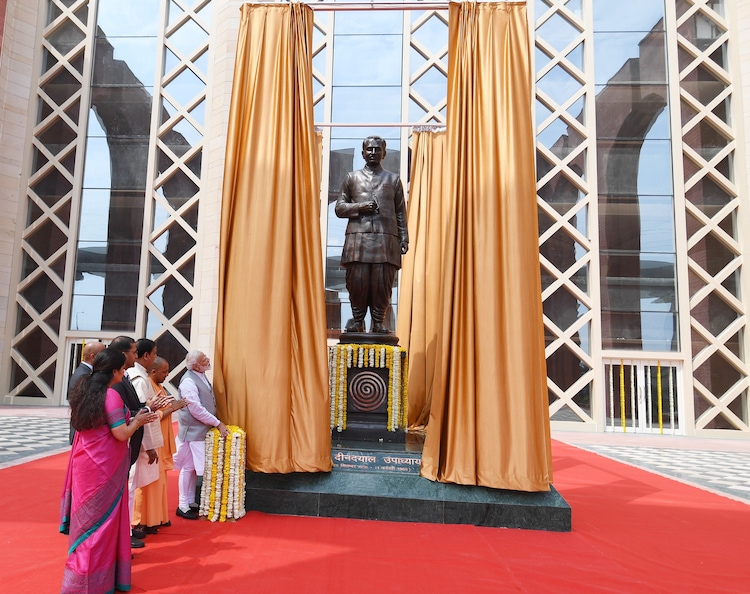
But what I found in my ground report is far from this expected reality.
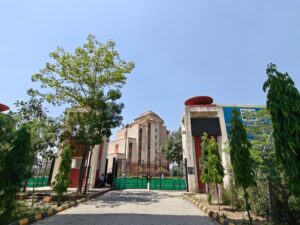
At the entrance, I noticed the institute’s name displayed in large letters, meant to be visible from a distance. Yet, the ‘U’ in Upadhyaya and the ‘I’ and ‘E’ in Institute were missing.
That small detail felt almost symbolic, something incomplete about what I was about to encounter inside.
The campus is built on 25 acres, spending nearly Rs 300 crore on it, but there is no permanent faculty and only 15 students are there – 10 girls, 5 boys.
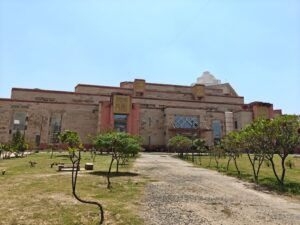
It is housed in a state-of-the-art, three-star green building equipped with the latest technologies. It features a 1,000-seat auditorium, an open-air theatre, and an Archaeological Museum.
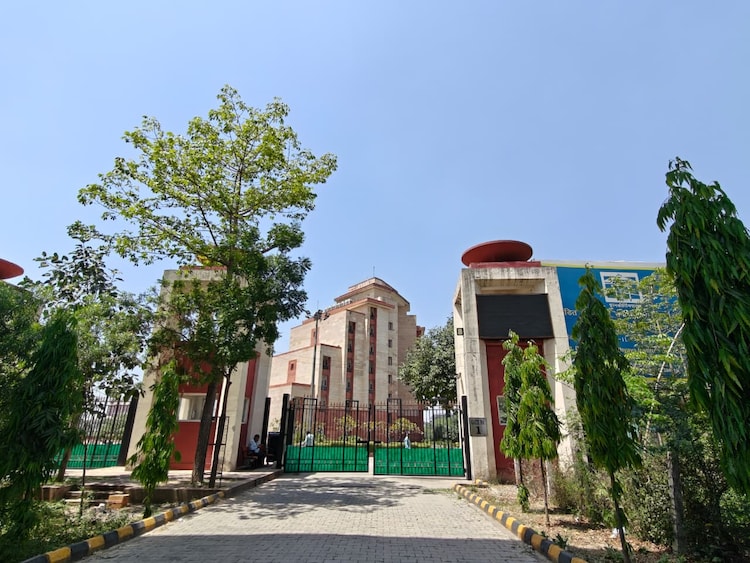
ENTRY THAT FELT LIKE QUESTIONING THE SYSTEM ITSELF
After that came the most difficult part: getting inside the campus.
The guards initially did not let me enter. They asked, “Madam, kisi se baat karwao andar” (Connect me with someone from the administration).
I tried calling the office, but the administration did not pick up the call like previous times.
For 10–15 minutes, I stood at the gate in a back-and-forth of questions and explanations. Eventually, I was allowed inside, accompanied by a security guard.
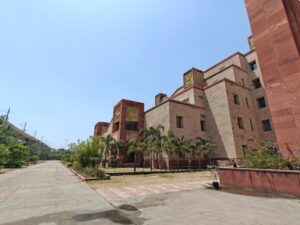
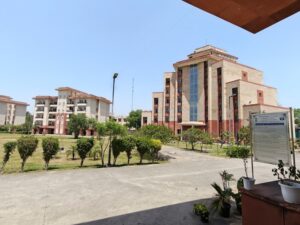
The moment I stepped in, the scale of the campus was visible immediately.
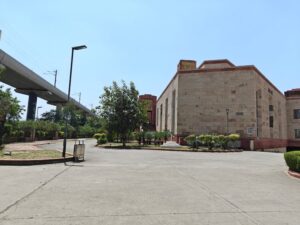
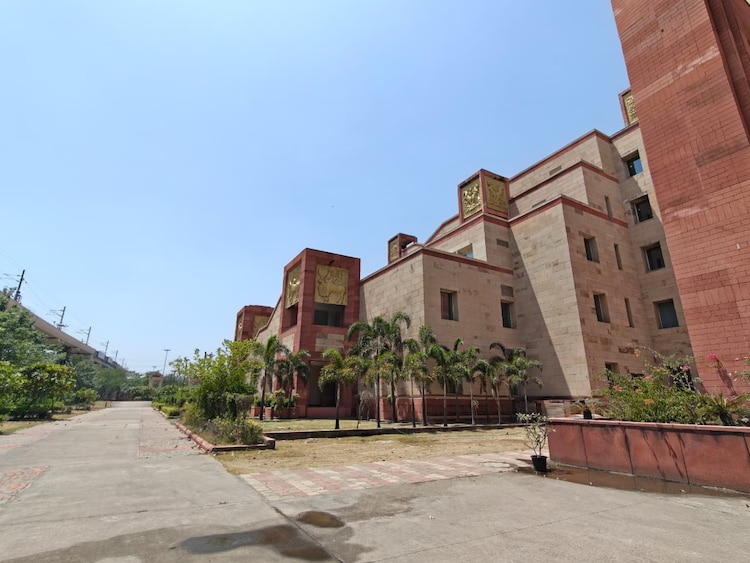
Wide internal roads. Multiple tall buildings. Beautiful walls. A vast layout stretching across 25 acres.
But what was missing was equally visible.
Not a single person.
No students. No faculty. No visible administrative movement. No cars. No bikes. Not even a dog.
Just buildings standing still in isolation.

A WALK THROUGH A CAMPUS WITHOUT MOVEMENT
The guard accompanied me towards the main building. The walk from the gate took nearly five minutes.
On the way, I asked him, “Bhaiya, kite kamre hain yahan par” (How many rooms there are in the campus)?
“Madam, bahut kamre hain, pura to nahin pata, bada campus hai na” (There are many. I don’t know exactly. It’s huge),” he responded.
Though I had expected him to answer with some figures. But even that answer felt consistent with what I was beginning to observe, no one seemed to fully know the structure they were part of.
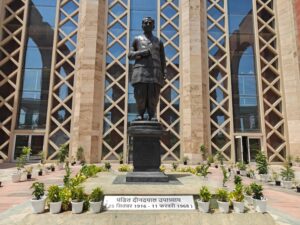
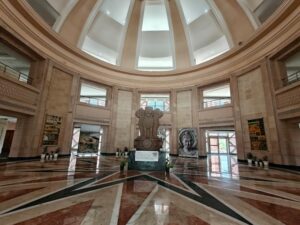
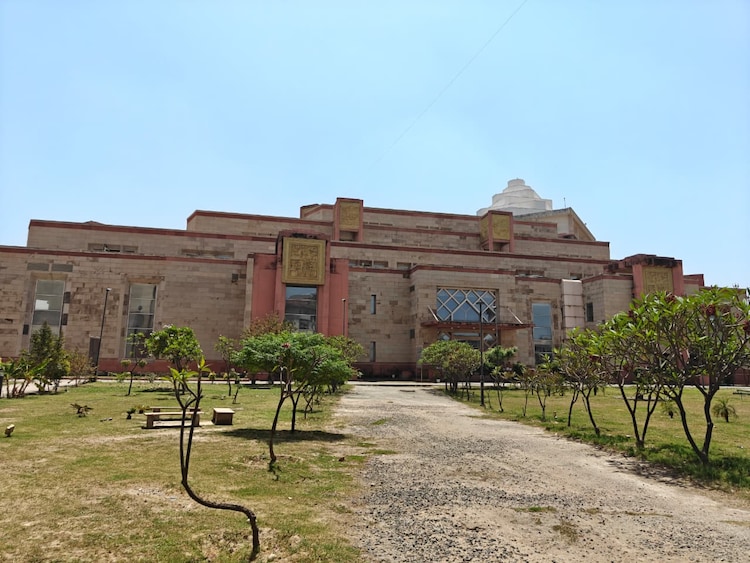
In front of the main building stood a large statue of Pandit Deendayal Upadhyaya.
As per the government, in 1985, the Institute of Archaeology (IA) was moved to a colonial-era building at 24, Tilak Marg, New Delhi, and later shifted to the Red Fort.
Over time, it became clear that the available space was insufficient to meet the growing needs of a self-contained, multidisciplinary institution for training, research, and excavation-related activities.
To address this, ASI acquired 25 acres of land in Greater Noida at a cost of Rs 4.77 crore to build a dedicated campus for the Institute of Archaeology.
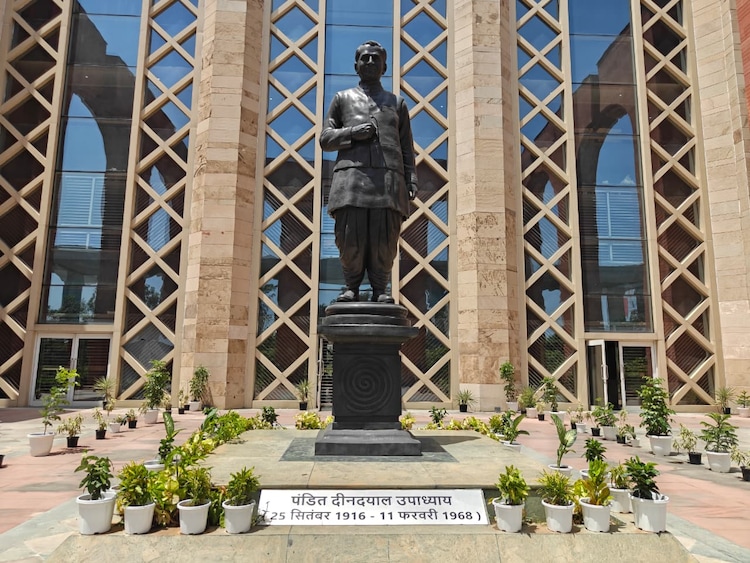
The building itself is a four-storey structure. According to the guard, offices are located on the fourth floor, the third floor is used for classes, while the first and second floors have labs and libraries.
He said, “Madam, first aur second floor to band hi rehta hai adhiktar” (the first and second floors are mostly closed), making me wonder about the reason, but he did not have any answer for it.
He also informed me that only one lift is functional out of several.
What also left me startled was no reception area on the entire campus.
The main entrance of any huge campus always has reception areas, but there was none. Just an empty entrance with no one for gatekeeping.
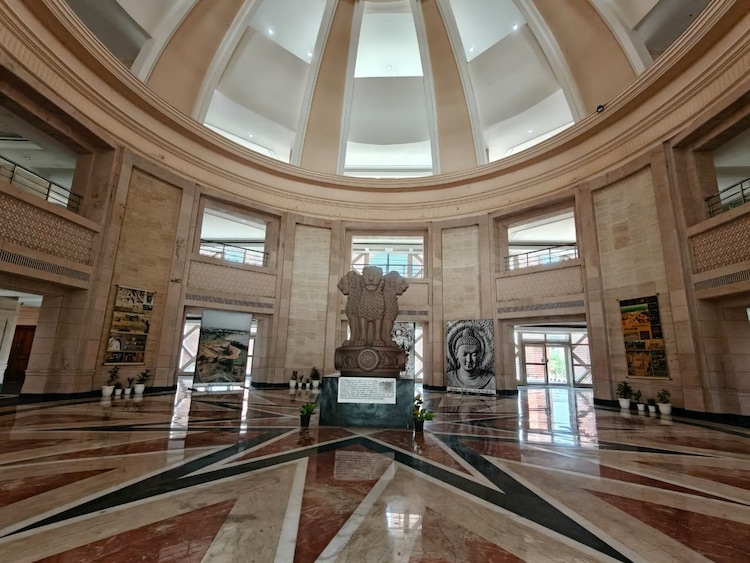
ARCHITECTURE THAT FEELS ALIVE, BUT ISN’T
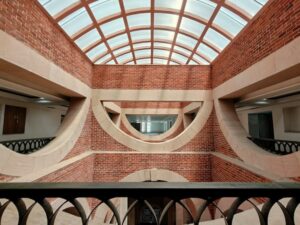
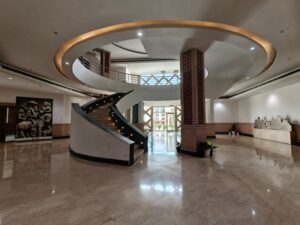
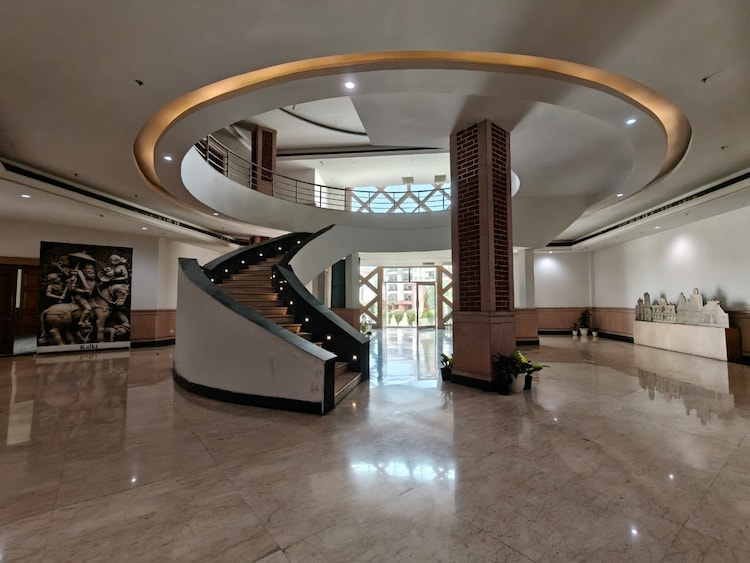
As I entered the building, I was struck by its architecture.
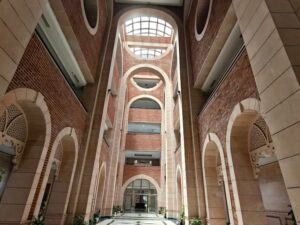
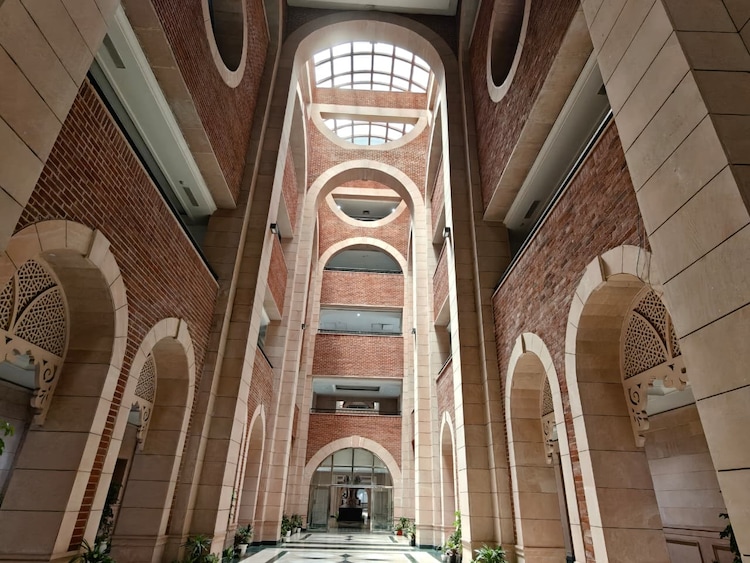
It is not a modern glass structure. Instead, it has traditional carved floral designs. A courtyard with a white transparent rooftop that allows sunlight to enter and light up the space naturally.
The Institute of Archaeology (IA), which functions as the academic wing of the Archaeological Survey of India (ASI) under the Ministry of Culture, offers students a supportive, engaging, and intellectually stimulating environment that helps them realise their full potential in the field of archaeology.
Visually, it is impressive.
But that was where it ended.
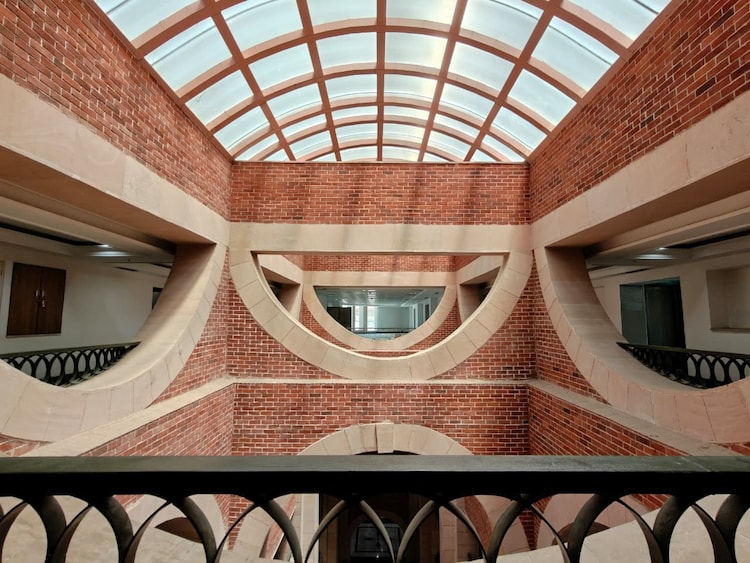
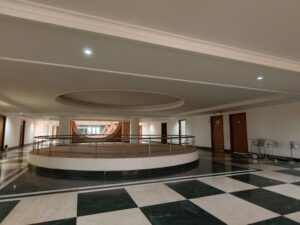
Not a single human being was visible inside the building.
Only one security guard on the fourth floor.
He was sitting and watching something on his phone.
I opened up and asked, “Bhaiya, aap yahan kab se kaam kar rahe hain” (How long have you been working here)?
His response was quick: “Madam, teen saal ho gaye hain” (It’s been three years).
And immediately my next question came up. “Kitne rooms hain yahan par” (How many rooms are there in the campus)?
But I again received the same response: “Pata nahin madam” (I don’t know).
Someone working on the campus for the last three years wasn’t aware of the number of rooms it has. There was something off with that information which stayed with me longer than expected.
A campus of this scale, and no one knows how many rooms it contains.
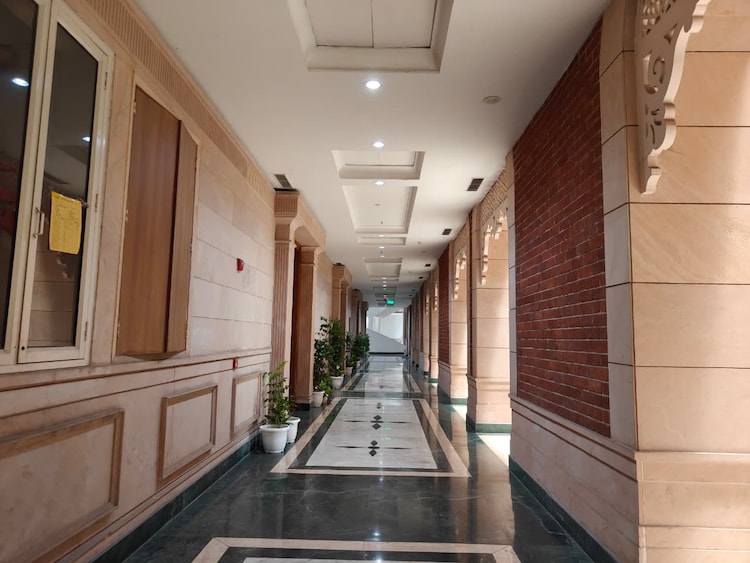
EMPTY CORRIDORS, LOCKED ROOMS, AND DUST
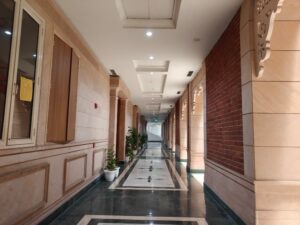
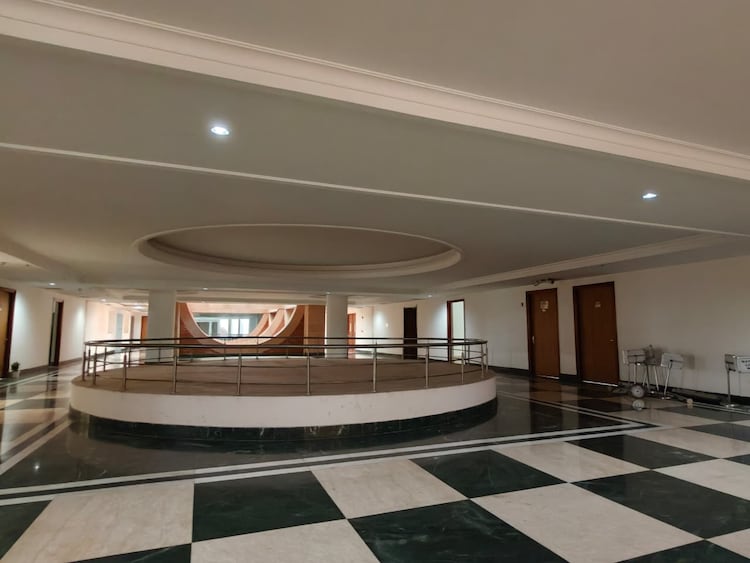
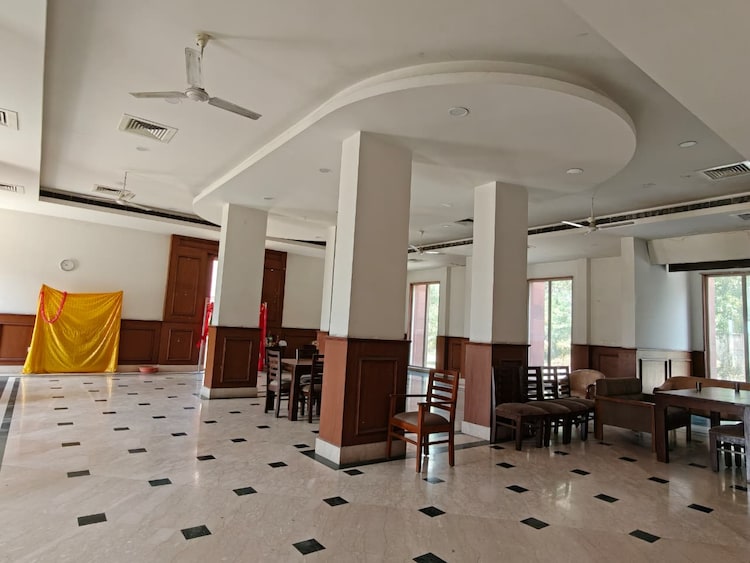
As I moved further inside, the emptiness became more visible.
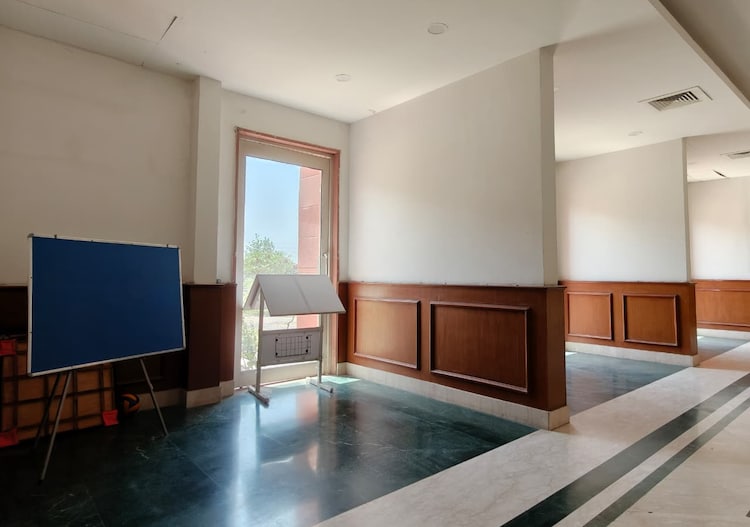
A broken table sat in one corner. Two dusty chairs beside it.
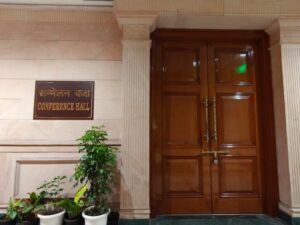
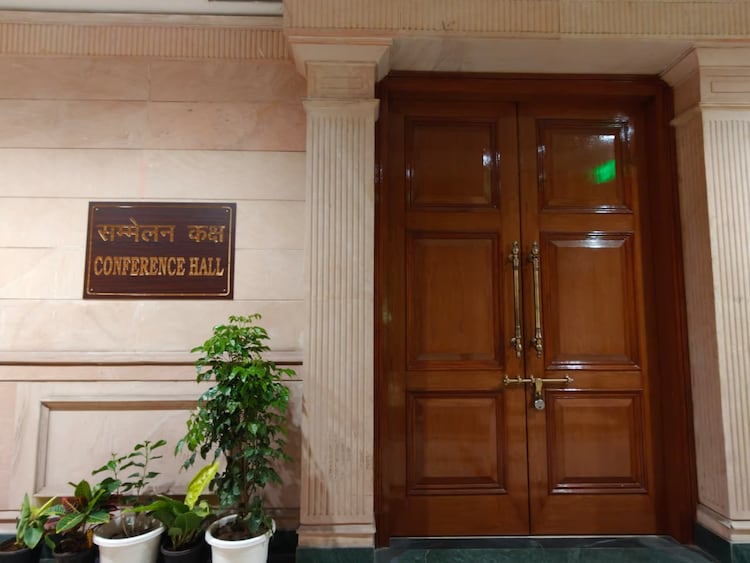
Most rooms on the fourth floor were locked.
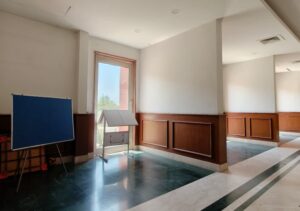
Corridors were empty, silent, and covered in dust.
Washrooms were not in working condition.
There was no movement of staff, no academic activity, no visible functioning classroom environment.
I waited nearly 20 minutes on the fourth floor before I was allowed to meet an official.
‘NO PERMANENT FACULTY’: A CORE DESIGN, NOT A GAP
The conversation began with my direct question: Why is there no faculty?
The official (requested anonymity) replied: “There has not been any faculty since it was inaugurated as it is not the concept of this institute.”
He explained that the institute is designed differently from conventional academic institutions.
The Institute organises professional workshops across various areas of archaeology. While its primary aim is to provide students with opportunities to excel in their chosen fields within archaeology, as per the government.
According to the official, the focus is not classroom teaching but field training. Students are exposed to practical archaeology rather than structured academic instruction.
He added that visiting faculty from ASI and state-level experts come and conduct guest lectures, sharing field-based knowledge.
When I asked about why there are degree delays, he said: “There must be some issue.”
No further explanation followed.
One of the most striking claims came next.
When I asked him, “What is the syllabus?”
The official said the institute does not follow a fixed syllabus. “Everything is based on practical exposure and fieldwork experience,” he told me.
Students, he said, go on field visits, sometimes lasting up to 60 days, and later return to write reports based on their experience.
“There is no fixed syllabus. Everything is covered through practical knowledge,” he said.
This raises a fundamental question: how does an academic institution function without a structured syllabus, especially one offering formal degrees? And on what basis are exams conducted and students are marked?
SUCH A BIG CAMPUS BUT ONLY 15 STUDENTS ACROSS INDIA
When asked about student intake, the official confirmed, “It is fixed. From all over the country, we only take 15 students.”
He emphasised that this number cannot exceed 15 under current circumstances.
Currently, the batch consists of 10 girls and 5 boys.
That number felt disproportionately small for a campus that spans 25 acres and was designed with large-scale infrastructure including auditoriums and museums.
But what was coming next took me by surprise.
MULTIPLE OFFICES, BUT NO PRESENCE
The official also said the campus houses 6–7 offices, including excavation, NMMA, BSP, science branch, underwater archaeology, and a separate head office.
He further said that even the ASI Science Branch director’s office is located here due to lack of space in Delhi.
Basically, this suggests a highly functional institutional hub. But during my walk, I did not see activity corresponding to any of these departments.
If multiple offices exist, why was there no visible staff movement?
Why were corridors empty?
Why were rooms locked?
These questions remained unanswered.
When I asked to meet the director, I was told to approach the Delhi office for permission. “Contact the media cell in Delhi and then come back,” he told me.
I was given a contact number for it. But when I attempted to contact the media cell in Delhi, calls went unanswered.
Not once, but thrice.
I left the official’s cabin and, taking the risk, I continued exploring the main building.
Despite being told that multiple offices operate here, I did not encounter a single visible staff member apart from security personnel.
This absence felt even more striking given the scale of the institution.
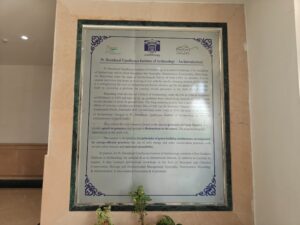
On the ground floor, there was a huge board near a gate with the history of the institution, titled ‘Pt. Deendayal Upadhyaya Institute of Archaeology – An Introduction!’
And then, I saw another building. “That is the hostel,” I thought to myself.

HOSTEL: QUESTIONS THAT GOT NO ANSWERS
From the main building, I moved towards the hostel through a rear gate. Clothes hanging outside confirmed it was a residential block.
I met two housekeeping staff members coming out of the hostel building.
“Didi, aap log yahan kaam karte hain.” (Do you people work here?)
“Housekeeping hain.”
“Kitni ladkiyan rehti hain yahan.” (How many girls live in the hostel?)
“Hume nhi pata, aap andar jakar puchh lo” (We are not aware, please ask someone else).
I was expecting some numbers but to my surprise, they weren’t aware.
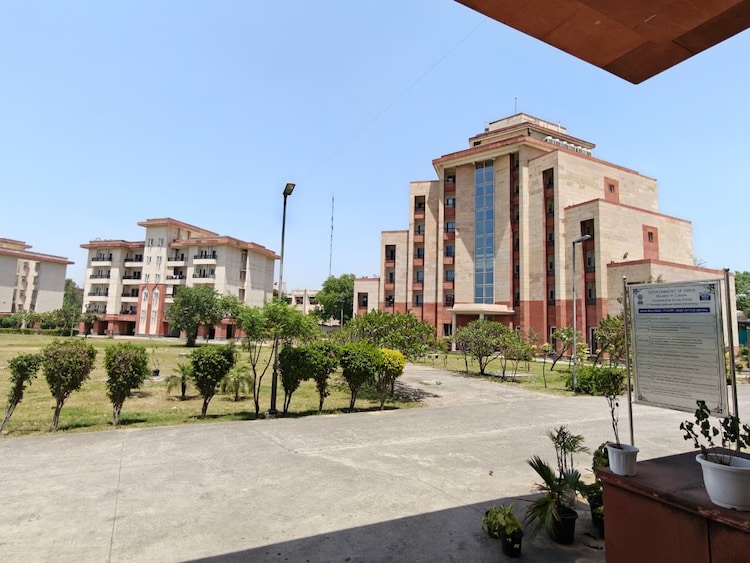
As I entered the building, I felt like no one had been there for days. It felt completely isolated.
In one corner, I saw a female security guard. Before she could ask, I gave my introduction. She said, “Patrakar hain” (Are you a journalist?) with a doubt in her voice.
I nodded yes.
With a hesitation in her voice, she confirmed that there are 10 girls, two in each room. And that boys and girls live in the same hostel.
When I asked about the number of rooms, she said, “Ginna padega” — we will have to count.
That answer itself raised more questions than it solved.
I also saw a notice board in one corner but nothing on it, only a plain blue board.
I asked if I could meet the students.
Initially, she agreed. But after a phone call, the permission was withdrawn.
“Madam, upar se order hai,” (It came from higher authority), she said.
I was not allowed to interact with any student.
A 15-minute wait ended without result. And then, I knew what was coming next.
A CAMPUS I WAS ASKED TO LEAVE: MAYBE OUT OF DESPERATION
I was simply asked to move out of the campus.
As I walked out, a guard accompanied me to the gate.
Even then, I kept looking for students, hoping to see even a small sign of academic life.
But I saw none.
Not one student crossed my path during the entire visit.
No classroom interaction. No campus movement. No visible academic engagement.
THE QUESTION THAT REMAINS UNANSWERED
As I left the campus, the same thought stayed with me.
If this is a 25-acre institute, built at Rs 289 crore, inaugurated by the Prime Minister, housing multiple departments of the Archaeological Survey of India, then why does it feel so empty?
Why are there only 15 students?
Why is there no permanent faculty?
Why are classrooms, labs, and libraries largely closed or unused?
And most importantly: how does an institute function when its own presence feels invisible?
I left with no answers.
Only questions that the campus itself could not explain.