
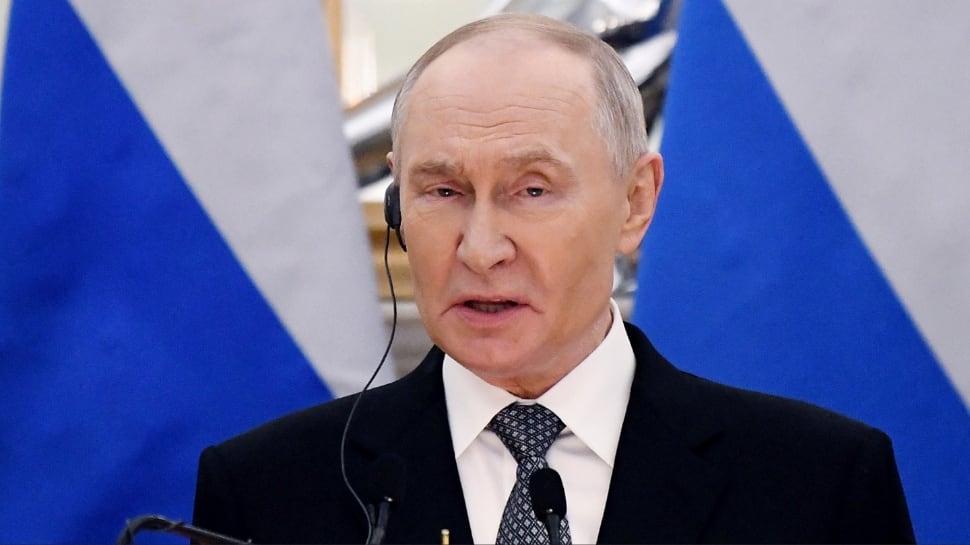
Putin’s quest for immortality: Russian scientists develop ‘RAGE’ gene therapy to extend life to 150 years

According to reports, Russian scientists are developing the world’s first gene therapy drug, which will slow down the biological aging process – something that corresponds directly to President Putin’s dream to increase the life expectancy of people to 150 years.

Minister of Science and Education of Russia, Denis Sekirinskiy, said during the forum that Russian scientists will try to prevent premature aging using special gene therapy that blocks a receptor called “RAGE” (Receptor for Advanced Glycation End-products).

How does it work?

The RAGE receptor is one of the main factors contributing to cellular decay and inflammation in connection with the aging process. The use of gene therapy can help scientists at the Biology of Aging and Medicine Institute extend the lifespan of human cells indefinitely.

“Gene therapy is one of the most promising areas of research in the struggle with aging,” stated Sekirinskiy. Although any evidence regarding the effectiveness of the treatment has not yet been disclosed, it becomes clear what direction the Kremlin intends to pursue – the development of “longevity medicine.”

Obsession with immortality

Putin, who turned 73 years old, recently made headlines by expressing his thoughts on life extension. For example, during the AI conference held in November, Putin predicted that people could reach 150 years of age in the future. Furthermore, media reports have revealed that Putin discussed the feasibility of having regular organ transplants to preserve youth during his meetings with Chinese President Xi Jinping.

All Russian scientists have been instructed by the Kremlin to promptly send all relevant information on the following subjects:

  • Cellular regeneration: Prevention of organ decay.
  • Cognitive preservation: Restoration of the weakened brain and sensory organs.
  • Bioprinting: Creating 3D human organs for replacements.

Succession and ‘national mission’

According to political observers, Putin’s fascination with living longer is connected to his need to remain in office until he can transfer his powers to the younger generation. For instance, Putin’s 11-year-old son, Ivan Spiridonov, is expected to reach the minimum legal age to become the President of Russia by the year 2050.

Despite the ongoing invasion of Ukraine, Putin has introduced a new ‘National Mission’ program focused on saving 175,000 lives until 2030 due to groundbreaking discoveries in anti-aging research.

The death of the ‘anti-aging guru’

The study was set back in its tracks by the death of Vladimir Khavinson, professor and Putin’s personal “anti-aging guru.” The latter had been using a “peptide cocktail” developed by Khavinson for the military forces during Soviet rule. The same cocktail is claimed to have been used not only by Putin but also by his alleged mistress, Alina Kabaeva.

The eldest daughter of Putin, Maria Vorontsova (a 40-year-old endocrinologist), is reported to be in charge of monitoring this risky biological research program as well.


Latest

Who are Bnei Manashe? A ‘Lost Tribe’ in India’s northeast finally make its way to Israel

After being exiled from the Kingdom of Israel, some members of these tribes are believed to have migrated over centuries through regions such as Persia, Afghani

Middle East conflict: Pakistan’s role limited despite ‘drama diplomacy’ and theatrics

The United States reportedly appears to be revisiting its earlier negotiation script with other countries, this time relying on coercive tactics and a show of f

Secret ‘human chain’ and handwritten letters: How Mojtaba Khamenei is commanding Iran

US-Iran war: Messages intended for Mojtaba Khamenei are reportedly handwritten, sealed in envelopes and passed on via a human chain of trusted couriers. The r

Nuclear secrets to the grave: The mysterious ‘pattern of disappearance’ killing the world’s brightest scientists

At least 20 top-tier defense scientists from the US and China have died or vanished since early 2026. From Maj. Gen. McCasland to AI pioneer Feng Yanghe, discov

US proposes bill for 3-year pause on H-1B visas in Congress

The proposed bill will reduce the annual visa cap from 65,000 to 25,000, end exemptions, replace the lottery with a wage-based selection system, and raise the m

Topics

Taxi driver’s daughter, Geetika Pant tops Uttarakhand Board with 98% marks

Geetika Pant, daughter of a taxi driver from Bageshwar, topped the Uttarakhand Board Class 12 exams with 98%. The result turned the district into a celebration

Who are Bnei Manashe? A ‘Lost Tribe’ in India’s northeast finally make its way to Israel

After being exiled from the Kingdom of Israel, some members of these tribes are believed to have migrated over centuries through regions such as Persia, Afghani

Middle East conflict: Pakistan’s role limited despite ‘drama diplomacy’ and theatrics

The United States reportedly appears to be revisiting its earlier negotiation script with other countries, this time relying on coercive tactics and a show of f

Once a firecracker hub, Bengal’s Haral faces job losses, SIR chaos

An uneasy silence hangs over Haral village in West Bengal, once known for lighting up festivities with its firecrackers. Shops are shuttered. Work has halted. E

Secret ‘human chain’ and handwritten letters: How Mojtaba Khamenei is commanding Iran

US-Iran war: Messages intended for Mojtaba Khamenei are reportedly handwritten, sealed in envelopes and passed on via a human chain of trusted couriers. The r

Nuclear secrets to the grave: The mysterious ‘pattern of disappearance’ killing the world’s brightest scientists

At least 20 top-tier defense scientists from the US and China have died or vanished since early 2026. From Maj. Gen. McCasland to AI pioneer Feng Yanghe, discov

US proposes bill for 3-year pause on H-1B visas in Congress

The proposed bill will reduce the annual visa cap from 65,000 to 25,000, end exemptions, replace the lottery with a wage-based selection system, and raise the m

Congress set a deadline on Trump’s Iran war: Will US president continue his war on Tehran after May 1? Explained

Under the War Powers Resolution, a federal law passed in 1973 to limit a president's authority to wage war without legislative backing, Trump has until 1 May to
spot_img

Related Articles

Popular Categories

spot_imgspot_img