
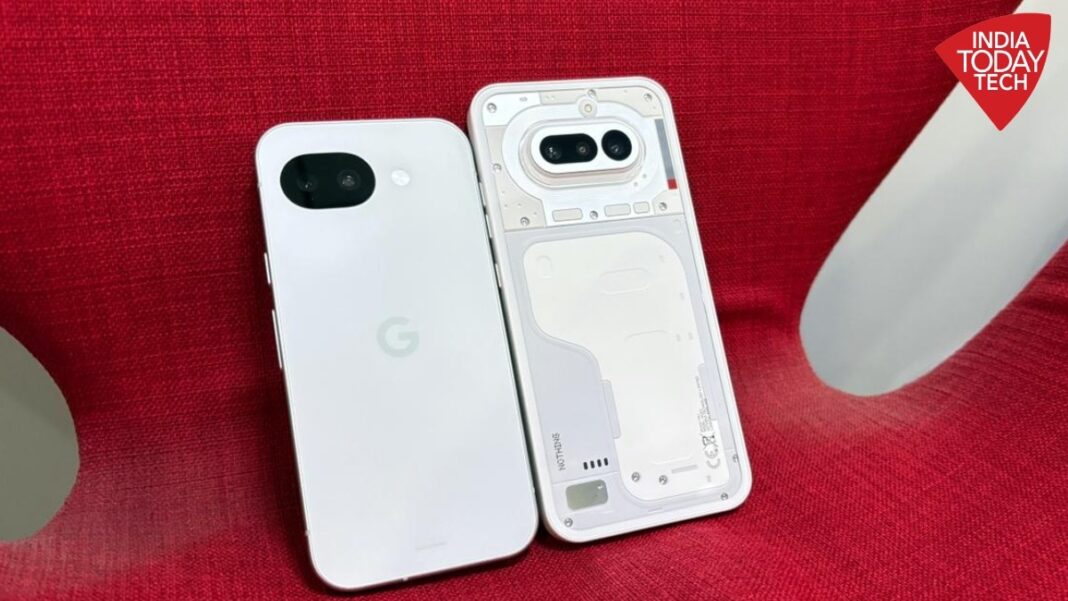
A lot is going on in India’s smartphone market right now. On one side, there’s a steady stream of new launches across segments, and on the other, a clear slowdown in demand. According to Counterpoint Research, India’s smartphone shipments fell 3 per cent year-on-year in the first quarter of 2026, making it the weakest Q1 in six years. But beneath this slowdown, some brands are quietly gaining ground. Nothing is one of them.
According to the report, Nothing (including CMF) grew 47 per cent year-on-year in Q1 2026, emerging as the fastest-growing smartphone brand in the country. The growth, as analysts point out, is being driven by the company’s accelerated offline expansion and the launch of its first exclusive retail store in India, which has helped improve visibility and accessibility.
There’s also product momentum at play. The recently launched Phone 4a series is reportedly seeing a strong early traction from users due to its distinct design language and increasing appeal among young users, who love to explore distinct design.
Interestingly, this growth hasn’t happened by chance. It is in line with a broader, deliberate strategy that Nothing has been building for India. Earlier this year, during the launch of its Bengaluru flagship store, co-founder Akis Evangelidis told India Today Tech how the brand is approaching the market. “This store (Bengaluru store) is not so much about sales itself,” he said. “We don’t want to make it a very transactional, commercial thing. The primary goal is to have a platform where we can engage with our community and also a place where people can really understand the brand.”
And that approach seems to be working. Indian smartphone buyers are warming up to the brand, community engagement is picking up, and its visibility is steadily expanding.
But it’s not just Nothing that is benefiting from the changing smartphone market dynamics in India. At the premium end, Google is also quietly gaining momentum.
Google becoming a new favourite in premium range
While companies like Vivo, Samsung and Oppo are leading the Indian market in terms of shipments, Google has now emerged as the fastest-growing brand in India’s premium smartphone segment (above Rs 45,000) due to its Pixel lineup and a growing focus on AI-led features.
But it’s not just hardware or Pixel branding driving this growth. The report suggests it is also down to Google’s broader India strategy. Along with premium hardware and long-term software support, the company is putting a clear focus on making premium devices more accessible.
Google had earlier announced its Pixel Upgrade Programme, which is a key part of that strategy. Through this programme, the brand is looking to reduce the upfront burden of buying a premium phone. Users can opt for no-cost EMIs starting at Rs 3,333 per month and upgrade to a newer Pixel after a set period, with an assured buyback value for their existing device.
This model is helping Google lower the barrier to entry and nudging users to stay within the Pixel ecosystem, a playbook that has worked well for Apple over the years.
So why is the broader market slowing down?
While Nothing and Google are steadily growing their presence, the broader smartphone market is slowing down. So what’s really behind it? Analysts point to a mix of factors. Rising memory prices, currency fluctuations (due to middle-east tension) and overall cost pressures have pushed up smartphone prices, especially in the entry-level segment.
As a result, buyers are becoming more cautious. Many are choosing to hold on to their devices for longer instead of upgrading frequently. Longer software support cycles and improved device durability are also playing a role here, giving users fewer reasons to upgrade quickly.


