
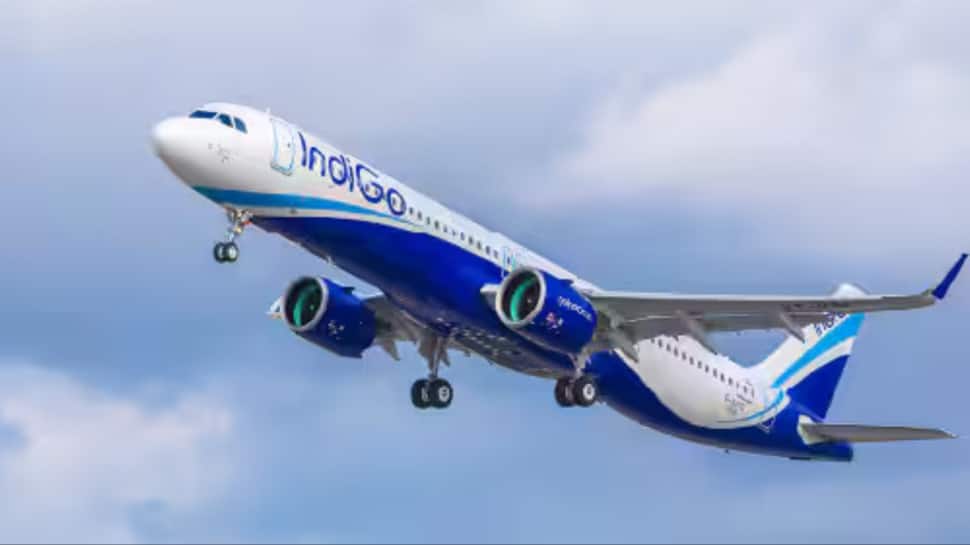
Budget carrier IndiGo has said passengers will face higher fares from 14 March as it introduces a fuel surcharge across both domestic and international routes, citing sharply elevated fuel costs linked to the ongoing war in the Middle East.
The additional charge will come into effect at 00:01 hours on Saturday, the airline confirmed in a statement, as it seeks to partially offset the impact of rising Aviation Turbine Fuel (ATF) prices, a major component of airline operating costs.
IndiGo referenced data from the International Air Transport Association’s Jet Fuel Monitor, which shows fuel prices in the region have surged by more than 85 per cent.
The airline acknowledged that fully passing on the cost of the spike to customers would necessitate a “very substantial adjustment to fares”. However, it said the newly introduced surcharge represents a “relatively smaller amount”, aimed at balancing cost pressures with passenger affordability.
“While offsetting the entire impact of this fuel price surge requires a very substantial adjustment to fares, IndiGo has introduced a relatively smaller amount as a Fuel Charge, keeping in mind the consequential burden on customers,” the airline said.
IndiGo expressed regret for any inconvenience the surcharge may cause, emphasising that the decision was driven by a sudden and significant shift in the operating environment. The airline added that it will continue to monitor developments and adjust charges as necessary.
Earlier, Air India group on Tuesday announced a phased expansion of fuel surcharge on its domestic and international routes, saying the move is “necessitated by the steep rise in jet fuel prices” arising from the geopolitical situation in the Gulf region.
The new fuel surcharges are being implemented in three phases, covering travel on all flights, including those operated by Air India Express.
In Phase 1 (for all new bookings made from 0001 hours India Standard Time on March 12, 2026), the revised fuel surcharge will be Rs 399 for domestic flights; Rs 399 for the SAARC region; $10 for the West Asia/Middle East region; $60 for the Southeast Asia region; and $90 for the Africa region.
In phase 2, the revised fuel surcharge will be $125 for Europe, $200 for North America and $200 for Australia, said Air India.
“Phase 3 will apply to and from Far East markets, namely Hong Kong, Japan, and South Korea, which will be announced in due course,” the airline added.
Tickets that have already been issued prior to the above times will not attract the new surcharge unless customers seek date or itinerary changes that require a recalculation of the fare, it noted.
Air India said it “regrets the need to increase fuel surcharges in this manner but emphasises that it is necessitated by factors outside its control”.
“Absent such fuel surcharges, it is likely that some flights would be unable to cover operating costs and would have to be cancelled. Air India will review its surcharges periodically and make appropriate adjustments as the situation requires,” the airline said.
Since early March 2026, aviation turbine fuel (ATF), which accounts for nearly 40 per cent of an airline’s operating costs, has seen significant price escalation due to supply interruptions.
In India, this pressure is amplified by high Excise Duty and VAT on ATF in major metro cities such as Delhi and Mumbai, magnifying the cost impact and placing substantial strain on airline operating economics, said Air India.
(With IANS inputs)


