
The sinking of the Iranian Navy ship, IRIS Dena by a US Navy submarine, marks the fourth time a ship has been sunk by a submarine-launched torpedo since the end of World War Two. This is also the first instance of the US torpedoing an enemy ship after WW2. The sinking of the Iranian warship has brought submarines and torpedoes into discussion. Torpedoes, which are centuries-old weapons, are still considered lethal in naval warfare despite battle technologies evolving at a breakneck speed.
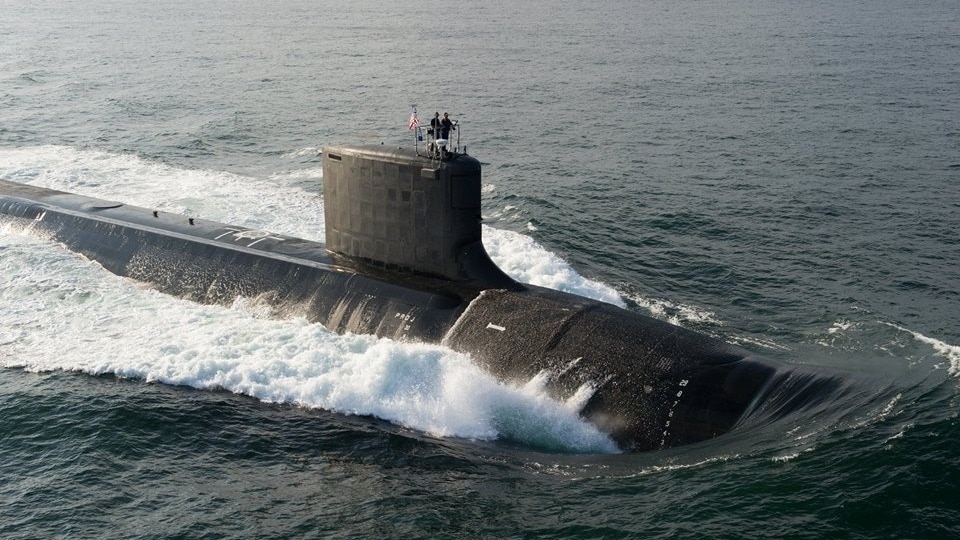
The IRIS Dena, an Iranian frigate, was sunk 40 nautical miles (76 km) off the coast of Sri Lanka by a US submarine using a Mark 48 torpedo, a heavyweight wire guided weapon designed in the 1960s to be used against both enemy submarines and surface weapons.
Torpedoes, like the Mark 48, are, and still remain, one of the most potent weapons used in naval warfare, due to them being difficult to track and evade but capable of causing destructive damage to its targets. For instance, according to a postwar study by the Joint Army Navy Assessment Committee(JANAC), in World War Two, the US alone sunk over 1,000 merchant vessels and warships of Imperial Japan, using torpedoes.
Since then, however, the usage of torpedoes has seen a gradual decline. While they are still a dangerous weapon, the development of other weapons like long-range anti-ship missiles, means that they are no longer the most destructive weapon as they once were. So, what are torpedoes, and how are they used? Why has their usage decreased following the end of World War Two? And how do they figure in the arsenals of modern large navies?
WHAT IS A TORPEDO? DO ONLY SUBMARINES USE TORPEDOES?
A torpedo is a self-propelled underwater weapon that can be launched from above or below the water’s surface. It carries an explosive warhead designed to detonate either on contact with a target or in proximity to it. Although most commonly associated with submarines, torpedoes can also be fired from surface warships or dropped by aircraft. Modern torpedoes are generally classified as lightweight or heavyweight; aircraft and smaller surface vessels typically deploy lightweight torpedoes, while larger warships and submarines use the heavyweight variants.
Modern torpedoes, like the Mark 48 used to sink the IRIS Dena, are guided to their targets either manually through wire and radio guidance, or automatically through techniques like acoustic homing, which uses sonar to home into targets.
Torpedoes were first developed in the late 19th century in the Austro-Hungarian Empire before gradually spreading to navies around the world. Initially, they were mounted on small, fast vessels designed to challenge the larger, heavily armoured, but slower, battleships and dreadnoughts of the era. These vessels eventually evolved into what are now known as destroyers.
HOW WERE TORPEDOES USED IN WORLD WAR ONE AND TWO?
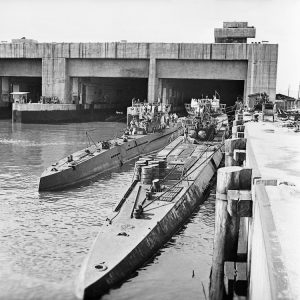
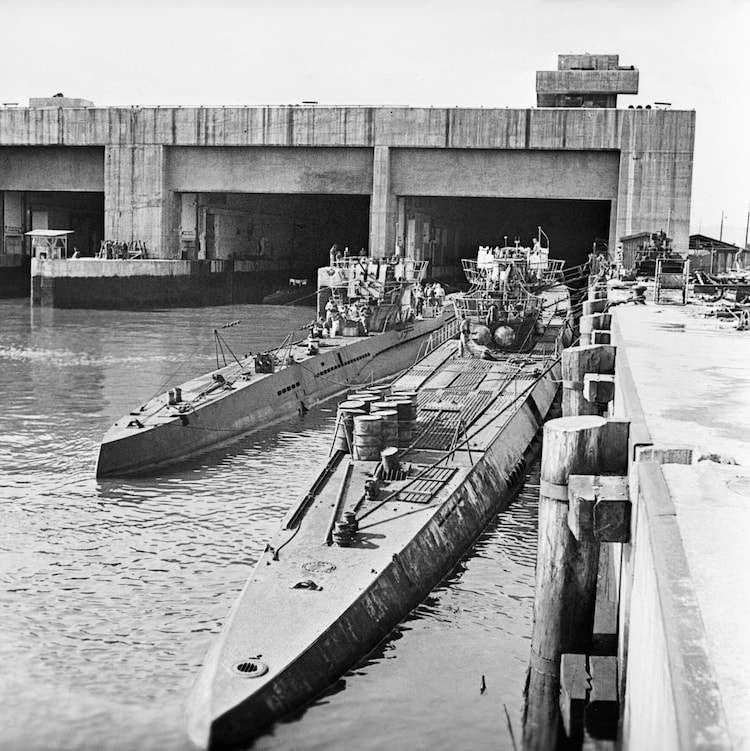
The first large-scale use of torpedoes came during World War One, when German submarines known as U-boats used them to attack merchant shipping in the Atlantic bound for the British Isles. U-boats stood for undersea boats and were submarines.
However, the peak of torpedo warfare came during World War Two, when all major powers equipped their surface ships, submarines, and aircraft with torpedoes. In the Atlantic, Nazi Germany again relied heavily on torpedo-armed U-boats to target Allied merchant convoys sailing to Britain. According to research by the Naval Historical Society of Australia, German torpedoes sank at least 2,561 Allied vessels during the war.
In the Pacific theatre, Japanese forces used air-dropped torpedoes to devastating effect against the US Pacific Fleet during the Attack on Pearl Harbour in 1941. In response, US Navy submarines conducted an extensive campaign against Japanese shipping, effectively crippling Imperial Japan’s supply lines and starving the Japanese home islands of vital wartime resources such as oil, rubber, and food. Postwar studies by the Joint Army Navy Assessment Committee credited US submarines with torpedoing and sinking at least 1,314 Japanese vessels.
HOW ARE TORPEDOES USED BY MODERN NAVIES?
After World War Two, and into the modern era, torpedoes remain highly potent weapons, with technologies like acoustic homing making them even more dangerous than ever before. That being said, they are no longer the most effective weapon, nor the most used weapon in the hands of modern navies. For instance, in the post-war period, only about four ships were sunk by torpedoes.
This includes INS Khukri, which was sunk by the submarine PNS Ghazi in 1971, the sinking of the Argentinian warship, General Belgrano by a British submarine in the Falklands War of 1982, and the recent sinking of IRIS Dena by the US Navy.
“Submarines sank over 2,000 warships during WW2 (1939-1945). Only 4 warships sunk by submarines in the last 80 years since WW2. That’s how rare the sinking of the IRIS Dena is,” senior journalist and defence expert Sandeep Unnithan posted on X on March 4.
In fact, the most effective weapons for modern navies are anti-ship missiles, like the US’ Harpoon, India’s Brahmos, China’s CM-302, Russia’s P-800, among others.
Faster, and more accurate, they give modern navies the ability to strike from longer ranges, safely out of reach of enemy defences. For instance, in the 1971 India-Pakistan War, three vessels of the Indian Navy armed with Styx anti-ship missiles managed to devastate the port of Karachi and sink multiple vessels without a single loss during Operation Trident.
INDIA’S TORPEDOES: VARUNASTRA AND SMART
That being said, as the sinking of IRIS Dena demonstrates, a well-placed torpedo can, and will sink most vessels. Torpedoes like the US’s Mark 48, China’s Yu-6, Italy’s Black Shark, Russia’s Type 53, among others, form the primary anti-ship armament of submarines in navies across the world.
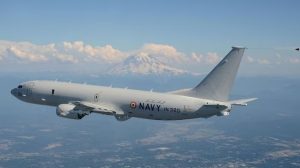
Torpedoes are also an essential component of Anti-Submarine Warfare (ASW), with models like India’s Varunastra and Torpedo Advanced Light (TAL) Shyena, US’ Mark 54, France’s MU90, among others. These are used to equip surface vessels like destroyers, frigates and corvettes, as well as specialised ASW aircraft like the Boeing P-8 Poseidon and Tupolev Tu-142 amomg others.
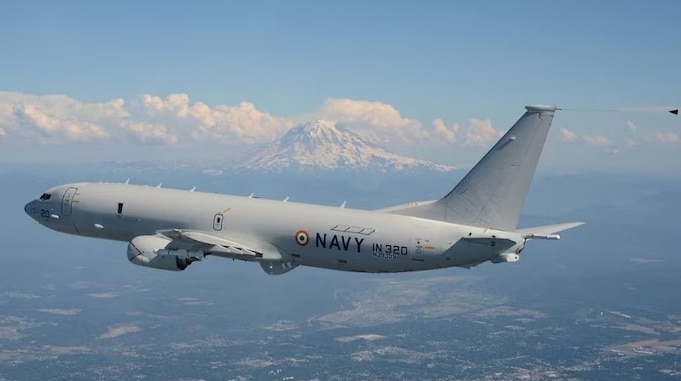
The Indian Navy operates a mix of imported as well as indigenous torpedoes across both heavyweight and lightweight categories for both anti-ship and anti-submarine roles.
This includes the Varunastra, an indigenous weapon designed by the DRDO for ASW use. The Varunastra is used by a variety of Indian Navy vessels, including the Vishakapatnam class destroyers, and the Niligiri class frigates. The Navy also uses the DRDO-designed Shenya lightweight torpedo for ASW work, equipping, among others, its Kamorta-class and Talwar-class ASW corvettes.
In addition to these indigenous designs, the Indian Navy has also inducted a variety of foreign designs. The Navy’s Sindhughosh-class submarines use Soviet-era Type 53 torpedoes, while the Scorpene-class subamrines will use a mix of French F21 and Italian Black Shark heavyweight torpedoes. The Navy’s P-8 Poseidon and MH-60R Seahawk ASW aircraft, meanwhile, use air-dropped Mark 54 light-weight torpedoes, acquired from the US.
But, the most potent torpedo used by the Indian Navy is the Supersonic Missile-Assisted Release of Torpedo or SMART system. It is a land-based torpedo developed by the DRDO which combines a Shyena light-weight torpedo with a missile carrier to hit targets up to 643 km away. The SMART system thus negates one of the key disadvantages of the torpedo, that is its low range when compared to anti-ship missiles like the Brahmos and Harpoon.
Hence, despite being an age dominated by long-range anti-ship missiles, torpedoes still remain an important component of modern naval warfare. They may not be used in the same numbers as they were throughout the two World Wars, but their stealth, destructive power, and ability to strike below a ship’s defences, and their continued utility against submarines, ensure they retain a critical role in modern naval arsenals.