

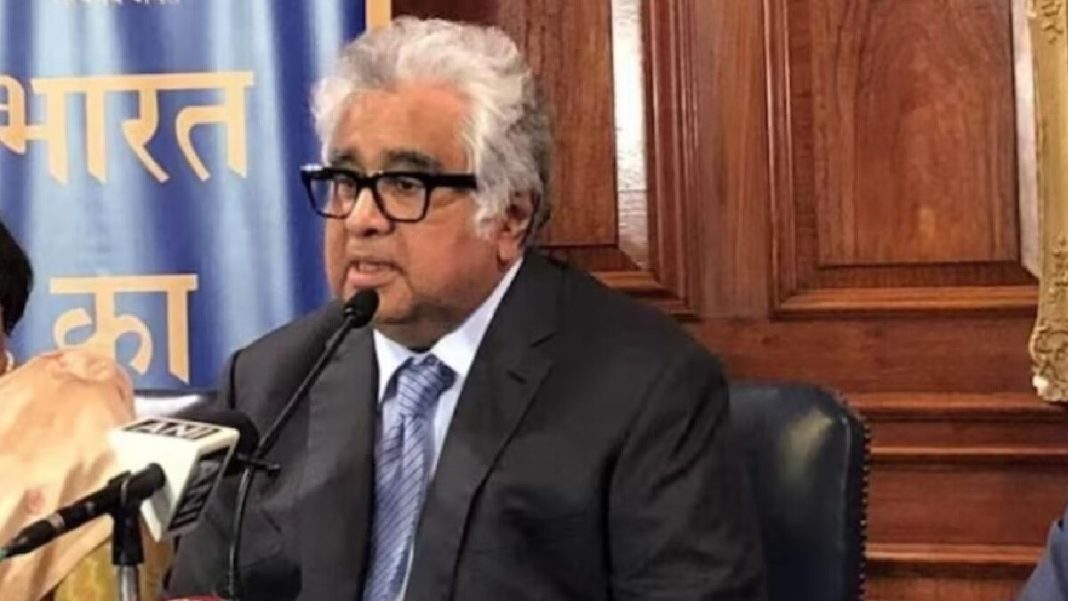
Amid the escalating conflict in West Asia, senior lawyer and international law expert Harish Salve has sharply criticised recent airstrikes by the United States and Israel on Iran, describing them as a clear violation of international law. Salve said that despite the existence of the United Nations Charter, which explicitly prohibits countries from threatening or using force unjustifiably, the current hostilities show a growing failure to uphold these principles.
According to Salve, the situation reflects a broader systemic failure of the international legal framework and the rules-based global order that emerged after World War II. He warned that the erosion of this system is being replaced with a “force-based order,” where military power overrides established legal norms. Salve said such a shift is dangerous and could push the world into a chaotic era reminiscent of the ‘stone ages.’
During an interview with India Today, Salve elaborated on the legal implications of the ongoing military actions and addressed questions about the role of the United Nations and other international organisations in easing tensions.
He said that under international law, particularly the UN Charter, the use of force is justified only in self-defense against an imminent threat or with authorisation from the UN Security Council. However, Salve argued that there was no legal pretext for the United States to launch attacks on Iran, citing the absence of evidence of any immediate threat.
He also highlighted the difficulties of holding powerful countries accountable under international law. While sanctions can be imposed through the United Nations, political realities such as the veto power in the Security Council often prevent meaningful action against major powers like the United States. Salve remarked that international law today increasingly appears to function more as an academic subject than a binding framework respected by nations. The repeated sidelining of legal norms in favour of unilateral actions by strong nations has diminished the potency and relevance of global legal mechanisms designed to maintain international peace.
The discussion also examined the limitations faced by international courts such as the International Court of Justice (ICJ), which often struggles to assert jurisdiction or enforce rulings against sovereign states that refuse to cooperate. This institutional weakness compounds the difficulty in securing justice for violations of international law, especially when civilian casualties mount, including tragic losses among children and innocents caught in conflict zones.
Salve emphasised the role of public opinion and democratic accountability in countries such as the United States, where the authority to approve war constitutionally rests with legislative bodies like Congress. However, political disputes and executive bypassing of these consultative processes, he said, have increased uncertainty over the legality of modern military engagements. His remarks raise broader questions about the effectiveness of international institutions and treaties in restraining aggressive actions, and highlight the urgent need for renewed commitment to a rules-based global order.
Reflecting on the broader implications, Salve warned that ignoring international law sets a dangerous precedent that could threaten global stability. In an interconnected global economy, he said, conflicts are no longer confined to regional theatres, and escalation in one area can quickly destabilise international peace and prosperity, making the enforcement of international legal norms more crucial than ever.
Harish Salve’s critique is both a sobering assessment and a call for the global community to restore respect for international law, strengthen institutions such as the United Nations, and prevent conflicts driven by military power rather than legal norms. His remarks also highlight the fragility of democratic institutions and legal frameworks in an era when the military might often overshadow lawful governance, posing a threat to global peace and security.


