

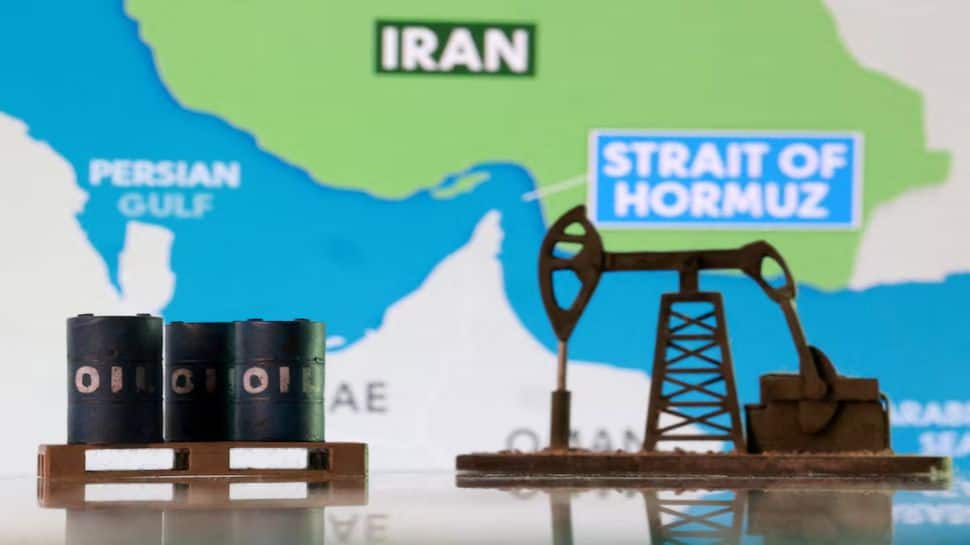
New Delhi: As war keeps intensifying between the United States-Israel and Iran, attention in New Delhi has turned to a narrow stretch of water that carries enormous weight for India’s energy security. Nearly 40 percent of India’s oil imports pass through the Strait of Hormuz. Closure of this route would send immediate ripples through the country’s fuel supply chain and could increase its reliance on Russian crude.
India once imported close to 2 million barrels of Russian oil a day. That number has fallen sharply this year, dropping to around 1.16 million barrels per day in January. The decline came as expectations grew that New Delhi might scale back purchases from Moscow to avoid the return of a 25 percent US tariff on Indian exports and to honour commitments made under a trade deal with Washington.
US President Donald Trump had hinted that tariffs could rise again if India failed to cut Russian oil imports. He described the move as part of efforts to pressure Moscow over the war in Ukraine. New Delhi responded by making it clear that the energy needs and security of its 1.4 billion people would be its foremost priority.
Indian refineries have continued to process Russian crude and export petroleum products to several countries. Industry watchers say a shutdown of the Strait of Hormuz would tighten supplies and place India in a vulnerable position. The country’s ability to absorb the shock will depend largely on how long the war continues.
Experts said energy supply lines cannot simply be switched off. They added that as long as shipments continue, there is little cause of concern. They urged policymakers to keep alternative sources in view, adding that the coming weeks are unpredictable as the situation evolves.
They said that India’s large refining capacity changes the way it conducts business, since the country not only meets domestic demand but also supplies petroleum products to markets such as Europe. During the peak of the Ukraine war, European and American markets used refined products derived from Russian crude.
On the question of possible objections to India maintaining Russian oil imports, the analysts said that those raising concerns would ultimately have to weigh the consequences for themselves.
Russia has already shown its readiness to step in if disruptions persist, offering to meet India’s energy requirements in case of sustained supply interruptions.
Why India could face pressure
The Government of India has stated that it has sufficient reserves to manage the present situation. Officials have said the country possesses enough crude stored in underground caverns in Andhra Pradesh and Karnataka, along with refinery and storage facilities, to meet domestic demand for up to 74 days.
According to official sources, crude stocks can cover around 25 days of consumption, while reserves of petrol and diesel can last for another 25 days. These numbers do not include strategic reserves set aside specifically to cushion short-term supply shocks.
There are additional concerns in the gas market. Qatar, India’s largest supplier of natural gas, has cited extraordinary circumstances following a drone attack and hinted at a halt in production. About 40 percent of India’s 27 million tonnes of liquefied natural gas (LNG) imports come from Qatar. Petronet LNG Limited has informed major clients such as GAIL India and Indian Oil Corporation about potential supply disruptions.
In a recent statement, the petroleum ministry said India ranks among the world’s top importers, refiners and exporters of petroleum products. It added that the country maintains adequate stocks of crude oil, petrol, diesel and aviation turbine fuel to manage short-term disruptions arising from tensions in the Middle East.
The ministry also said that India has diversified its energy sources in recent years. It added that the country now has access to supplies that do not pass through the Strait of Hormuz, ensuring alternative cargoes are available.
Will fuel prices rise?
Energy experts are divided on the impact at the pump. They said that oil marketing companies benefited when discounted Russian crude boosted their margins and that cushion should limit immediate pressure on retail prices. They suggested that political considerations would also weigh against allowing fuel prices to climb.
They said India can manage the situation for two to three weeks, though anxiety may surface sooner in other countries. They added that any prolonged blockade of oil routes would affect multiple economies and is unlikely to persist beyond a month.
For now, India stands watchful. Tankers continue to sail and refineries continue to run. The outcome of the war will determine whether the country’s energy balance is steady or faces a testing period that could touch every household budget.


