Key Takeaways
- US and Australia sign $8.5 billion critical minerals partnership
- Both countries to invest $1 billion each in mining projects within six months
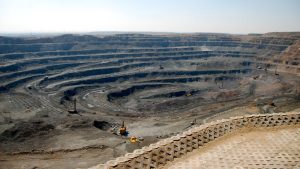
- Deal aims to counter China’s dominance in rare earths production
- Includes faster permitting, price floors, and resource mapping cooperation
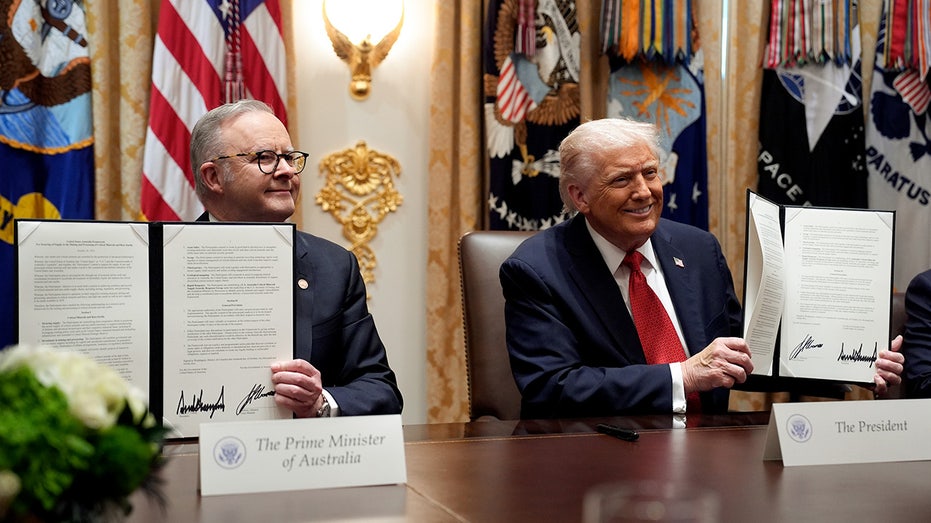
President Donald Trump and Australian Prime Minister Anthony Albanese have signed a landmark $8.5 billion agreement to secure critical minerals supply chains and reduce Western dependence on China. The deal, announced during their first White House summit, represents a major strategic move to counter Beijing’s control over rare earths essential for modern technology.
The partnership includes immediate investments of $1 billion each from both nations over the next six months into mining and processing projects. The agreement also establishes minimum price floors for critical minerals and streamlines permitting processes for mines and related facilities.
Accelerated Production Timeline
President Trump expressed confidence in the deal’s rapid impact, telling reporters: “In about a year from now, we’ll have so much critical mineral and rare earths that you won’t know what to do with them.” Prime Minister Albanese described the $8.5 billion pipeline as “ready to go.”
The collaboration extends beyond immediate investments to include joint geological mapping, mineral recycling initiatives, and measures to prevent critical mineral asset sales on national security grounds.
Strategic Response to China’s Dominance
The agreement comes as Western governments actively work to diversify critical minerals supply chains away from China. The United States recently condemned China’s export controls on rare earths as threatening global supply stability.
Current production statistics highlight the challenge: China produced 270,000 tons of rare earths in 2024 with 44 million tons of reserves, compared to US production of 45,000 tons (1.9 million tons reserves) and Australian output of 13,000 tons (5.7 million tons reserves).
Australia has indicated openness to selling shares in its planned strategic reserve to allies including Britain, suggesting broader Western cooperation in critical minerals security. The US-Australia partnership represents a significant step toward creating alternative supply chains for materials essential to smartphones, electric vehicles, military equipment, and other advanced technologies.