
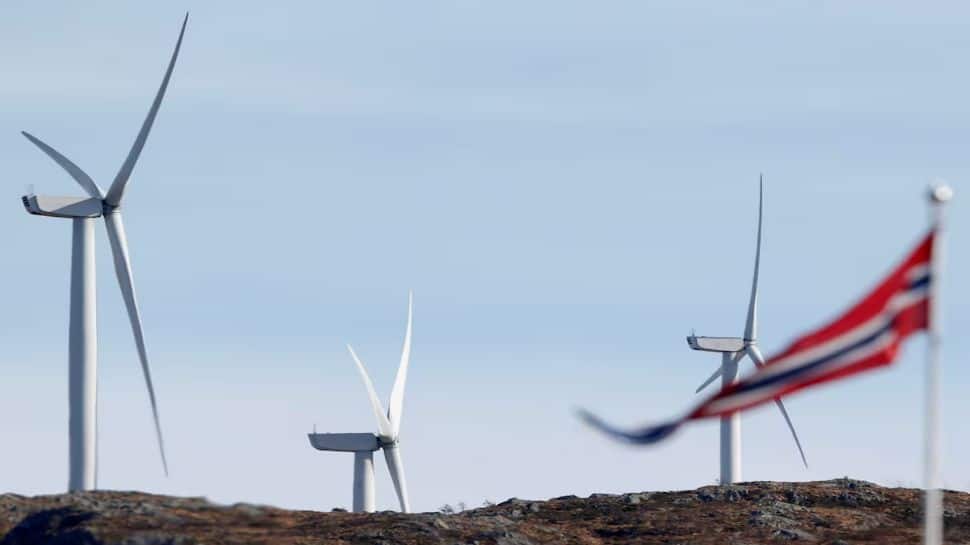
Oslo: Norway is described as one of the most environmentally advanced countries in the world. Its cities are filled with bicycles, nearly all of its electricity comes from renewable sources and in 2024, close to nine out of every ten new cars sold were electric vehicles. On paper, it looks like a country moving away from fossil fuels.
At the same time, Norway continues to produce large volumes of oil and gas. These fuels are exported in massive quantities and are the biggest source of income for the government. The country is also a member of the International Energy Agency (IEA) and has been among the early adopters of carbon taxation policies. Electricity forms the largest share of its total energy use.
This mix of green policies at home and heavy fossil fuel exports abroad has come to be known as the “Norwegian paradox”. It has been debated for years, especially as environmental groups and young activists call for a clear timeline to scale down the oil industry.
On the other hand, the sector continues to support jobs and plays a major role in the national economy.
A major part of Norway’s oil wealth feeds into its sovereign wealth fund, which is also known as the “Oil Fund”. This fund supports the country’s pension system and welfare model, giving it strong financial backing for public services. The energy sector accounts for more than 60% of Norway’s exports and over 20% of its GDP.
The largest operator on the Norwegian continental shelf is Equinor, a company in which the government holds a major stake. A large share of its profits is directed into the Oil Fund. By the end of 2025, estimates suggest the fund could reach around $1.9 trillion, which is roughly equal to about $3.5 lakh per citizen.
Recent developments have added to Norway’s earnings. The war in the Middle East and disruptions to the Strait of Hormuz have pushed oil prices higher, leading to unexpected gains. Government revenue is said to have increased by around $5 billion, while local energy companies have helped Oslo’s stock market reach record levels.
Norwegian Finance Minister Jens Stoltenberg, who was also NATO chief, described the situation as a paradox, saying that Norway tends to benefit more from periods of instability. Inside the country, people are still debating this. As columnist Cecilie Langum Becker put it, “The bitter truth is that when the world burns, money flows into our government budget.”
Norway’s role in international energy markets has increased further since 2022, when Russian supplies to Europe dropped after the war in Ukraine. The country has since become one the major suppliers for Europe’s energy needs. The country supplies about 30 percent of the gas and 15 percent of the oil consumed in Europe, and 90 percent of its total exports go there.
Despite its fossil fuel exports, Norway has built a strong domestic clean energy system based mainly on hydropower. In 1991, it introduced a carbon tax, and in 2005 it became a global leader in electric vehicle adoption through incentives. A climate law passed in 2017 set a target of cutting emissions by 50% by 2030.
Even with these measures, international tensions have influenced domestic debate. Europe have led even climate-oriented political groups to accept Norwegian gas as a necessary supply source. Environmental activist Truls Gulowsen said the debate has now reached sensitive territory, including plans to open new oil exploration areas in fragile Arctic waters.
The Norwegian government has recently issued 57 new exploration licences. Prime Minister Jonas Gahr Støre stated, “We will continue to search for more oil to supply Europe,” while maintaining support for developing the industry rather than setting a fixed exit timeline.
Oil and gas continue to support more than 200,000 direct jobs in Norway. Industry representatives argue that reducing supply at this stage would create major economic disruption. At the same time, analysts warn that the sector is moving towards a long-term decline, even if the transition away from it is expected to take time.
Norway continues to manage a balance between its green domestic image and its international role as a major fossil fuel exporter, a tension that defines one of the country’s most debated economic and environmental realities.


