

India Lodges Strong Protest Over China’s New Map Claiming Indian Territory
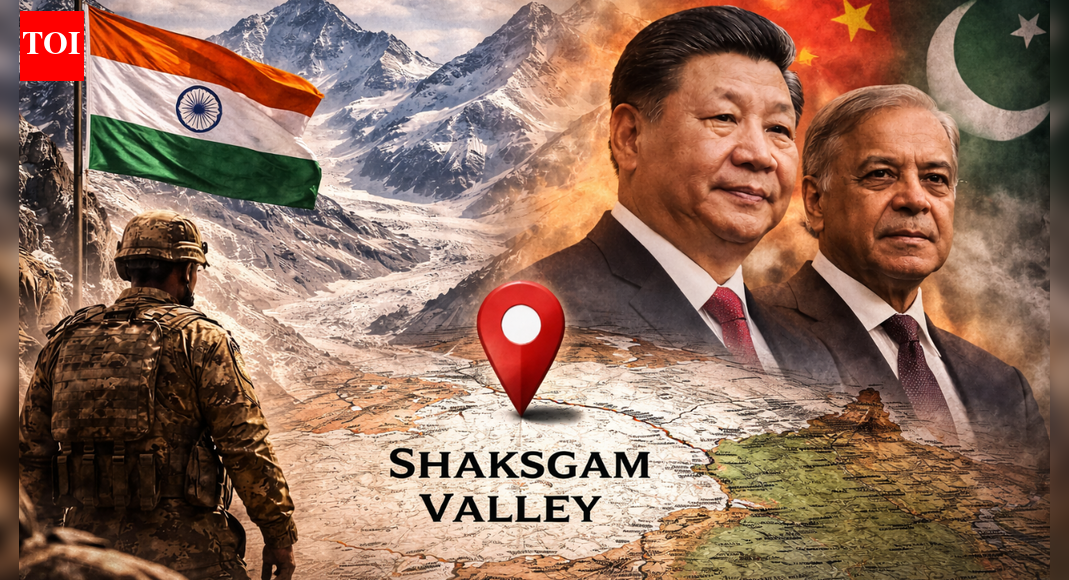
India has formally protested China’s latest official map, which asserts sovereignty over Arunachal Pradesh, Aksai Chin, and the Shaksgam Valley in Pakistan-occupied Kashmir. The External Affairs Ministry called the claims “baseless” and stated they complicate border resolution efforts.
Key Developments
- Diplomatic Protest: India lodged a strong protest via diplomatic channels against China’s “2023 Standard Map.”
- Rejected Claims: India firmly rejects Beijing’s cartographic assertions over Arunachal Pradesh, Aksai Chin, and Shaksgam Valley.
- Strategic Concern: India is monitoring Chinese infrastructure building in the Shaksgam Valley, close to the sensitive Siachen Glacier region.
External Affairs Ministry spokesperson Arindam Bagchi stated, “We have today lodged a strong protest through diplomatic channels with the Chinese side on the so-called 2023 Standard Map of China that lays claim to India’s territory. We reject these claims as they have no basis. Such steps by the Chinese side only complicate the resolution of the boundary question.”
China released the map on August 28. It claims approximately 90,000 sq km of Arunachal Pradesh and the Aksai Chin area in Ladakh.
What is the Shaksgam Valley?
The Shaksgam Valley, or Trans-Karakoram Tract, is part of the Hunza-Gilgit region of Pakistan-occupied Kashmir (PoK). It is a territory claimed by India but controlled by Pakistan. It borders China’s Xinjiang province to the north and the Siachen Glacier region to the east.
In 1963, Pakistan ceded the valley to China under a boundary agreement. India has never accepted the legality of this pact, maintaining Pakistan had no right to cede Indian territory.
Why is Shaksgam Valley Strategically Crucial?
The valley’s importance stems from its proximity to the Siachen Glacier—the world’s highest battlefield. It is also near the Karakoram Pass, which separates Ladakh from Xinjiang.
China’s ongoing infrastructure projects, including roads and potential military facilities in the area, raise serious security concerns for India. The presence of Chinese troops could potentially threaten India’s positions in Siachen.
Roots of the Dispute
The Shaksgam Valley was part of the princely state of Jammu and Kashmir at India’s independence in 1947. It came under Pakistani control after the 1947-48 conflict. The 1963 cession to China forms the core of the current dispute, with India consistently protesting all Chinese activities there.
China’s Position and India’s Response
China claims the valley as part of Xinjiang, citing the 1963 agreement with Pakistan. Its activities are also linked to the China-Pakistan Economic Corridor (CPEC), which passes through PoK—a project India opposes as it traverses disputed territory.
India’s stand is unequivocal: it considers the Shaksgam Valley part of its sovereign territory. New Delhi continues to raise the issue at bilateral and multilateral forums while closely monitoring the situation and taking steps to protect its territorial integrity.


