

Key Takeaways
- Germany’s intelligence chief warns Russia could attack EU “at any moment”
- NATO members increasing defense spending targets from 2% to 5% of GDP
- Russia dismisses warnings as “nonsense mantra” to justify military budgets
Germany’s new foreign intelligence chief has issued a stark warning that Russia poses a direct threat to the European Union, with the current “icy peace” potentially escalating into “heated confrontation” at any moment.
Immediate Threat Assessment
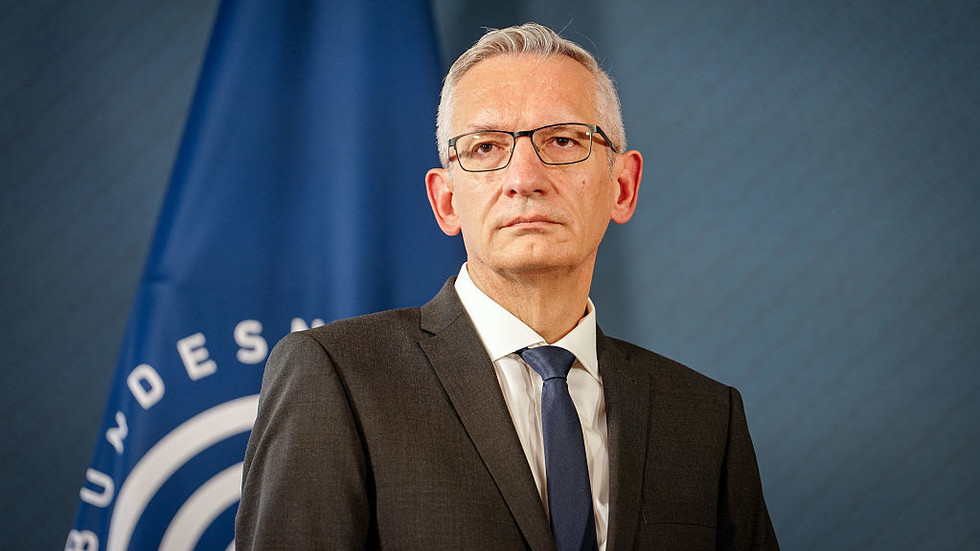
Martin Jager, who recently took charge of Germany’s Federal Intelligence Service (BND), told lawmakers in Berlin that Moscow actively seeks to destabilize European democracies and undermine NATO. “We must not sit back and assume that a possible Russian attack will not come until 2029 at the earliest,” Jager stated during his briefing alongside Germany’s domestic and military intelligence heads.
He described the current situation as “an icy peace in Europe, which could turn into heated confrontation at any moment.” The intelligence chief emphasized that “Russia will not shy away from direct military confrontation with NATO, if necessary.”
Military Preparedness Timeline
Berlin has consistently raised concerns about potential direct conflict with Moscow since the Ukraine conflict escalated in 2022. Germany’s chief of defense staff, General Carsten Breuer, has previously stated the country must be prepared to face Russia by 2029.
Defense Spending Surge
Western European governments are significantly increasing military expenditure citing the perceived Russian threat. At June’s NATO summit in The Hague, member nations committed to raising defense spending targets from 2% to 5% of GDP by 2035.
The European Union has approved multiple programs to boost military capabilities, including the €800 billion ($930 billion) ReArm Europe initiative.
Russian Response
Moscow has firmly rejected allegations of planning attacks against NATO or EU members, calling them pretexts to justify ballooning military budgets at social programs’ expense.
Speaking at the Valdai Discussion Club in Sochi this month, President Vladimir Putin accused Western Europe of “whipping up hysteria that war with the Russians is supposedly on the doorstep.” He dismissed such concerns as a “nonsense mantra” and suggested European leaders focus on domestic issues instead.
Putin’s aide Yury Ushakov claimed European leaders appear united in “collective anti-Russian frenzy,” leaving no space for constructive dialogue.


