

Key Takeaways
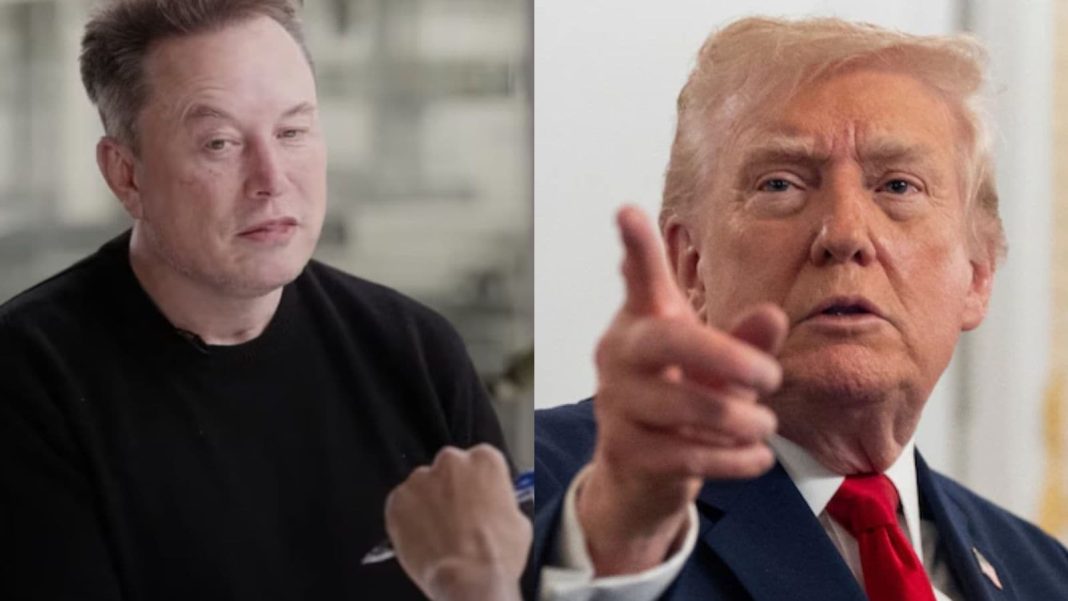
- Elon Musk revealed he tried and failed to dissuade President Trump from imposing tariffs, calling them market-distorting.
- India’s exports to the US fell sharply after tariffs were hiked to 50%, potentially impacting $48.2 billion in goods.
- Musk also predicted AI and robotics could make work optional within 10-15 years.
Elon Musk has disclosed that his personal lobbying effort to stop former US President Donald Trump from imposing tariffs was unsuccessful. The Tesla CEO, speaking on the People by WTF podcast with Zerodha’s Nikhil Kamath, stated the President “loves tariffs” and his attempts at persuasion failed.
Musk’s Argument Against Tariffs
Musk argued strongly for free trade, calling it more efficient. He explained that tariffs create distortions in markets and questioned their logic by scaling the concept down.
“Would you want tariffs between you and everyone else at an individual level? That would make life very difficult. Would you want tariffs between each city? No—that would be very annoying. Would you want tariffs between each state within the United States? That would be disastrous for the economy. So then why do you want tariffs between countries?”
He also touched on immigration, supporting high-skilled workers but criticising parts of the H-1B visa system for being gamed by some outsourcing companies. However, he opposed shutting the program down, warning it would harm the US economy.
Impact of Trump’s Tariffs on India
The US, which is India’s largest export market, began imposing tariffs at 10% in April. They were raised to 25% by early August and then to 50% by the month’s end.
The immediate effect was significant: India’s exports to the US plummeted from $8.8 billion to $5.5 billion in just five months.
As talks on a bilateral trade package continue, the 50% tariff remains on most Indian exports. Half of this duty is a penalty for India’s purchase of Russian energy. India estimates these tariffs could affect goods worth about $48.2 billion based on 2024 export values.
The World Trade Organisation expects global trade growth to slow to 2.4% this year, down from 2.8% in 2024.
Musk’s Vision: A Future Where Work is Optional
Shifting topics, Musk made a bold prediction about the future of employment driven by and robotics.
“My prediction is, in the future, working will be optional… I think it will turn out to be true that, in less than 20 years, but maybe even as little as… ten or 15 years, the advancements in AI and robotics will bring us to the point where working is optional.”
He likened future work to gardening—an activity done for enjoyment, not necessity. Musk believes technological progress will lead the world toward a state of “almost unlimited abundance.”