

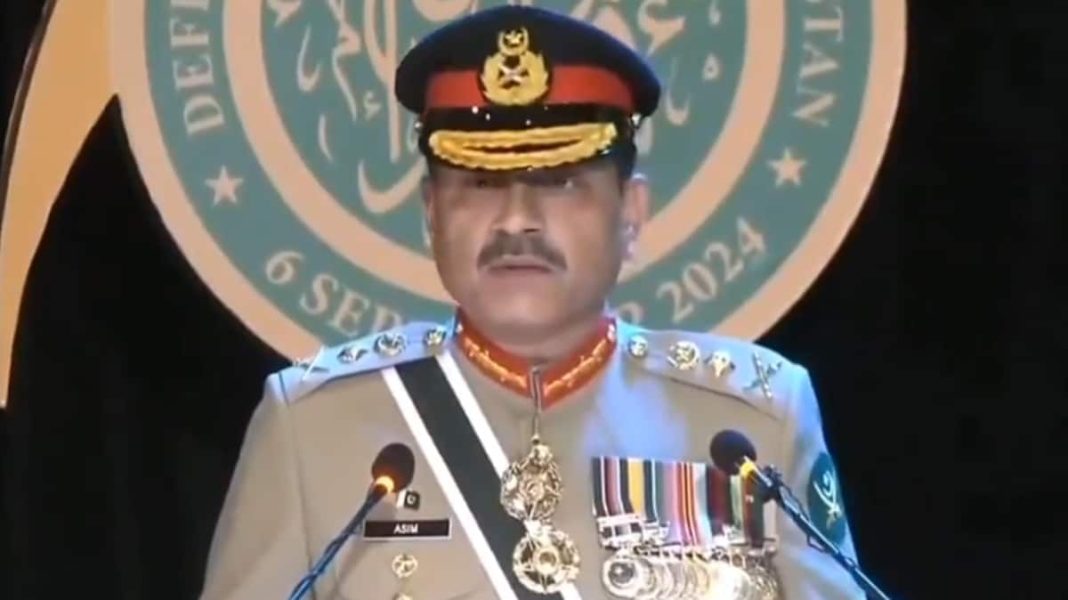
Pakistan Moves Closer to Direct Military Rule as Munir Gains Supreme Power
Field Marshal Asim Munir has become Pakistan’s most powerful leader after being appointed Chief of Defence Forces (CDF) under the controversial 27th Constitutional Amendment, pushing the country toward direct military rule according to a recent report.
Key Developments
- Field Marshal Asim Munir appointed Chief of Defence Forces with control over all military branches
- 27th Constitutional Amendment grants lifelong immunity from prosecution
- Report indicates Pakistan inching closer to direct military rule
- Munir gains additional five years in power and control of nuclear arsenal
Historical Context of Military Dominance
A The Christian Science Monitor report notes that while the CDF title is new, Pakistan has oscillated between civil and military rule since gaining independence in 1947. Military dictators have governed directly for 33 of the country’s 78-year history, while wielding influence from behind the scenes for the remaining 45 years.
Historian Ayesha Jalal observed, “What we’re witnessing now is a military, which has been strong, becoming even stronger.”
Recent Political Manipulation
Under Munir’s leadership, the army has allegedly manipulated elections and cracked down on Pakistan’s most popular political party, PTI. Former Prime Minister Imran Khan, PTI’s leader, remains imprisoned while the military gained popularity following recent conflicts with India.
The report states: “Under Field Marshal Munir’s leadership, the army has manipulated elections and unleashed a brutal crackdown on Pakistan’s most popular political party, the Pakistan Tehreek-e-Insaf (PTI), whose leader, former Prime Minister Imran Khan, is languishing in jail.”
Longstanding Military Influence
Historians debate how the military gained such lasting political influence, with some tracing it back to colonial-era structures. After the 1947 partition, the army quickly overshadowed Pakistan’s political class, which largely comprised migrants from India.
Following Pervez Musharraf’s dictatorship, rival parties PMLN and PPP agreed to prevent military interference in politics. The 2013 election marked Pakistan’s first peaceful transfer of power between civilian governments.
Khan’s Rise and Fall
The military subsequently cultivated Imran Khan as a “third-way” candidate, bringing him to power before orchestrating his removal through a no-confidence vote in 2022 after tensions erupted between Khan and military leadership.
The constitutional amendment now solidifies Munir’s position with extended tenure and unprecedented authority, marking a significant shift toward direct military control in Pakistan.


