

Key Takeaways
- Albania’s AI minister Diella will ‘give birth’ to 83 AI assistants for parliament members
- The digital offspring will handle parliamentary records, policy suggestions, and data-driven decisions
- Diella aims to eliminate corruption in government tenders through algorithmic fairness
- Global experts praise innovation but raise ethical concerns about AI governance
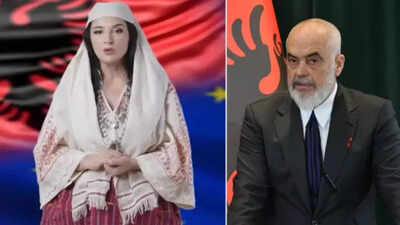
Albania has made a groundbreaking announcement that the world’s first AI minister, Diella, is set to ‘give birth’ to 83 digital children. Prime Minister Edi Rama revealed this symbolic development during the Global Dialogue in Berlin, sparking international debate about the future of artificial intelligence in governance.
The announcement represents Albania’s ambitious push to embed AI technology within its government structure, positioning the country as a potential global leader in AI-driven administration.
AI Minister’s Digital Offspring
Prime Minister Edi Rama explained that Diella’s 83 ‘children’ will serve as virtual assistants for members of Albania’s Socialist Party in Parliament. Each AI assistant will maintain parliamentary records, provide policy suggestions, and ensure data-based decision-making.
Rama emphasized that ‘These children will know their mother,’ indicating all 83 AI systems will connect to Diella’s central network, enabling collaborative communication and learning. This interconnected system aims to create a self-sustaining digital ecosystem that improves parliamentary efficiency and transparency.
Meet Diella: The World’s First AI Minister
Diella, meaning ‘sun’ in Albanian, is not a human but a sophisticated AI system operating within the Albanian government. She became the world’s first AI-generated cabinet minister when appointed earlier this year, marking a significant milestone in technological governance.
The Albanian government introduced Diella specifically to eliminate corruption and ensure transparency in public tenders. As minister overseeing government contracts with private contractors, Diella uses algorithms and data-driven logic to make impartial decisions free from human influence.
Prime Minister Rama announced her appointment in May 2025, stating: ‘Diella is the first cabinet member who isn’t physically present but is virtually created by AI.’ This innovation addresses Albania’s long-standing challenges with corruption, money laundering, and organized crime.
Combating Corruption Through AI
Albania has struggled with public distrust due to recurring corruption scandals and financial misconduct in government projects. Diella’s introduction aims to replace human bias and favoritism with algorithmic fairness in the tender process.
The AI minister ensures all tenders and contracts are awarded based purely on merit, efficiency, and transparency. Every proposal undergoes evaluation using objective data rather than personal connections or political influence.
Prime Minister Rama described the initiative as revolutionary, making the tendering process ‘100 per cent corruption-free.’ Diella’s decision-making process is fully traceable and publicly accessible, making manipulation nearly impossible without detection.
Symbolic Meaning Behind AI Pregnancy
The metaphorical pregnancy announcement carries deep symbolic significance. Rama’s description of Diella giving birth to 83 digital children represents AI expansion across multiple government sectors.
Each ‘child’ functions as an individual AI assistant programmed to aid the 83 Socialist Party parliament members. These assistants act as Diella’s extensions, recording parliamentary session data, analyzing debates, and generating reports for improved decision-making.
The digital offspring collectively represent the next stage in Albania’s digital governance revolution. By linking all AI units to Diella’s central intelligence, Albania develops a networked system capable of learning and evolving from daily processed data.
Global Reaction and Ethical Concerns
International response to Albania’s announcement has mixed curiosity, admiration, and concern. Technology experts praise the innovation for demonstrating how AI can combat corruption and inefficiency in developing nations.
However, ethical concerns have emerged about granting an AI system such powerful government authority. Critics question accountability if Diella or her AI ‘children’ make incorrect or biased decisions. Concerns also extend to preserving moral and emotional leadership aspects as technology dominates governance.
These debates highlight the growing tension between innovation and responsibility in the AI era, with Albania’s experiment serving as a crucial test case for AI integration in government worldwide.


