Key Takeaways
- PM Modi held multiple bilateral meetings with world leaders at G20 Summit
- Announced 6 new global initiatives including trilateral tech alliance
- India-Australia-Canada partnership focuses on AI, clean energy, supply chains
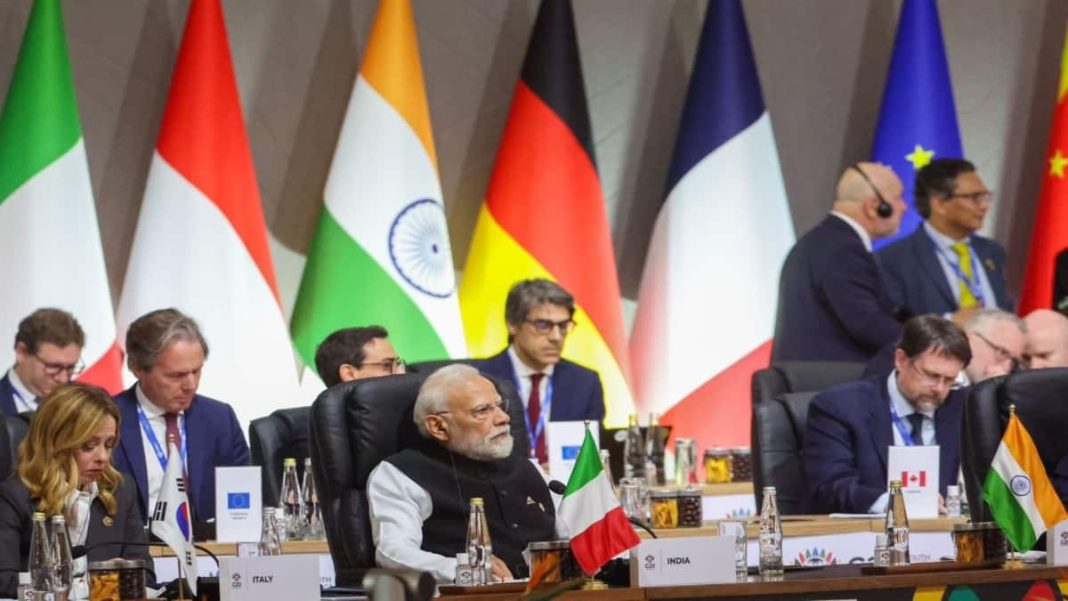
Prime Minister Narendra Modi engaged in a series of high-level bilateral meetings during his second day at the G20 Leaders’ Summit in Johannesburg, announcing six significant global initiatives that underscore India’s growing diplomatic influence.
The Prime Minister emphasized that these exchanges demonstrated a “shared commitment to global progress and prosperity” as he met with leaders including UK’s Keir Starmer, Malaysia’s Anwar Ibrahim, France’s Emmanuel Macron, South Korea’s Lee Jae-myung, Brazil’s Luiz Inacio Lula da Silva, and UN Secretary-General António Guterres.
Strengthening Bilateral Partnerships
PM Modi described his meeting with UK Prime Minister Keir Starmer as “wonderful,” noting that “this year has brought new energy to the India-UK partnership, and we will keep driving it forward across many domains.”
His second meeting this year with South Korean President Lee Jae-myung reflected “the strong momentum in our Special Strategic Partnership,” with discussions focusing on deepening economic and investment ties.
Following talks with Brazilian President Lula da Silva, Modi confirmed both nations would “continue to work closely to boost trade and cultural linkages for the benefit of our people.” His discussion with UN Secretary-General António Guterres was characterized as “very productive.”
Trilateral Tech Alliance Announced
A major development emerged as PM Modi announced the Australia-Canada-India Technology and Innovation (ACITI) Partnership after meeting with Australian Prime Minister Anthony Albanese and Canada’s Mark Carney.
“We are delighted to announce an Australia-Canada-India Technology and Innovation Partnership today,” Modi stated. “The initiative will deepen collaboration between democratic partners across three continents and three oceans in emerging technologies, support diversification of supply chains, clean energy and mass adoption of AI.”
The Canadian government confirmed the partnership would leverage the “natural strengths of the three countries” with emphasis on green energy innovation and building resilient supply chains, including in critical minerals.
The alliance aims to advance strategic collaboration toward net zero goals and drive supply chain diversification while examining AI development to improve citizens’ lives. The meeting also signaled warming relations between India and Canada.