

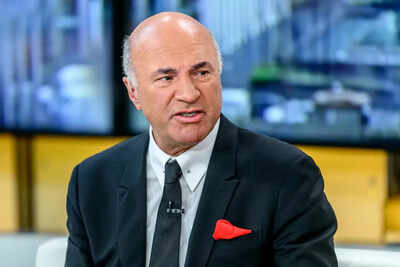
Kevin O’Leary Warns US Lacks Power Grid for AI, Criticises Fed and Tariffs
Canadian billionaire investor Kevin O’Leary has issued a stark warning about America’s energy infrastructure, stating the US has built “zero” new power capacity compared to China’s massive 500-gigawatt expansion, threatening the next phase of AI growth.
Key Takeaways
- Kevin O’Leary warns the US power grid is stagnant, with “zero” new capacity built in 24 months versus China’s 500 GW.
- He argues this energy shortage jeopardises the data centres needed for advanced AI development.
- O’Leary is also critical of US economic policy, predicting no rate cuts while Jerome Powell chairs the Fed and calling tariffs inflationary.
The Core Power Grid Problem
O’Leary contrasted the stagnation of America’s electrical grid with China’s rapid buildout. He noted that while Beijing added 500 gigawatts of power in the last two years, the US has built “zero.” He warned that without massive infrastructure upgrades, the US cannot sustain the energy-hungry data centres required for the AI boom.
“I’m not as optimistic that jawboning the Fed is going to get rates reduced anytime soon. I mean this is an unusual situation obviously, but I don’t think you can count on rate cuts while Powell’s there. This tariff situation is getting really interesting. Tariffs themselves on commodities or goods that you don’t create yourself is inflationary. There’s no way around it. Get rid of those tariffs so they can bring down those increased costs on that affordability issue. The reason the S&P maintains new highs, in my opinion, is the productivity factor brought in by AI tools that have just started to be used in the last 24 months is really effective. We’re starting to see how good this can be across all 11 sectors. Here’s our problem and why I have a little caution to these statements. We have no power. The Chinese have built 500 gigawatts in the last 24 months. We have built zero. We have no power on the grid. This is a big problem,” wrote Kevin on X.
Broader Economic Criticism
Beyond the grid, O’Leary criticised broader US economic policy. He warned investors not to expect relief from interest rates while Jerome Powell remains Federal Reserve Chair. He also argued that tariffs are a direct driver of inflation, increasing costs for consumers.
While acknowledging the current stock market strength driven by AI productivity gains, O’Leary stressed that software alone cannot deliver sustained growth without the physical hardware—and the electrical wattage—to run it. His comments highlight a critical bottleneck for America’s technological ambitions.