

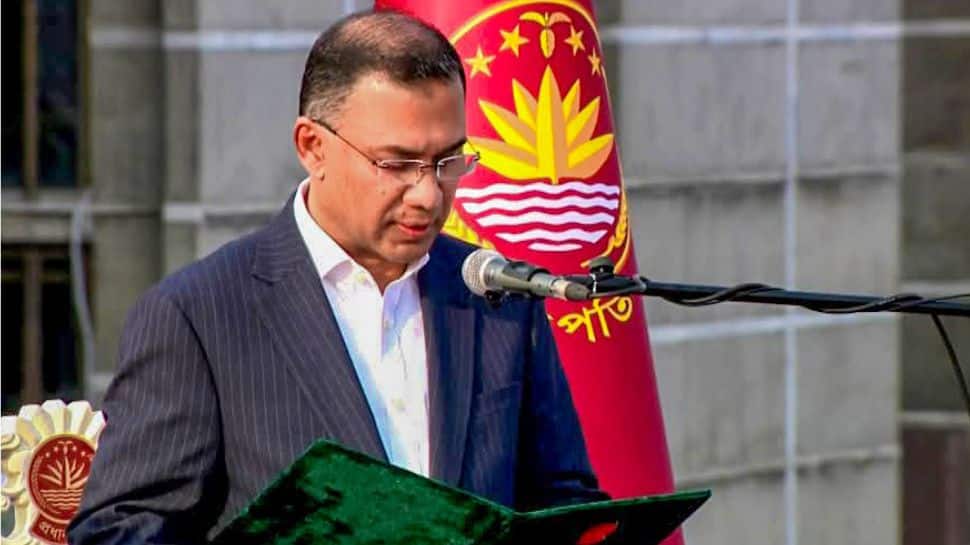
Bangladesh politics: After a decisive win in the 13th Parliamentary elections of Bangladesh, Tarique Rahman, Chairman of the Bangladesh Nationalist Party (BNP), was sworn in as the 11th Prime Minister of the nation. The newly elected leader now faces a series of major decisions and carries the weight of significant responsibilities ahead.
Some of the biggest questions on Tarique Rahman’s desk include the minorities’ security, trade with the US and China, relations with Pakistan, India ties, and former Bangladesh PM Sheikh Hasina’s extradition.
The BNP government in Bangladesh
BNP elected Rahman as its leader, setting him up to become the Leader of the House and take the oath as the Prime Minister of the country. Bangladesh last saw a male PM almost 35 years ago.
Meanwhile, the BNP’s 50-member cabinet comprises 25 ministers and 24 state ministers, with three technocrats. It features several new faces, including leaders entering ministerial roles for the first time, with some securing a place in the cabinet after their maiden election, according to IANS, the country’s leading Bengali daily, Prothom Alo, reported.
What lies ahead for Tarique Rahman’s government?
Trade ties with the US and China
Bangladesh, under new Prime Minister Tarique Rahman, faces structural challenges in balancing the US and China trade ties as both are vital economic partners, according to IANS, a new report said. While America is touting market access, security cooperation, and regulatory leverage, China is offering infrastructure, industrial integration, and defence supplies.
The balancing of the ties is going to be a major task for the Tarique Rahman administration.
The Sheikh Hasina extradition question
On the issue of former prime minister Sheikh Hasina’s extradition, the BNP-led government is likely to adopt a careful approach. It cannot politically ignore the matter, yet the urgency of pursuing it will depend on Hasina’s continuing influence in Bangladesh’s domestic politics. The government will have to balance legal, diplomatic and domestic considerations.
The Pakistan factor
Bangladesh’s history with Pakistan has been fraught, rooted in the war of 1971. However, ties saw a thaw under the interim government led by Muhammad Yunus. With a new political leadership in Dhaka, the trajectory of Bangladesh-Pakistan engagement, whether cooperation or cautious distance, remains to be seen.
Ties with India
Relations with India deepened significantly during Sheikh Hasina’s tenure but became strained after her ouster. As prime minister, Tarique Rahman is expected to recalibrate Dhaka-New Delhi ties, balancing domestic political sentiment with economic and strategic realities. Diplomacy, connectivity, and border management will likely be central to this reset.
Minorities in Bangladesh
Another major challenge for the new government is ensuring the safety of religious minorities. Recent incidents of violence have raised domestic and international concern. Addressing minority protection will be crucial for Bangladesh’s internal stability, global image, and democratic credibility.
Bangladesh elections 2026
In the 2026 elections, the BNP won 209 parliamentary seats, while the radical Islamist party Jamaat-e-Islami secured 68 seats.
The 13th parliamentary election was held alongside the referendum on the July National Charter on February 12 in 299 out of the country’s 300 constituencies.
(with IANS inputs)