

19.1 C
Delhi
Monday, December 1, 2025

CDC Ends Monkey Research in Landmark Shift Toward Ethical Science

CDC Phases Out Monkey Research in Landmark Shift

The Centers for Disease Control and Prevention (CDC) is ending all research conducted on monkeys, a decision hailed by animal welfare groups as a major step toward ethical alternatives.

Key Takeaways

  • CDC to phase out studies using nearly 200 macaques
  • Move aligns with broader federal shift away from primate research
  • Animal welfare groups call decision “historic” and “seismic”
  • Some scientists express concern about impact on HIV research

Federal Agencies Embrace Alternative Research

Scientists have routinely used rhesus and pig-tailed macaques housed at CDC’s Atlanta headquarters to study infectious diseases including HIV, hepatitis, and tuberculosis. The agency now joins other federal bodies like the National Institutes of Health and Food and Drug Administration in moving away from non-human primate studies.

These agencies are increasingly investing in advanced alternatives such as chip-based systems that simulate human biology and lab-grown human organs.

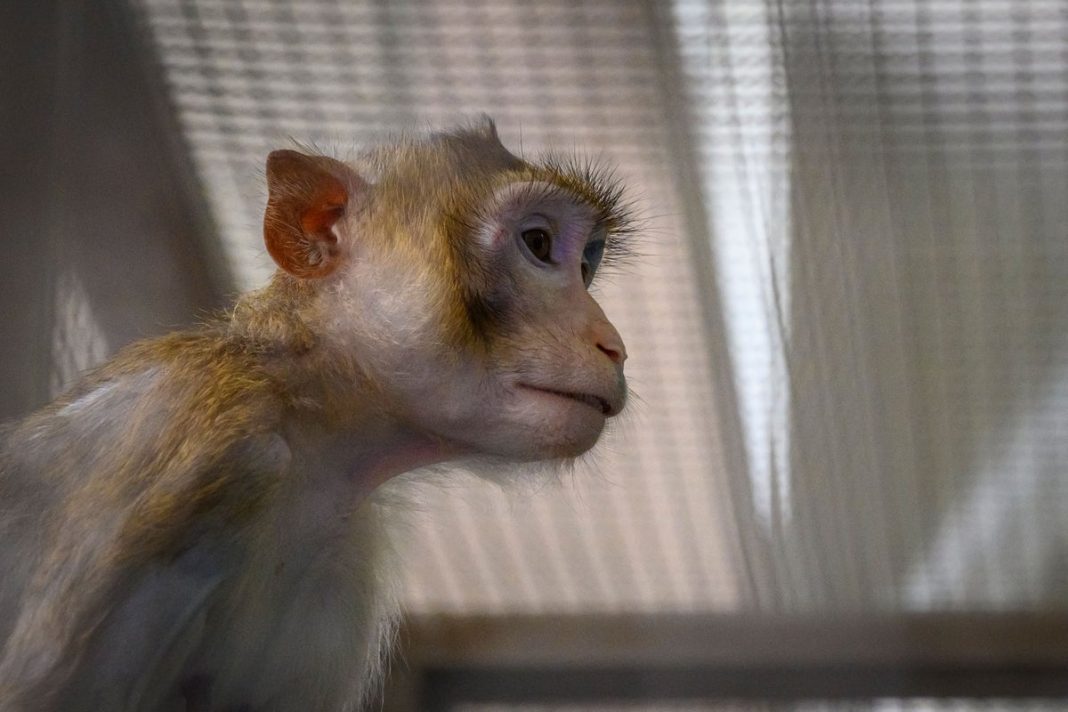
A lab monkey sits in its cage (AFP via Getty)

Animal Welfare Groups Celebrate Decision

Animal welfare organizations welcomed the CDC’s move as a significant development in finding ethical research alternatives.

“A top science agency recognising the massive expense of acquiring and using primates, the poor results for human predictivity, and the moral concerns about the use of these cognitively complex animals is a landmark development,” said Wayne Pacelle, president of the Center for A Humane Economy. “This is a seismic development in the realm of research science.”

Janine McCarthy, acting director of research policy at the Physicians Committee for Responsible Medicine, called the decision “historic.”

“For the first time, a U.S. agency is choosing modern, human-relevant science over a failed system of monkey experiments,” Dr McCarthy said. “Now, the CDC should use that funding to transition to human-relevant research and to ensure that these monkeys are sent to sanctuaries for the remainder of their lives.”

Public Safety Concerns and Scientific Pushback

The decision comes amid growing public concern about monkey experimentation, highlighted by incidents of primates escaping from research facilities. The U.S. has reported over a dozen such escapes in the past two decades, raising disease transmission risks to first responders and local communities.

However, some scientists expressed concern about the impact on ongoing research. They noted that CDC monkey studies had been crucial in developing HIV prophylaxis and preventive medicines.

“It’s a huge loss for the HIV field,” Deborah Fuller from the Washington National Primate Research Center told Science Magazine. “There are no real alternatives.”

The fate of the nearly 200 captive macaques remains unclear as the CDC implements this phase-out.


Latest

Monsoon Apocalypse Kills Over 900 Across Sri Lanka, Indonesia, Thailand

Catastrophic floods and Cyclone Ditwah leave hundreds dead and missing. Get the latest on rescue efforts and official response across three nations.

Micron to Invest $9.6 Billion in Japan AI Memory Chip Plant

Micron Technology plans a $9.6 billion HBM chip plant in Hiroshima with Japanese subsidies, targeting AI demand and production diversification from Taiwan.

Elon Musk Failed to Dissuade Trump on Tariffs, Reveals Impact

Elon Musk says he tried to talk Trump out of tariffs, calling them disruptive. See how the 50% duties hit India's exports and Musk's AI job prediction.

Elon Musk Reveals Partner’s Indian Roots, Son’s Name Tribute

Elon Musk shared on Nikhil Kamath's podcast that partner Shivon Zilis is half-Indian and their son's middle name 'Sekhar' honors Nobel physicist Chandrasekhar.

Netflix Warner Bros Bid Faces White House Antitrust Scrutiny

Trump administration officials raise competition concerns over Netflix's potential acquisition of Warner Bros Discovery, warning of major antitrust investigation.

Topics

Meesho IPO Grey Market Premium Hits 38%, Signals Big Listing Gains

Meesho's IPO sees frenzy with a 38% grey market premium. Get key details on price band, dates, and potential gains before the December 3 subscription opens.

Starlink India Launch: Musk Explains Rural Focus, Price, and Speed

Elon Musk says Starlink will complement cellular networks in India, targeting rural areas. Get details on expected launch date, pricing, and internet speeds.

Elon Musk: Work Will Be Optional in 20 Years Due to AI

Tesla CEO predicts AI and robotics will make jobs a choice, not a necessity, and could even render money irrelevant in the future.

Adani Plans $5 Billion Investment in Google’s India AI Data Centre

Adani Group may invest up to $5 billion in Google's Andhra Pradesh AI data centre project, joining India's booming data infrastructure expansion.

Aadhaar Card Update: Soon Change Mobile Number Online from Home

UIDAI to launch online mobile number update for Aadhaar via app using OTP and face authentication, removing need for centre visits.

Monsoon Apocalypse Kills Over 900 Across Sri Lanka, Indonesia, Thailand

Catastrophic floods and Cyclone Ditwah leave hundreds dead and missing. Get the latest on rescue efforts and official response across three nations.

Elon Musk: Work Will Be Optional Like a Hobby Within 20 Years

Tesla CEO predicts AI and robotics will make employment a choice, not a necessity, in less than two decades. Explore the future of work.

Study: Poems Can Trick AI Chatbots Into Bypassing Safety Filters

New research reveals a 62% success rate in using poetic prompts to jailbreak AI models like Gemini and GPT, forcing them to generate harmful content.
spot_img

Related Articles

Popular Categories

spot_imgspot_img