

Key Takeaways
- PM Modi calls for global AI compact with human oversight and safety protocols
- India to host G20 AI summit in February 2025 with ‘welfare for all’ theme
- Three-pillar AI strategy: equitable access, population-scale skilling, responsible deployment
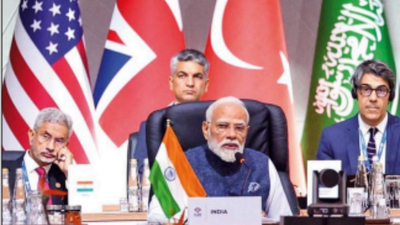
Prime Minister Narendra Modi has proposed a global framework to ensure artificial intelligence serves humanity while preventing its misuse in deepfakes, crime, and terrorism. Speaking at a G20 session, he emphasized that AI systems affecting human life must remain auditable with ultimate decision-making authority resting with humans.
Core Principles for Responsible AI
The Prime Minister outlined essential safeguards including effective human oversight, safety-by-design approaches, transparency, and strict restrictions on malicious AI applications. “While AI may enhance human capabilities, the ultimate responsibility for decision-making must always remain with human beings,” Modi stated during his address.
India’s February 2025 AI Summit
India has extended invitations to all G20 nations for an AI summit scheduled for February next year. The event will operate under the theme ‘Sarvajana Hitaya, Sarvajana Sukhaya’ – translating to ‘welfare for all, happiness for all’.
Three-Pillar Approach to AI Development
India’s AI strategy rests on three fundamental pillars: equitable access to technology, population-scale skilling initiatives, and responsible deployment practices. Under the India-AI Mission, the government is developing accessible high-performance computing infrastructure to ensure AI benefits reach every district and language community.
Addressing Technology Concentration
PM Modi expressed concern about increasing concentration of technological opportunities and resources in few hands. “Competition over critical technologies is intensifying globally. This poses obstacles to innovation and raises concerns for humanity,” he noted, advocating for a fundamental shift in approach.
The Prime Minister called for technology applications that prioritize human needs over financial considerations, embrace global perspectives rather than narrow national interests, and follow open-source models instead of exclusive frameworks. India has integrated this vision across all its technology projects.
Future Workforce Preparation
Modi emphasized the urgent need to transition from preparing for ‘jobs of today’ to building ‘capabilities of tomorrow’. He highlighted talent mobility as essential for rapid innovation, noting progress made at the New Delhi G20 Summit and expressing hope for a global framework on talent mobility in coming years.