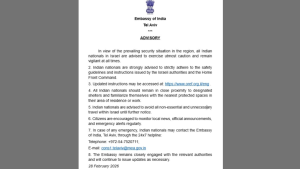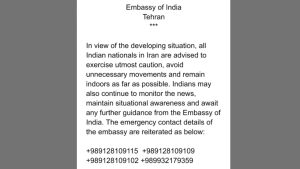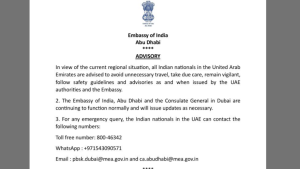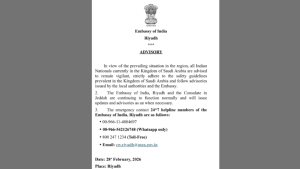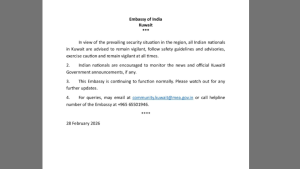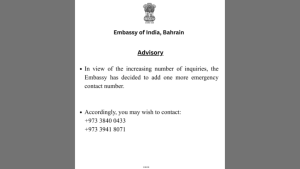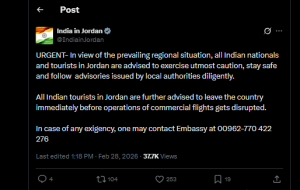


India has issued an advisory for foreign nationals currently in the country after widespread flight disruptions linked to escalating tensions in West Asia left many travellers uncertain about their onward journeys.
On Sunday (March 1, 2026), the Ministry of External Affairs (MEA) urged overseas visitors whose travel plans have been affected to approach the nearest Foreigners Regional Registration Office (FRRO) for assistance with visa extensions or to regularise their stay. The advisory comes amid significant airspace restrictions across parts of the Middle East, which have led to hundreds of cancelled and rerouted flights globally.
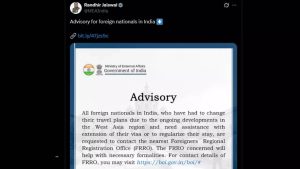
The official advisory reads, “All foreign nationals in India, who have had to change their travel plans due to the ongoing developments in the West Asia region and need assistance with extension of their visa or to regularize their stay, are requested to contact the nearest Foreigners Regional Registration Office (FRRO). The FRRO concerned will help with necessary formalities. For contact details of FRRO, you may visit https://boi.gov.in/boi/”
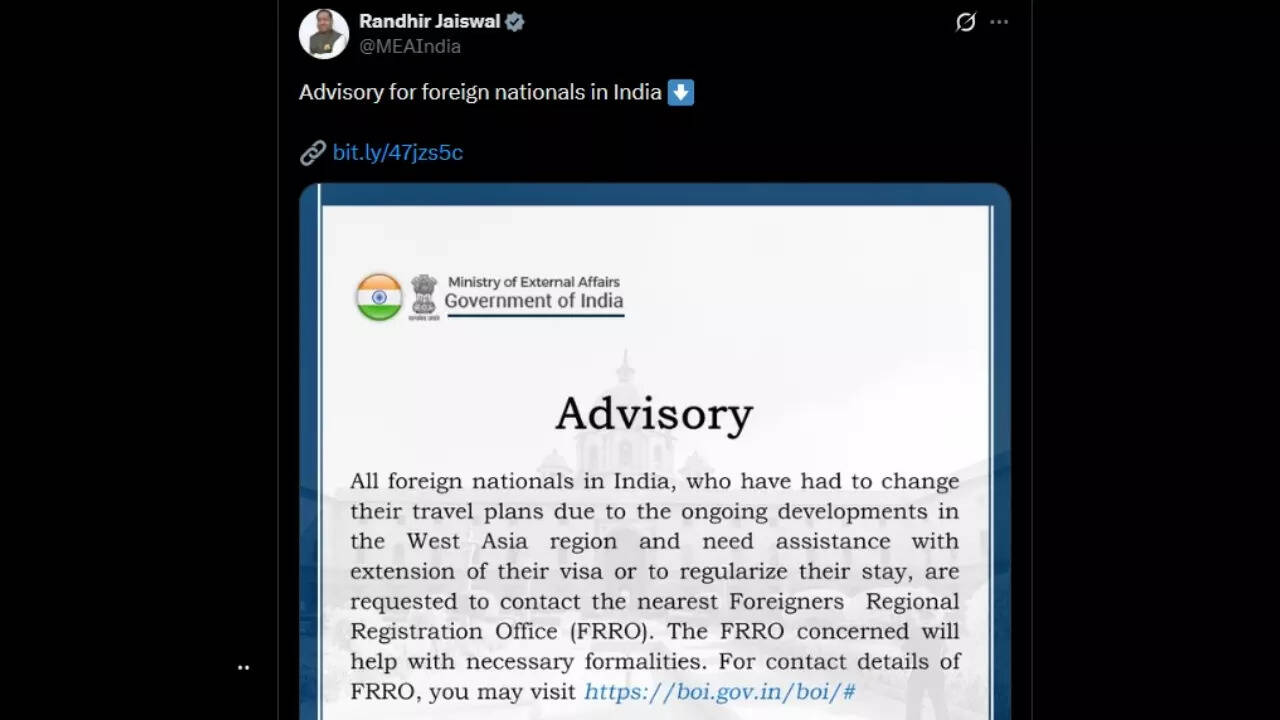
In its communication, the MEA clarified that foreign nationals in India who are unable to depart as scheduled due to the current situation in West Asia can seek support from FRRO offices across the country. Authorities have indicated that the concerned FRROs will facilitate necessary extensions and help travellers comply with visa regulations during this period of uncertainty.
While the government has not provided an official estimate of the number of foreign visitors impacted, travel industry sources suggest that a considerable number of passengers transiting through Gulf hubs have faced sudden cancellations. India is a key stopover and destination for travellers connecting through cities in the Middle East, making it particularly vulnerable to airspace-related disruptions.
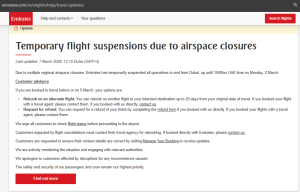
In response to the rapidly changing scenario, airlines operating to and from India have begun suspending services or diverting aircraft to avoid restricted corridors. Air India announced the cancellation of 22 additional international flights scheduled for Sunday, raising the total number of its overseas services called off so far to 50. The airline cited safety considerations and evolving airspace advisories as reasons for the decision.
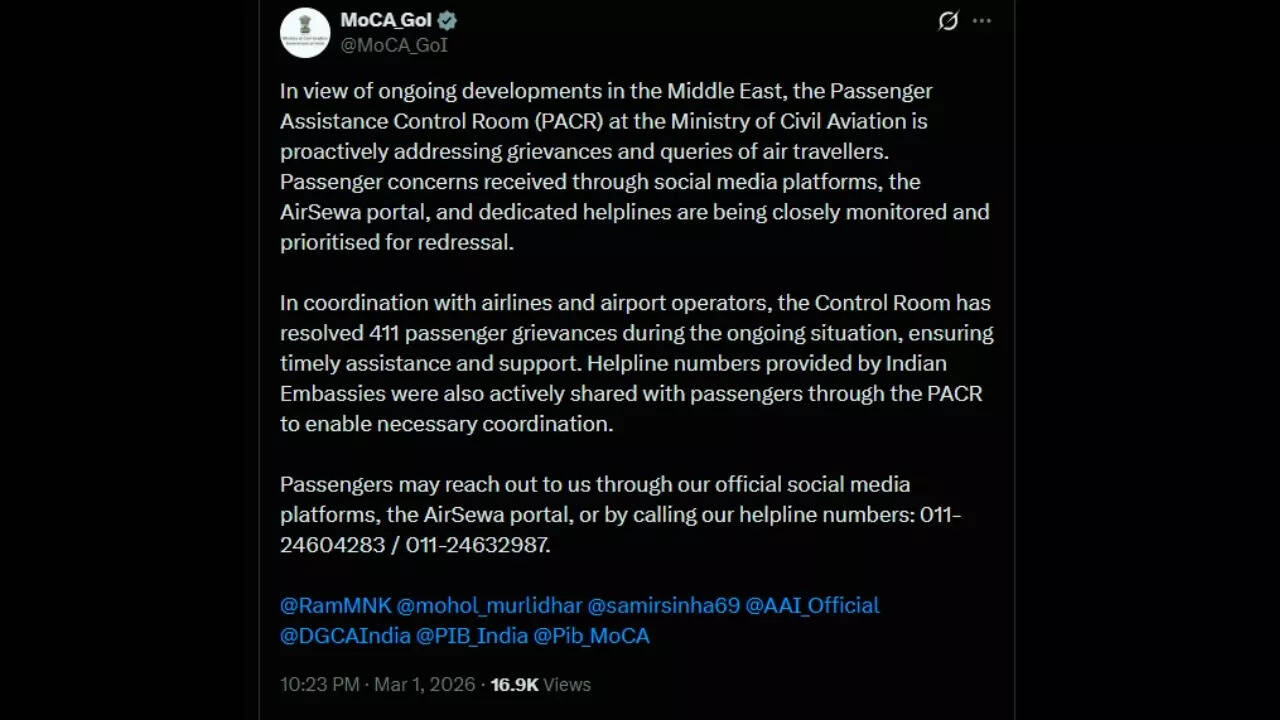
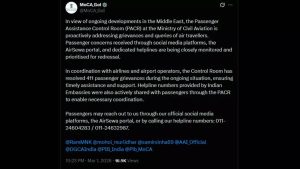
The Ministry of Civil Aviation (@MoCA_GoI) on X released a statement on March 1, 2026, 10:23 PM, that reads, “In view of ongoing developments in the Middle East, the Passenger Assistance Control Room (PACR) at the Ministry of Civil Aviation is proactively addressing grievances and queries of air travellers. Passenger concerns received through social media platforms, the AirSewa portal, and dedicated helplines are being closely monitored and prioritised for redressal. In coordination with airlines and airport operators, the Control Room has resolved 411 passenger grievances during the ongoing situation, ensuring timely assistance and support. Helpline numbers provided by Indian Embassies were also actively shared with passengers through the PACR to enable necessary coordination. Passengers may reach out to us through our official social media platforms, the AirSewa portal, or by calling our helpline numbers: 011-24604283 / 011-24632987.”
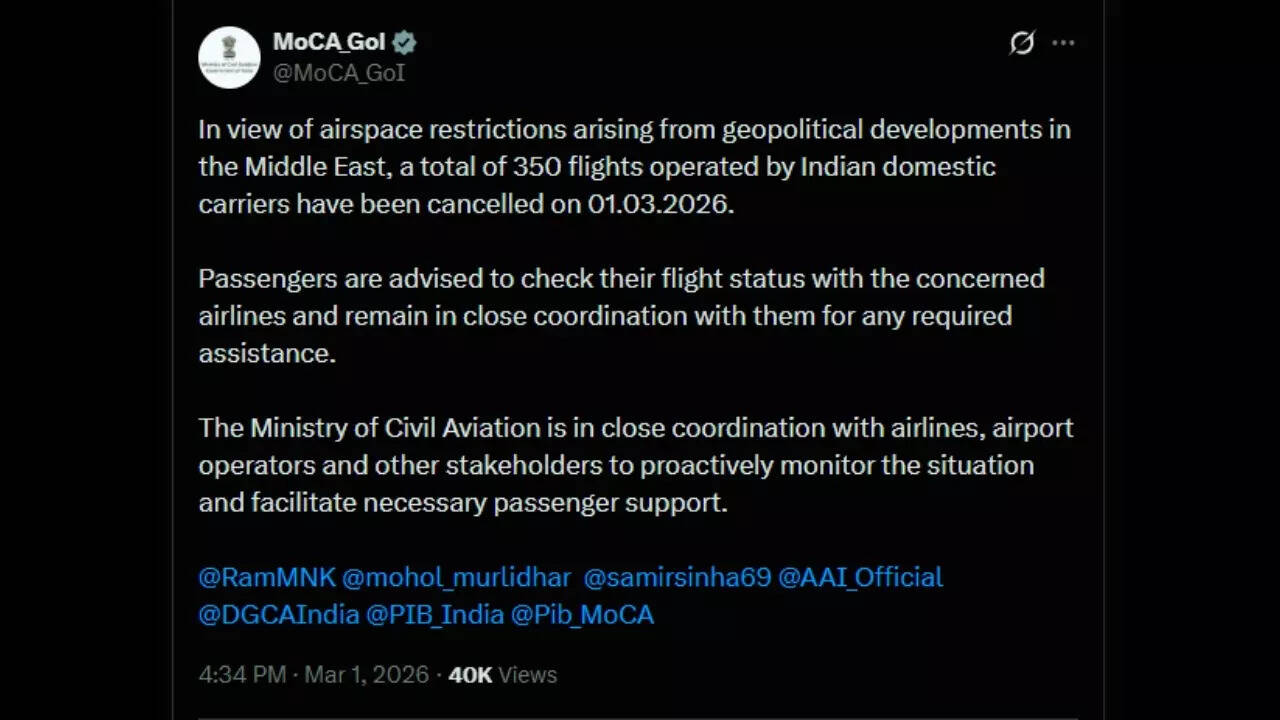
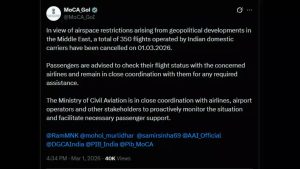
Earlier in the day, the official handle also wrote, “ In view of airspace restrictions arising from geopolitical developments in the Middle East, a total of 350 flights operated by Indian domestic carriers have been cancelled on 01.03.2026. Passengers are advised to check their flight status with the concerned airlines and remain in close coordination with them for any required assistance. The Ministry of Civil Aviation is in close coordination with airlines, airport operators and other stakeholders to proactively monitor the situation and facilitate necessary passenger support.”
The advisory to foreign nationals underscores the government’s attempt to prevent inadvertent visa overstays during a period of exceptional disruption. India’s visa regulations require visitors to maintain valid documentation throughout their stay, and the MEA’s move is aimed at ensuring flexibility under the circumstances.