Lab-Grown Chocolate: A Sustainable Alternative Could Hit Shelves by 2028
California Cultured is developing lab-grown chocolate from cocoa cells, offering a sustainable solution to traditional chocolate’s environmental problems. The company aims to make real, high-quality chocolate affordable and available worldwide by the end of this decade.
Key Takeaways
- Lab-grown chocolate made from cultivated cocoa cells could reach stores by 2028
- Initial price estimated at $15-$20, dropping to conventional levels within four years
- Production takes days instead of months or years required for traditional cocoa
- Technology could also be applied to create lab-grown coffee
The Science Behind Lab-Grown Chocolate
California Cultured’s process begins with cells harvested from cocoa beans. These cells are cultivated in lab plates containing a nutrient and sugar mixture that serves as their “food.” The cells replicate in this environment until there are sufficient quantities for chocolate production – a process taking just days compared to the months or years needed for conventional cocoa farming.
“We’re able to trick the plant cells into thinking it’s still in the ground and we trick the cells into growing infinitely,” CEO Alan Perlstein told the Daily Mail. “After a certain level of growth we’re able to harvest that and transform it into chocolate.”
Taste Test: How Does It Compare?
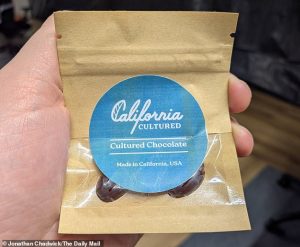
The author sampled a small piece about the size of a coffee bean, noting it melted on the finger like real chocolate – a promising sign of authenticity. The flavor profile was familiar: slightly bitter, not overly sweet, with a faint vegetal tang.
While it didn’t match the complexity of premium chocolate like York Cocoa Works from the UK’s “chocolate city,” it was significantly better than the low-quality chocolate commonly found in advent calendars and chocolate biscuits. The sample was distinctive enough that someone might notice something different, but not obviously identify it as lab-grown.
Global Production Advantages
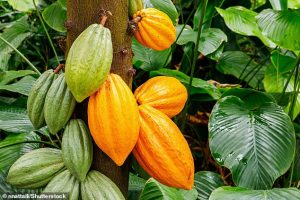
Traditional cocoa production is limited to tropical regions within approximately 20 degrees of the equator, with West Africa dominating commercial production. Lab-grown chocolate can be produced anywhere, potentially closer to consumers.
Perlstein envisions growing chocolate near where people live rather than in distant rainforests, allowing consumers to “see it and understand it” before tasting. This approach blurs the line between laboratory and visitor attraction.
“We’re trying to reinvent this really important ingredient that has not really advanced in over 100 years,” Perlstein told the Daily Mail. “We’re very impatient to bring it to the market.”
Environmental Impact of Traditional Chocolate
Conventional chocolate faces significant sustainability challenges:
- Deforestation: Cocoa cultivation has destroyed much of the world’s untouched tropical forests
- Greenhouse Gases: UK chocolate industry produces about 2.1 million tonnes annually
- Water Usage: Approximately 1,000 liters required to produce one chocolate bar
- Pesticide Contamination: Chemicals sprayed on crops lead to environmental contamination
These issues are exacerbated by high chocolate demand, which drives up prices and pushes manufacturers toward cheap additives like palm oil.
Lab-grown chocolate offers a promising alternative that could revolutionize the industry while addressing critical environmental concerns. As California Cultured works toward its 2028 market debut, consumers may soon have access to sustainable chocolate that doesn’t compromise on quality.