

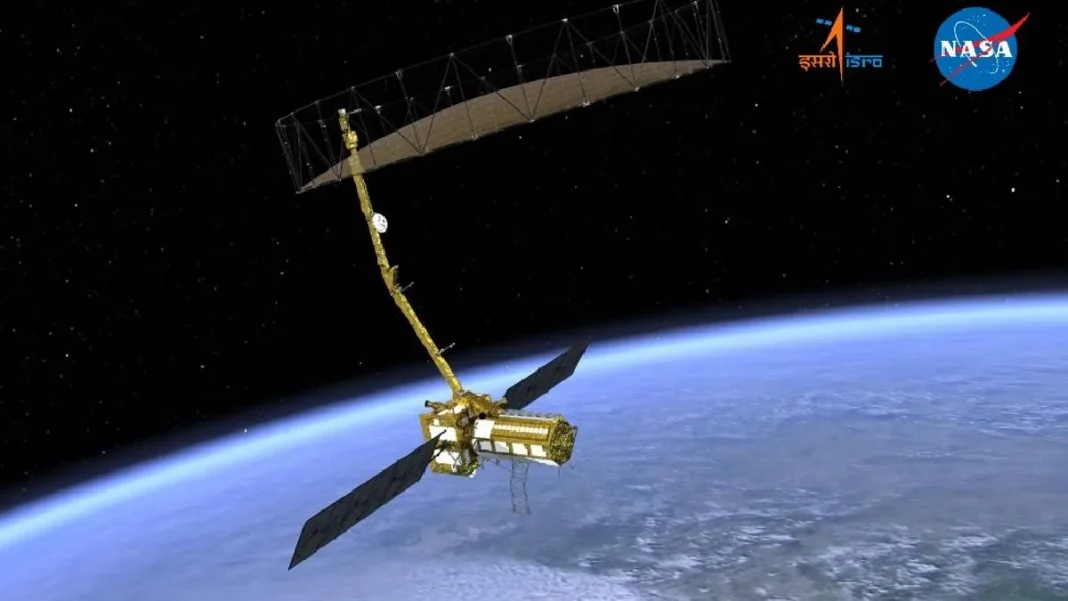
ISRO-NASA’s NISAR Satellite Goes Operational November 7
ISRO Chairman V Narayanan announced that the groundbreaking NASA-ISRO Synthetic Aperture Radar (NISAR) satellite will be declared fully operational on November 7, marking a major milestone in international space collaboration.
Key Takeaways
- NISAR satellite declared operational on November 7, 2024
- Most expensive Earth observation satellite ever built
- Monitors global land and ice surfaces twice every 12 days
- First satellite with dual L-band and S-band radar systems
- Gaganyaan uncrewed mission scheduled for January
The 2,400 kg satellite, launched on July 30 using ISRO’s GSLV rocket, has completed all data calibration procedures. “Entire data calibration has been completed, and we will have a conclave on November 7 to declare the satellite operational,” Narayanan confirmed at the Emerging Science, Technology and Innovation Conclave.
He emphasized the satellite’s exceptional performance, stating: “All the data is very outstanding… it is going to be a highly useful satellite.”
Advanced Dual-Band Radar Technology
NISAR represents a technological breakthrough as the first satellite to carry both L-band and S-band Synthetic Aperture Radar systems. This dual-band configuration enables comprehensive Earth monitoring through clouds and precipitation, operating day and night.
- L-band radar: Provides deep penetration for measuring soil moisture, forest biomass, and surface movements
- S-band radar: Sensitive to small vegetation, agricultural ecosystems, and snow moisture content
Gaganyaan and Space Station Updates
Narayanan also provided significant updates on India’s ambitious space programs:
Gaganyaan Mission: The first uncrewed test flight is scheduled for January, with three total uncrewed missions planned before the crewed launch targeted for 2027. Over 8,000 tests have already been conducted for the human spaceflight program.
Indian Space Station: ISRO aims to launch the first module by 2028, with complete operational capability by 2035. The 52-ton facility will support 3-4 astronauts for extended missions, positioning India among elite spacefaring nations.


