

UK’s First Neuralink Patient Controls Computer With Thoughts
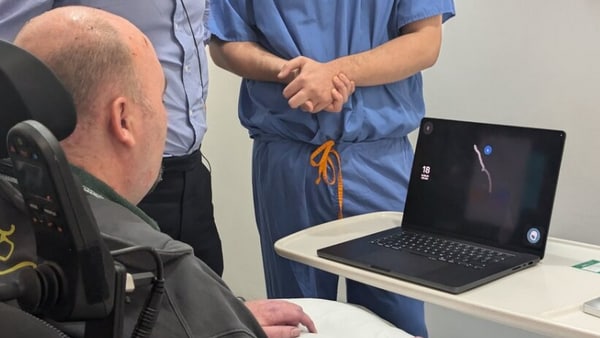
A man paralyzed by motor neuron disease has become the first UK recipient of a Neuralink brain implant, gaining the ability to control a computer using only his thoughts just hours after surgery.
Key Breakthrough
Neuralink Corp., Elon Musk’s brain-computer interface company, announced the milestone on Monday via X. The patient, named Paul, received his implant at University College London Hospitals earlier this month.
“Paul, who is paralyzed due to motor neuron disease, received his Neuralink implant at UCLH earlier this month and was able to control a computer with his thoughts just hours after surgery,” the company stated.
He’s now collaborating with engineers to explore using the implant for playing favorite video games like Dawn of War and performing other daily tasks that could “enrich and restore autonomy in his daily life.”
Expanding Clinical Research
This development follows Neuralink’s July announcement about launching clinical studies in Great Britain through partnerships with University College London Hospitals and Newcastle Hospitals.
What is Neuralink?
Neuralink develops brain-computer interfaces enabling direct communication between the brain and electronic devices. Despite raising over $1 billion and reaching a $9 billion valuation, the company hasn’t yet published peer-reviewed human data that would allow independent evaluation of its technology.
Future Ambitions
The company aims to implant its chips in 20,000 people annually by 2031, targeting at least $1 billion in yearly revenue.
Michael Lawton, CEO of Barrow Neurological Institute (a Neuralink trial site), noted the company has “a vision to apply a link to just about anybody who could have a possible need for it,” while emphasizing they remain “a long way” from healthy person applications and remain focused on “diseased patients with disability.”
Broader Applications
Beyond computer control, Neuralink is developing technology for multiple conditions:
- Restoring vision for the blind
- Reading speech directly from the brain
- Treating Parkinson’s disease
The company plans an October trial for speech-impaired individuals, enabling “directly from brain to voice without any keyboards in between,” according to President Dongjin “D.J.” Seo.
“If you’re imagining saying something, we would be able to pick that up,” Seo told audiences at the Korea Advanced Institute of Science and Technology in Seoul.