
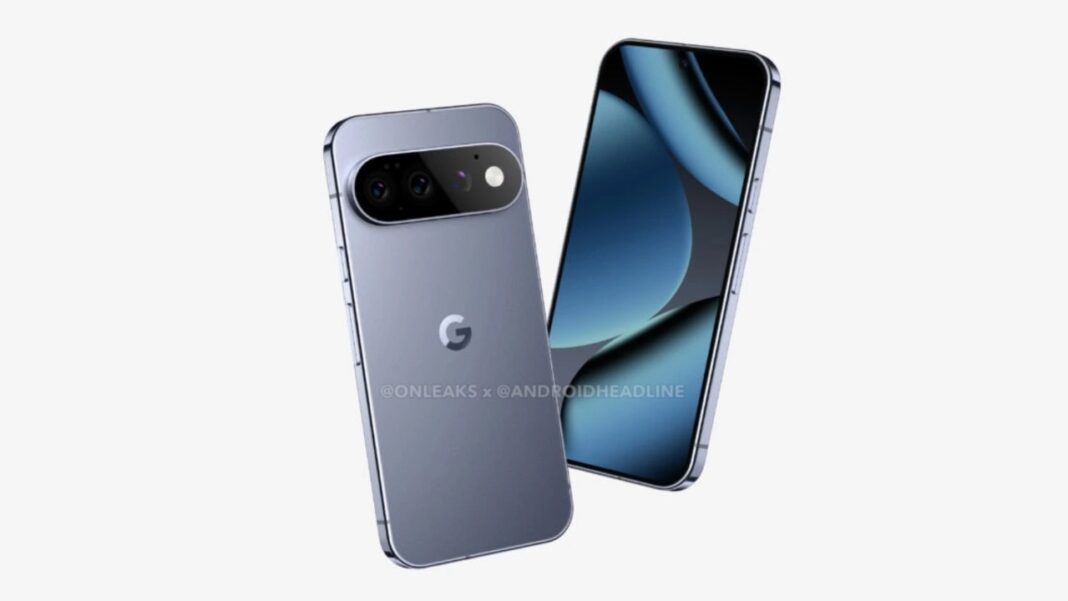
Last year, Google introduced the Pixel 10 series in August, and this year is expected to follow a similar timeline with the launch of the Pixel 11 series. Like its predecessor, the lineup could include four models: the standard Pixel 11, Pixel 11 Pro, Pixel 11 Pro XL, and the foldable Pixel 11 Pro Fold. Notably, this time instead of upgrading RAM, the new series may see a reduction in RAM capacity due to the ongoing global memory shortage. However, reports suggest the lineup could still bring improvements in other areas, including the chipset, display, and cameras.
Google Pixel 11 series design
The Pixel 11 series is expected to stick with the same flat metal frame design as its predecessor, giving it that familiar premium in-hand feel. The back will likely continue to use glass, but there’s also talk of a new feature called “Pixel Glow.” It’s said to work somewhat like Nothing’s Glyph lighting system, and while it has appeared in the Android 17 beta code, not much is known about how it will actually function yet.
As for the Pixel 11 Pro XL, it seems to follow the same overall design language as the rest of the lineup. Leaked renders suggest a slightly refined camera module, dropping the body-coloured accents in favour of a cleaner, all-black look — something that also appears in renders of the Pixel 11 and Pixel 11 Pro.
Google Pixel 11 series camera
The standard Pixel 11 is likely to feature a 50-megapixel primary camera, an upgrade over the Pixel 10, which comes with a 48-megapixel main sensor, a 13-megapixel ultra-wide lens, and a 10.8-megapixel 5x telephoto camera.
While details around the Pixel 11 series cameras remain under wraps, a look at the previous generation offers some perspective on what to expect. The Pixel 10 Pro and Pixel 10 Pro XL arrived with identical triple-camera setups, featuring a 50-megapixel primary sensor, a 48-megapixel ultra-wide lens, and a 48-megapixel 5x telephoto camera.
Meanwhile, the Pixel 10 Pro Fold took a 48-megapixel main sensor, paired with a 10.5-megapixel ultra-wide and a 10.8-megapixel 5x telephoto lens.
Google Pixel 11 series processors
The Google Pixel 11 series may be powered by the company’s yet-to-be-announced Tensor G6 chipset, which is reportedly built on TSMC’s advanced N2 process. The Tensor G6 may also include a MediaTek M90 modem and a new Titan M3 security chip.
A recent report of Android headlines suggests the Pixel 11 is tipped to launch with a base configuration of 8GB RAM, a step down from the 12GB offered on its predecessor. Meanwhile, the Pixel 11 Pro, Pro XL, and Pro Fold could start at 12GB RAM, replacing the current 16GB base variants. Although 16GB options are still expected, the introduction of lower-tier models may push the prices of higher-end configurations further up.
Google Pixel 11 series display and battery
The Pixel 11 series is expected to bring a range of display upgrades across the lineup. The standard Pixel 11 is tipped to feature a 6.3-inch OLED panel with FHD+ resolution, a 120Hz refresh rate, and peak brightness of up to 2,200 nits.
The Pixel 11 Pro is likely to retain a 6.3-inch QHD+ OLED display, while the Pro XL could sport a larger 6.8-inch QHD+ panel—both offering 120Hz refresh rates and peak brightness levels of up to 2,450 nits.
Meanwhile, the Pixel 11 Pro Fold is said to include a 10802342 OLED outer screen and a 20762160 OLED inner display, both supporting 120Hz refresh rates.
In terms of battery, the Pixel 11 is expected to pack a unit with a minimum capacity of 4,840mAh. The Pixel 11 Pro and Pro XL are tipped to feature batteries rated at a minimum of 4,707mAh and 5,000mAh, respectively. The foldable Pixel 11 Pro Fold could come equipped with a battery offering a minimum capacity of 4,658mAh.


