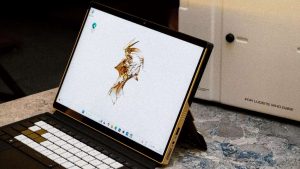

The design brief behind the ROG Flow Z13-KJP started with one question: what would Ludens carry? Not what specs should it have, not what price bracket it should hit—but what kind of device would Kojima Productions’ fictional astronaut-knight mascot strap to his suit before a spacewalk? That question shaped every surface, every material, every etching on this tablet. And it’s what makes the Z13-KJP feel fundamentally different from any gaming laptop you’ve held before.
Ludens—for the uninitiated—is Kojima Productions’ company icon, a figure in an EVA suit designed by Hideo Kojima and artist Yoji Shinkawa. The character represents “those who play,” and his armour blends the silhouette of a medieval knight with the functionality of a space explorer. When Asus approached Kojima Productions for this collaboration, it was Shinkawa who took the lead on the tablet’s physical design.
He didn’t approve mood boards or sign off on colour swatches. He picked up a pencil and sketched the chassis himself.
CNC-cut armour plating, carbon fibre panels, and vents that look hand-drawn
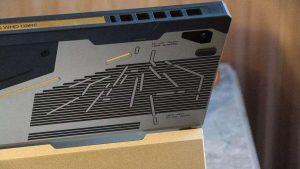
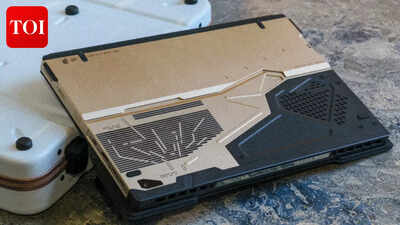
The result is a tablet that looks like equipment, not electronics. Flip it over and the rear panel is CNC-milled aluminium carved with deep, angular cutouts—sharp diagonals and exposed structural lines that mirror the segmented plating on Ludens’ EVA suit. These aren’t decorative. They follow the same mechanical design language Shinkawa uses when he illustrates exoskeletons and mech joints in his concept art.
A strip of carbon fibre sits between the metal sections, breaking up the surface the way layered materials would on actual protective gear.
Run your fingers across it and you feel the depth of those cuts. This isn’t a flat lid with some laser work on top. It’s a chassis that was sculpted to feel armoured.
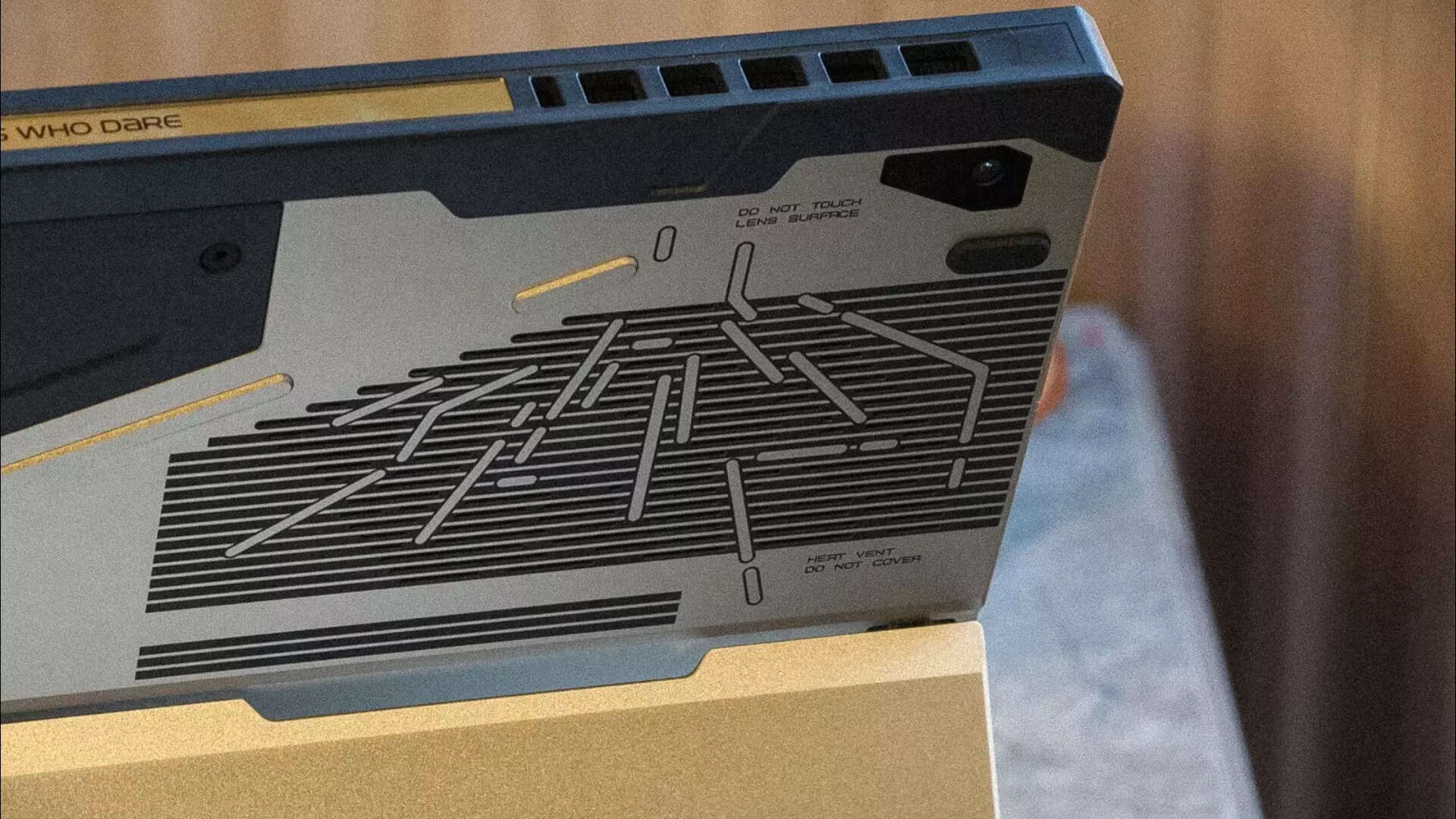
The ventilation grilles push the fiction further. Where most gaming laptops go with aggressive slashes or honeycomb patterns, the Z13-KJP’s vent etching has an almost sketched quality—loose, technical, like annotations from Shinkawa’s drawing table that were never cleaned up for production. Stencilled text alongside them reads “FROM SAPIENS TO LUDENS,” right next to “CAUTION: HEAT VENT—DO NOT COVER” and “DO NOT TOUCH LENS SURFACE,” all formatted like safety markings on a spacecraft hull. It’s worldbuilding through industrial design. You half expect to find a serial number linking this unit to a fictional space programme.
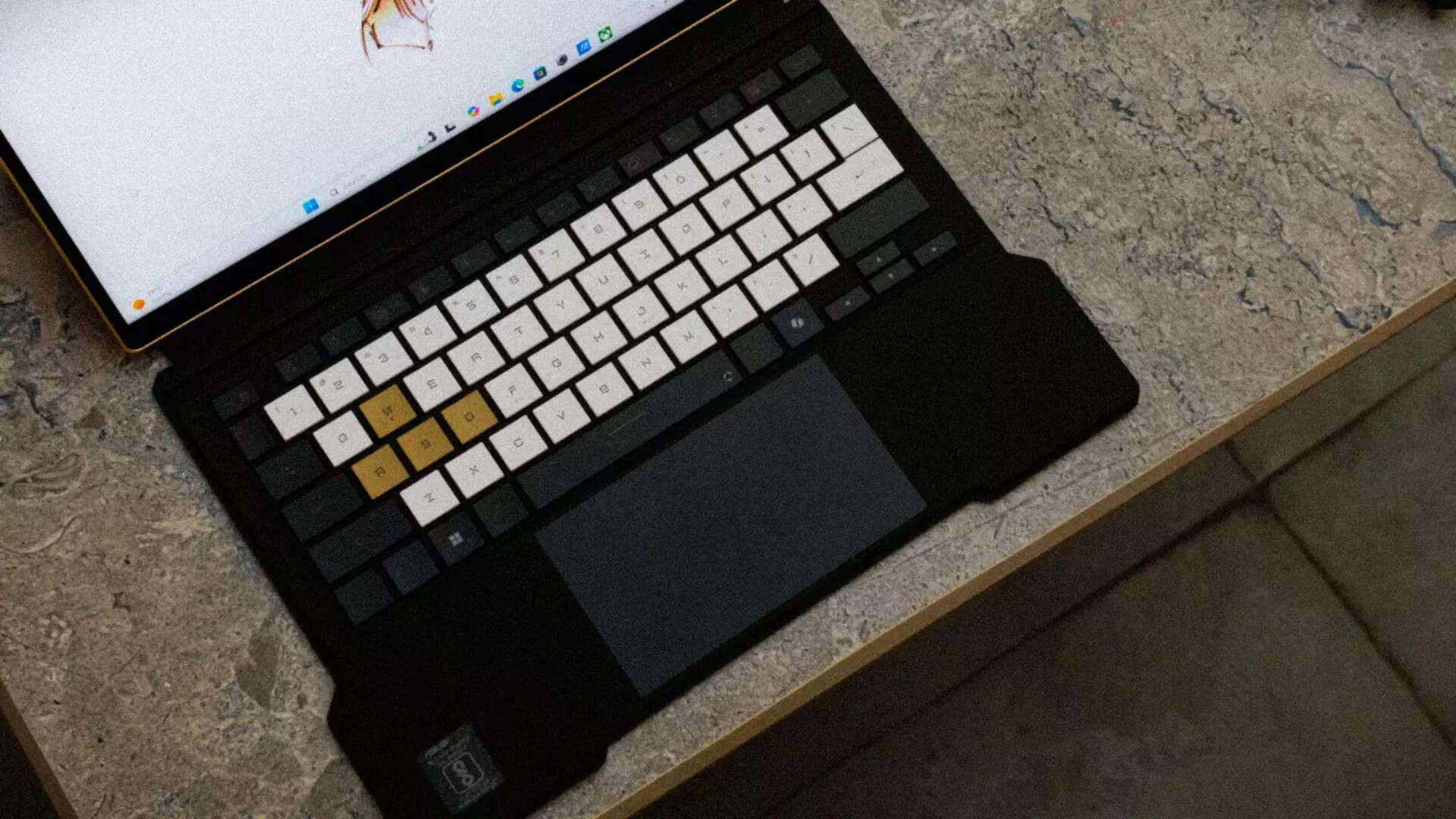
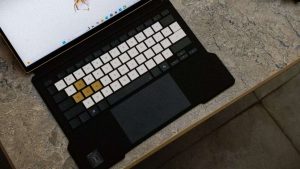
The keyboard continues the theme with custom keycaps in a blocky, industrial typeface—no trace of ROG’s standard font. Single-zone RGB backlighting keeps things muted. The colour palette across the entire device stays in golds, matte blacks, and gunmetal greys. Shinkawa’s visual language lives in ink washes and earth tones, and the Z13-KJP honours that completely. Nothing here is trying to scream gamer. Everything is trying to whisper astronaut.
From the power adapter to the flight tag, the spacewalk fiction never breaks
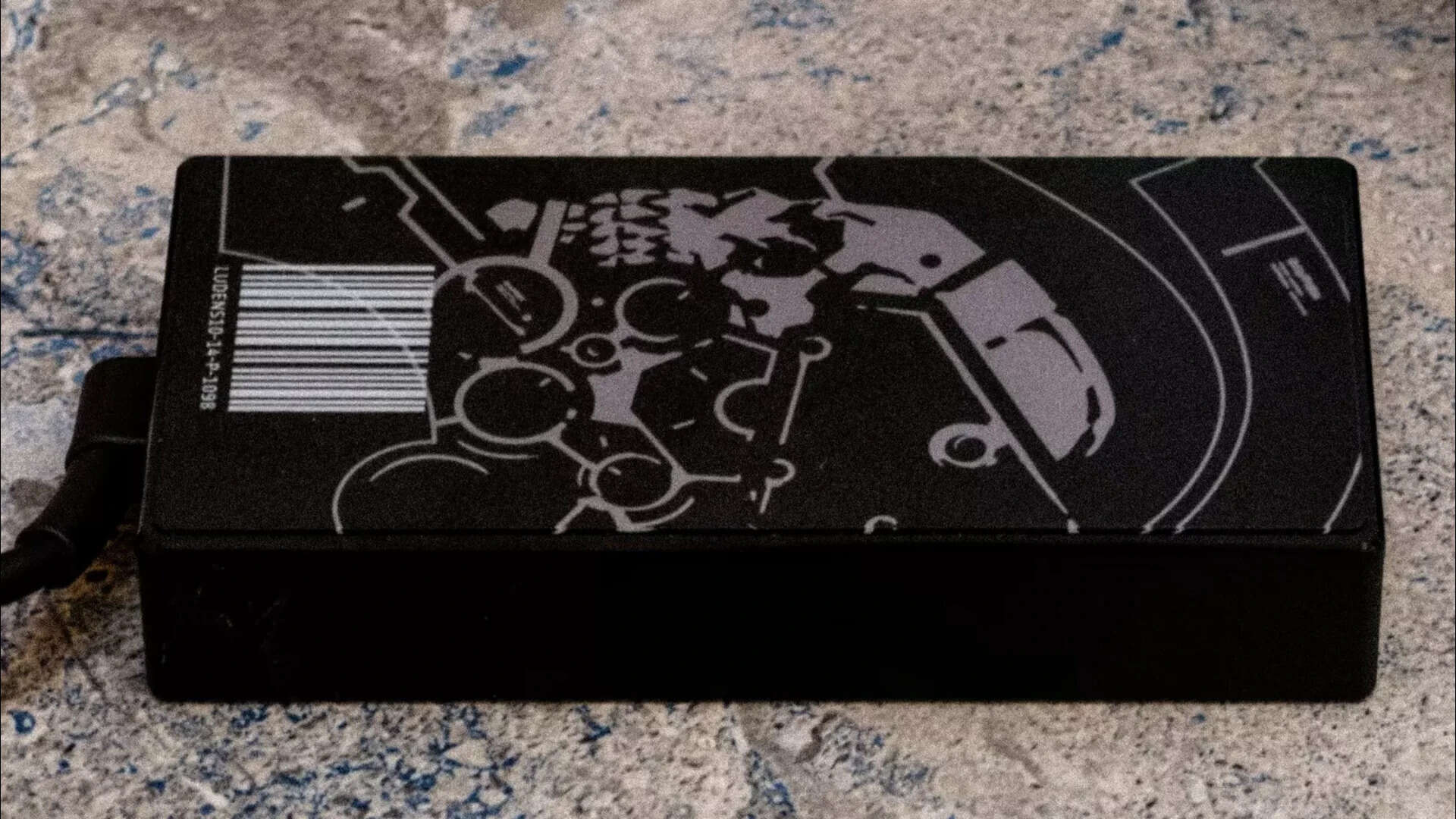
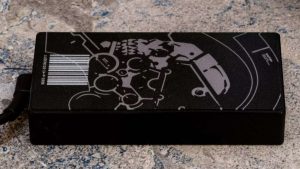
What separates the Z13-KJP from the usual co-branded limited editions is how far the design thinking extends beyond the tablet itself. The 200W power adapter—the single most boring object in any laptop box—wears Kojima Productions’ skull logo in Shinkawa’s brushstroke style against matte black. It looks like something you’d find in a mission kit.
The carrying case was designed around the same narrative. It’s not a generic laptop sleeve with a logo patch. It was conceived as a protective transport pod—the kind of hard-shell case an astronaut might clip to a suit before heading out an airlock. Even the packaging is themed.
Inside, there’s a flight tag co-branded with ROG and Kojima Productions, “FOR LUDENS WHO DARE” stamped on the reverse. A set of exclusive stickers. And a thank-you card that’s worth more than a passing glance—Shinkawa’s rough pencil sketches of the tablet on the front, personal messages from Kojima and Shinkawa on the back. It’s the kind of insert you’d pin above a desk, not toss in a drawer.
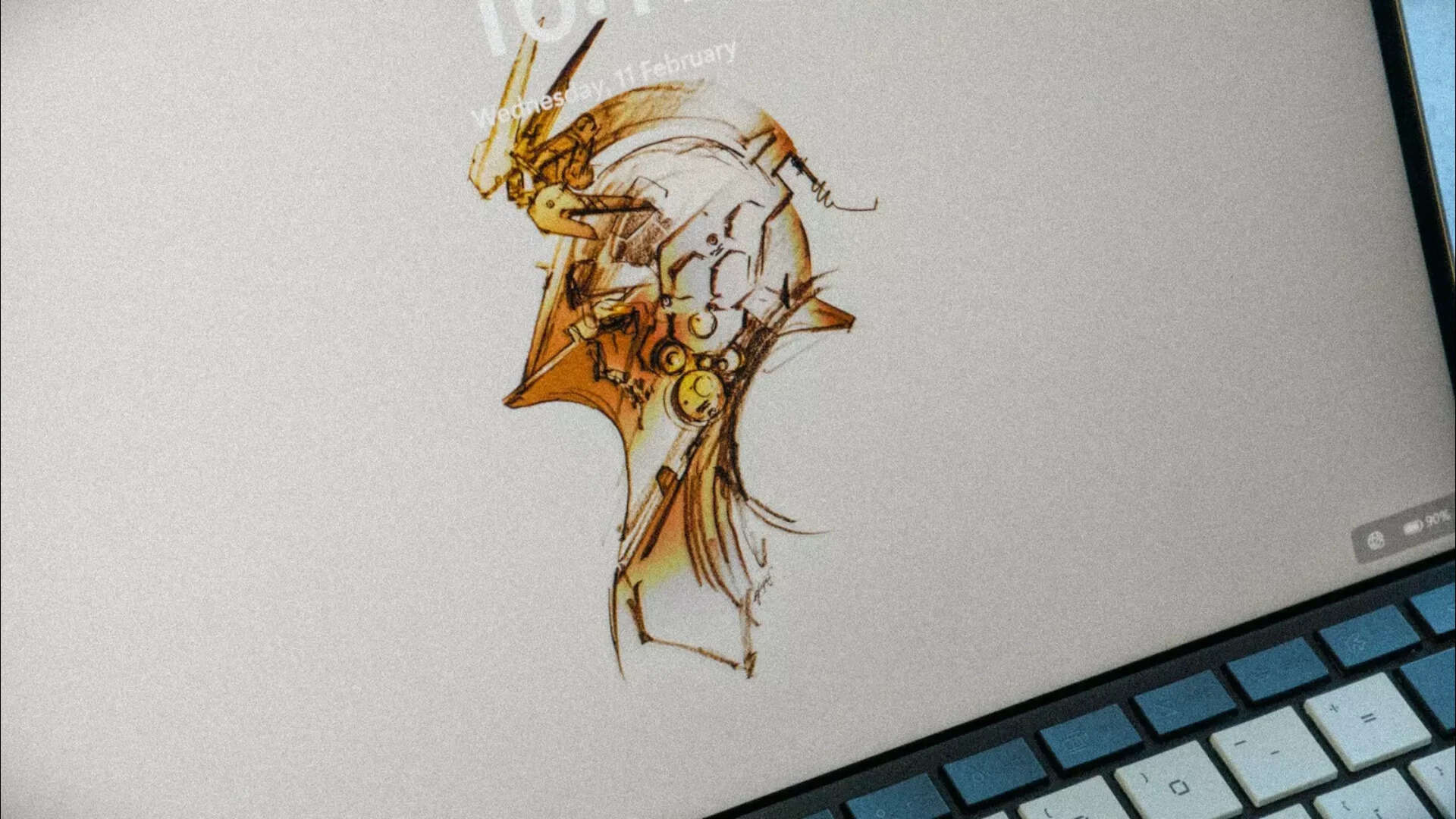
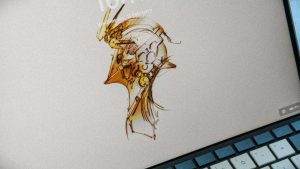
Boot up the machine and the fiction stays alive. A wallpaper illustrated by Shinkawa loads by default. A custom Armoury Crate theme reskins the system utility to match the KJP aesthetic. A Steam code for Death Stranding 2: On the Beach sits inside Armoury Crate, waiting to be redeemed at first boot.
From the outer box to the home screen, every touchpoint has been art-directed by the same hand. That kind of consistency is rare at any price.
Underneath the astronaut armour, there’s serious hardware
The Z13-KJP runs AMD’s Ryzen AI Max+ 395—16 Zen 5 CPU cores, 40 RDNA 3.5 GPU compute units, Radeon 8060S graphics, 50 TOPS of NPU. Where things get interesting is the memory. Traditional laptops split RAM between the CPU and GPU. The Z13-KJP doesn’t. Instead, it draws from a unified 128GB pool of LPDDR5X-8000 quad-channel memory that shifts dynamically between the two depending on what you’re doing. Then, there’s 1TB of PCIe 4.0 NVMe storage.
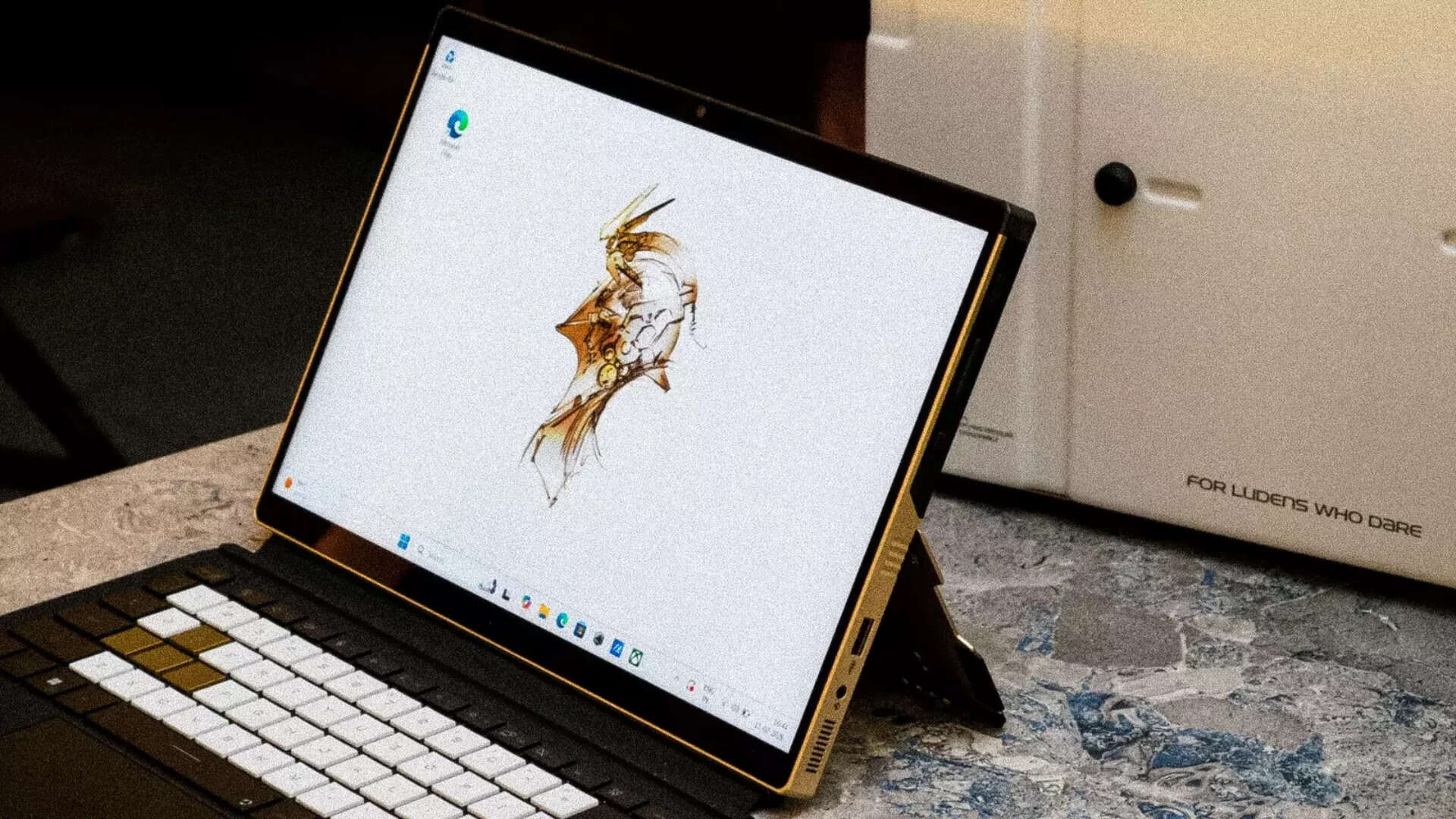
The display keeps pace. A 13.4-inch 2.5K Nebula panel running at 180Hz, with full DCI-P3 coverage, 500 nits of brightness, Pantone validation, Dolby Vision, and Gorilla Glass DXC handling glare. Touch and stylus are both supported—this is still a tablet, after all. Cooling is where the tablet form factor quietly works in the Z13-KJP’s favour. No hinge means more room inside, so Asus has fitted oversized 68mm fans and a stainless steel-copper vapour chamber.
Port selection is unusually generous for this form factor: two USB4 ports with DisplayPort 2.1 and PD 3.0, a USB-A port, HDMI 2.1, a microSD slot hidden under the kickstand, and Wi-Fi 7. There’s a 70Wh battery that charges over USB-C and the speeds are fast enough to hit 50% in half an hour, which matters for a device that’s clearly built to leave the desk.
Spec for spec, the Z13-KJP reads like a machine that takes its tablet form factor seriously—not as a compromise, but as the point.
The real question is who this is for
At Rs 3,79,990, the Z13-KJP is a big ask. But what’s already clear is that the design story here isn’t surface-level. Shinkawa’s sketches became the chassis. The spacewalk fiction shaped everything from the carrying case to the vent markings. Now it’s on the hardware to keep up.
And we’ll be putting it through its paces to find out—but that’s for later. Could you get similar hardware for less? Probably. But that isn’t the proposition here. Not many machines look like this, feel like this, or unbox like this. You’re paying for Shinkawa’s craft—whether that level of craft matters enough at this price, and to whom, is worth thinking about.