

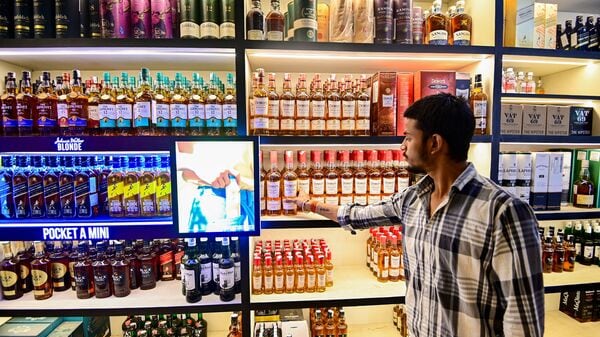
Liquor stocks, including United Breweries, United Spirits, Tilaknagar Industries, and Radico Khaitan, gained in Friday’s session, March 6, with each stock surging between 4% and 7% at their intraday highs after the Karnataka government announced a shift to a global taxation standard and the complete deregulation of alcohol pricing while presenting the state budget.
Karnataka, which is one of the largest states in India, is also among the biggest markets for alcoholic beverages, with its large base of young professionals and multinational workforce driving demand for premium brands.
Presenting the state budget in the Assembly, Chief Minister Siddaramaiah said the government would modernise the state’s decades-old excise framework and introduce reforms aimed at improving transparency, compliance, and ease of doing business.
Excise reforms and pricing deregulation
Karnataka is planning to introduce an alcohol-in-beverage-based excise duty structure that taxes alcohol based on its strength and reduces pricing categories to eight from 16, while allowing producers to decide prices.
“An Alcohol-in-Beverage (AIB)-based excise duty structure is globally recognised as the gold standard for alcohol taxation, as it directly targets the alcohol content, which is the primary source of negative externalities,” he said.
This will be introduced from April 2026, Siddaramaiah added. The new system will gradually replace the current duty structure and rationalise pricing across alcoholic beverages, according to the Chief Minister.
In Karnataka, the government controls retail alcohol pricing. Manufacturers declare ex-factory prices, based on which the state fixes the maximum retail price.
The state has among the highest alcohol taxes in India, with liquor classified into multiple price sections, each attracting an additional excise duty.
India is the world’s eighth-largest alcohol market with annual revenues of $45 billion, and each state has its own regulations and pricing structure.
The government has also introduced technology-driven systems to curb leakages and improve monitoring of liquor movement across the state.
The government reported a 12.7% growth in excise revenue for the current fiscal year, reaching ₹36,492 crore by February. For the 2026-27 financial year, the state has set an ambitious revenue target of ₹45,000 crore.
Further, it has set a revenue collection target of ₹29,000 crore for stamps and registration, ₹15,500 crore from motor vehicles, and ₹11,000 crore from royalty on mines for the financial year 2026-27.
(With inputs from Reuters)
Disclaimer: We advise investors to check with certified experts before making any investment decisions.


