
The escalation of the conflict between the US, Israel and Iran in early 2026 has brought the world to a precarious scientific crossroads.
Following the intensified military strikes of Operation Epic Fury and the shifting power dynamics in Tehran this March, the technical reality of a nuclear exchange might no longer be confined to physics textbooks.
If the current regional volatility crosses the atomic threshold, the resulting chain reaction would trigger a sequence of environmental and biological events that the Earth has not experienced since the end of World War II.
HOW DO NUCLEAR WEAPONS WORK?
At the heart of a nuclear explosion lies the principle of mass energy equivalence, famously described by Albert Einstein as E = mc2.
Here, E represents energy, m stands for mass, and c is the symbol for the speed of light.
In simple terms, this means that matter and energy are just two versions of the same thing.
Think of mass as super-concentrated energy; when you break the bonds of an atom, a tiny bit of that mass disappears and turns into a giant explosion.
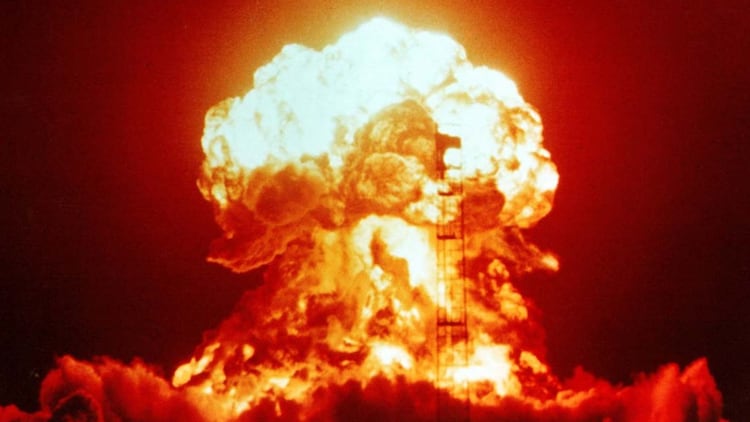
Since c, which is the speed of light, is so huge, even a speck of dust’s worth of matter can create a blast that perishes a city. Most modern warheads are thermonuclear, meaning they use a two-stage process: fission and fusion.
Fission is the process of splitting a heavy, unstable atom into smaller pieces. In the first stage of a weapon, a highly explosive shell compresses Plutonium-239, a radioactive metal specifically made to be fissile, or easy to split.
This compression forces the plutonium into a state of supercriticality. To understand this, imagine a room full of people.
If they are standing far apart and one person throws a ball, the others will likely miss the ball.
But if you pack them so tightly together that they are shoulder to shoulder, and then throw a ball, it is guaranteed to hit someone, which then bumps two more people, creating an instant, unstoppable chain reaction.
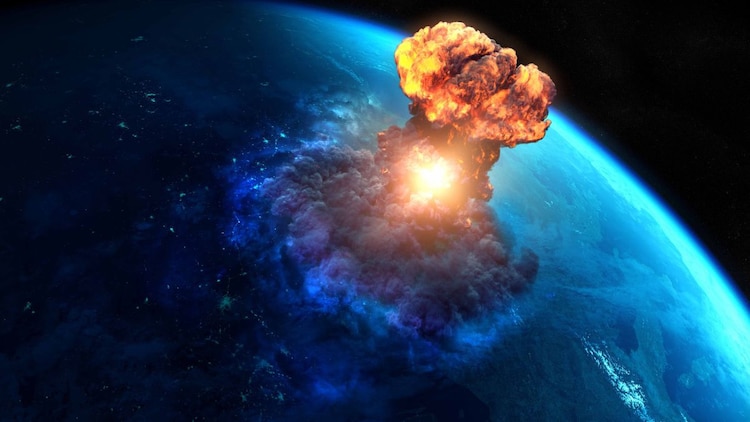
Supercriticality is a state in nuclear physics where a nuclear chain reaction is self-sustaining and growing.
In a nuclear bomb, this ensures that once the first atom splits, its neutrons, or neutral particles inside the nuclei, have no choice but to hit other atoms immediately.
This triggers a flood of energy in mere nanoseconds, releasing a burst of gamma rays, or high-energy light.
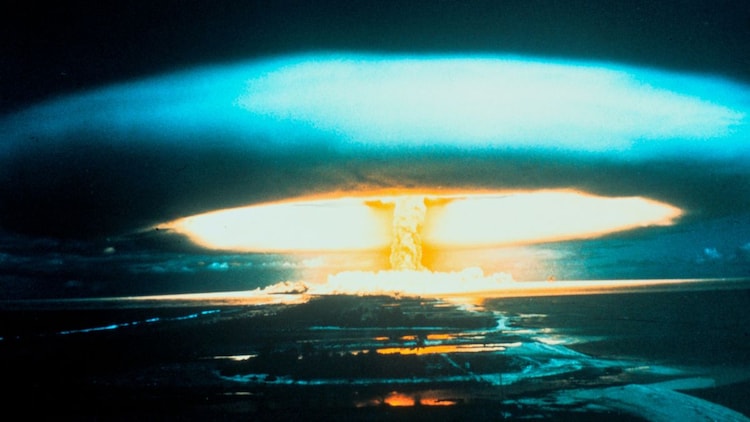
According to the Atomic Archive, this initial energy then triggers the second stage, often called the Teller Ulam configuration.
The second stage is fusion, which is the polar opposite of fission.
The intense heat from that first fission spark is used to crush isotopes of hydrogen, specifically deuterium and tritium, until they join together.
Isotopes are simply versions of the same element that have different numbers of neutrons.
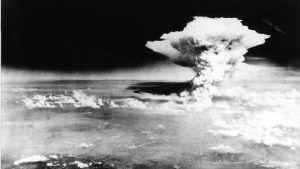
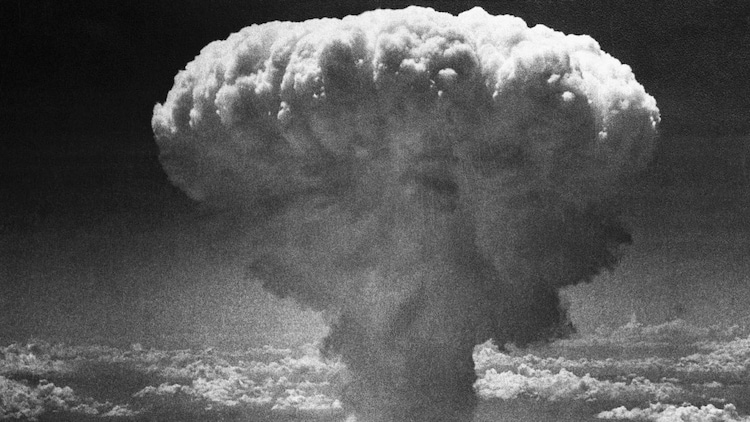
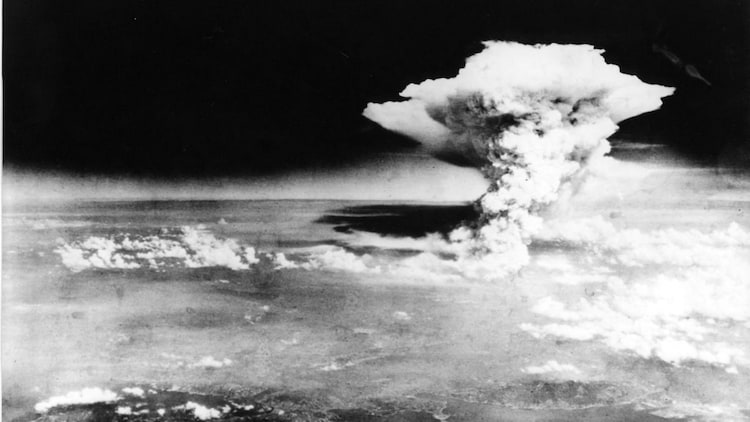
When these hydrogen isotopes fuse to form helium, they release energy thousands of times more powerful than the Little Boy bomb dropped on Hiroshima in 1945.
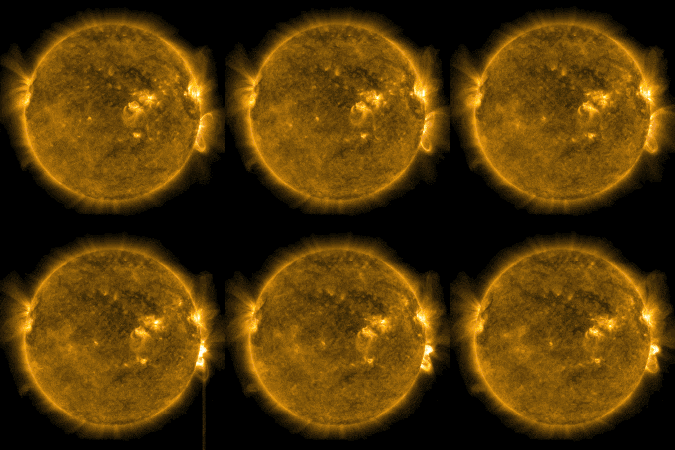
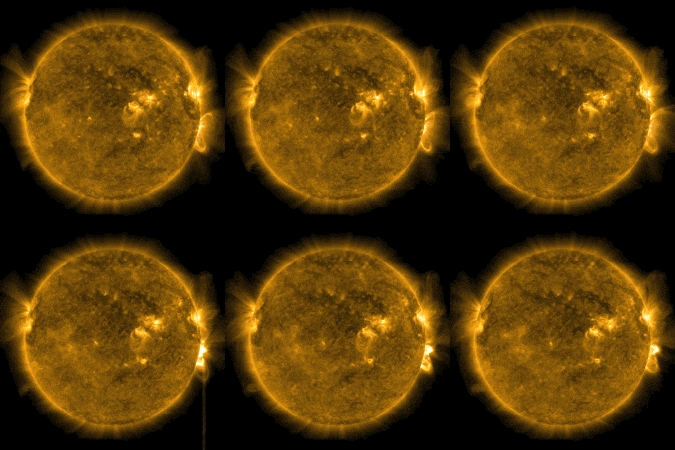
This process, known as stellar nucleosynthesis, is the exact same reaction that powers the Sun.
WHAT HAPPENS WHEN A NUCLEAR BOMB EXPLODES?
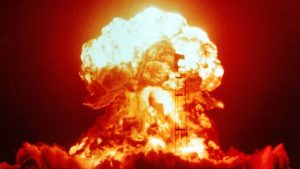
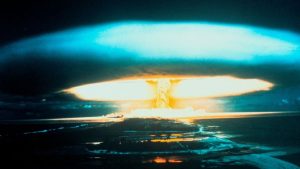
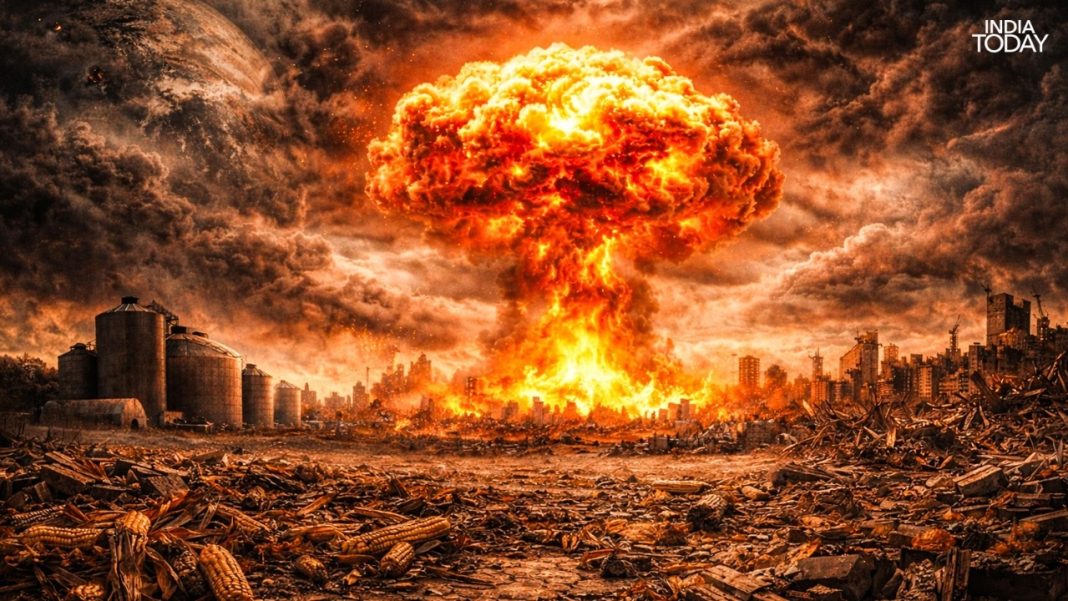
The moment a nuclear device detonates, it creates a fireball that reaches temperatures up to millions of degrees Celsius.
This thermal radiation travels at the speed of light, which means victims are burned before they even hear the explosion.
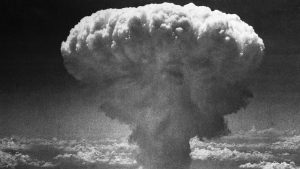
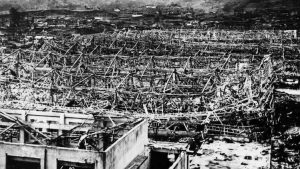
In Hiroshima and Nagasaki, this heat was so intense it created permanent shadows of objects and people on concrete walls.
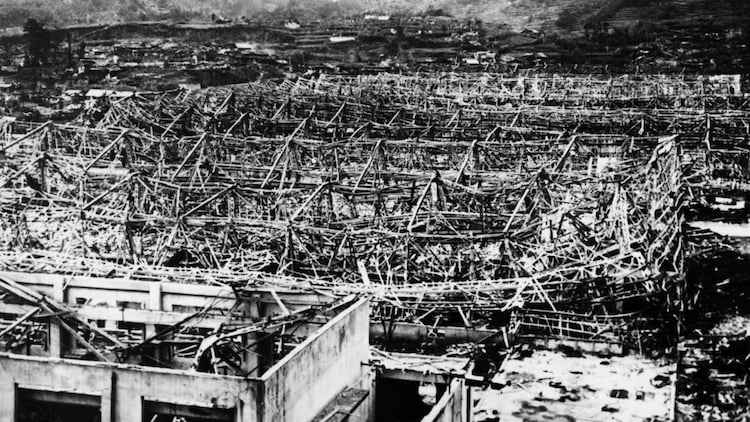
The thermal radiation is followed by a supersonic blast wave, which is a violent, high-pressure shock wave moving faster than sound.
Physics dictates that as the air is heated rapidly, it expands outward, creating a high pressure front that can destroy concrete buildings for kilometres.
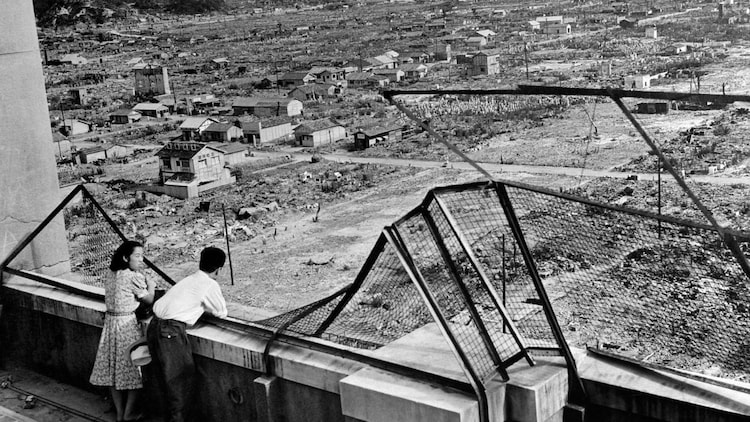
Research from the Radiation Effects Research Foundation shows that the combination of the heat and the pressure wave accounts for the vast majority of immediate casualties in an urban strike.
Furthermore, an electromagnetic pulse would instantly disable the silicon-based infrastructure of modern electronics.
WHAT IS NUCLEAR WINTER?
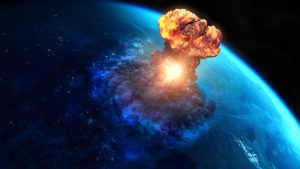
The most significant long-term threat is not the blast itself but the atmospheric consequences.
A study published in the journal Nature Food reveals that if cities in the Middle East were to burn due to a nuclear war, they would release roughly 5 million tonnes of black carbon soot into the stratosphere.
Unlike normal smoke, this soot is pushed above the clouds where it cannot be washed away by rain.
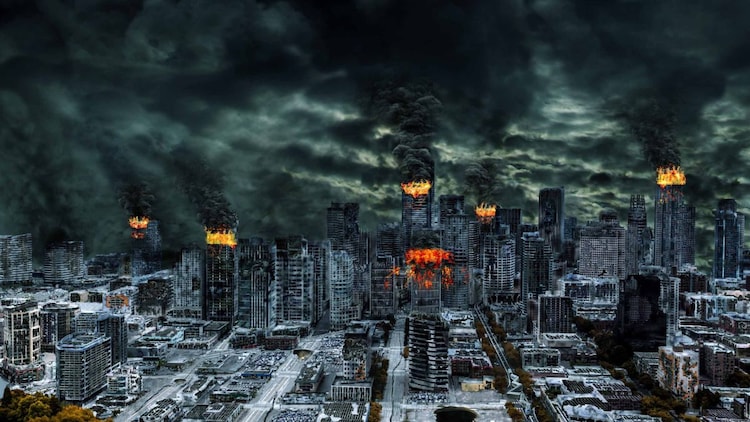
It would circle the globe, absorbing sunlight and causing a sudden, drastic drop in surface temperatures. This nuclear winter would lead to a total collapse of global agriculture.
Even a limited nuclear exchange between Israel and Iran could reduce global food calories by 90 per cent, leading to a famine that would kill billions of people far from the conflict zone.
HOW LONG DOES NUCLEAR RADIATION LAST?
Beyond the heat and the cold, the third horseman is ionising radiation, which is energy strong enough to detach electrons from atoms.
When a bomb detonates near the ground, it sucks up dirt and debris, coating them in radioactive isotopes like Caesium-137 and Strontium-90.
These particles are carried by high-altitude winds across borders. According to the International Campaign to Abolish Nuclear Weapons, these isotopes have half-lives that allow them to persist in the environment for decades.
They enter the food chain through soil and water, where they mimic calcium and potassium in the human body, leading to bone cancer and leukaemia.
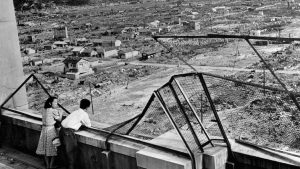
The atomic bombings of Hiroshima and Nagasaki proved that radiation is a trans-generational poison damaging human DNA, which results in permanent genetic mutations.
In the cold mathematics of nuclear war, the living will find themselves envying the dead as the very sunlight that once sustained life becomes a memory of a vanished era.