

19.1 C
Delhi
Thursday, February 26, 2026

Why do worms socialise? IISc study finds they share a genetic secret with humans

Tiny worms in a laboratory at the Indian Institute of Science (IISc) in Bengaluru are rewriting what we know about social networking. While humans use apps to connect, these microscopic creatures, known as Caenorhabditis elegans, use a complex internal chemical toolkit.

A recent study from the Centre for Neuroscience at IISc reveals that a single genetic tweak can turn solitary worms into a coordinated, swarming mob.

The findings, published in the Proceedings of the National Academy of Sciences (PNAS), offer a new window into how nervous systems tune group interactions across the animal kingdom.

WHY DO WORMS CHOOSE TO SOCIALISE?

Usually, these worms are independent loners that spread out to find food. However, PhD student Navneet Shahi noticed something odd while studying mutants.

Instead of searching for nearby meals, the worms huddled together in massive groups.
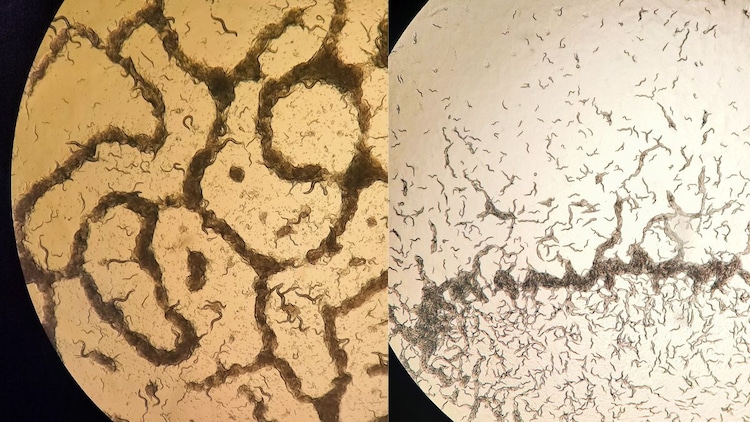
Scientists at IISc Bengaluru have discovered a genetic switch that turns solitary worms into a swarming mob. The research sheds light on the evolution of social behaviour. (Photo: IISc)

Scientists at IISc Bengaluru have discovered a genetic switch that turns solitary worms into a swarming mob. The research sheds light on the evolution of social behaviour. (Photo: IISc)

They were so committed to the crowd that they stayed clumped even when they began to starve.

By collaborating with physicists from Turkey, the team discovered this behaviour is self-emergent. Even a single worm can trigger a multi-generational social movement.

IS SOCIAL BEHAVIOUR HIDDEN IN OUR GENES?

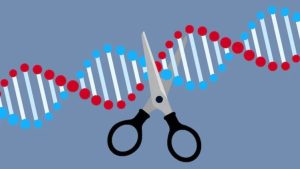
The researchers used CRISPR (Clustered Regularly Interspaced Short Palindromic Repeats), a gene editing technology used to cut DNA in living organisms, to delete a gene called CASY-1.

This protein is a distant relative of calsyntenin, a protein found on the surface of neurons in humans, and which helps brain cells maintain and synthesise synapses necessary for memory and learning.

When this gene is missing, it disrupts a neuropeptide called pigment dispersing factor.
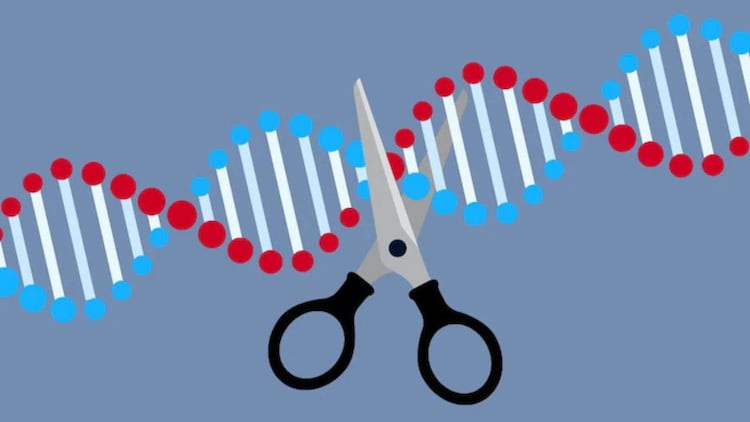
The researchers used CRISPR (Clustered Regularly Interspaced Short Palindromic Repeats), a gene editing technology used to cut DNA in living organisms, to delete a gene called CASY-1. (Photo: Getty)

The researchers used CRISPR (Clustered Regularly Interspaced Short Palindromic Repeats), a gene editing technology used to cut DNA in living organisms, to delete a gene called CASY-1. (Photo: Getty)

This disruption essentially takes the brakes off serotonin signalling. This means that removing the CASY-1 gene acts like a broken brake on a car, allowing serotonin levels to surge and uncontrollably drive the worms into a social swarming state.

Serotonin is the same chemical that regulates mood and socialising in humans.

Without the CASY-1 filter, the worms are driven into a permanent state of collective swarming.

CAN LIGHT CONTROL ANIMAL SOCIALISING?

To prove the genetic link, Professor Kavita Babu and her team turned to optogenetics, a biological technique that uses light to control the activity of neurons.

By using pulses of light, they could instantly activate or silence neurons to see if the worms would huddle or disperse in real time. The results were fascinating.

The study suggests that the molecular pathways governing social life are evolutionarily conserved.

This means the same chemical foundations that make locusts swarm or humans congregate might be active in these tiny worms.
Latest

Nasa reveals astronaut’s name behind the rare medical evacuation from space

Nasa astronaut Mike Fincke has come forward as the one who suffered a medical event on the ISS, leading to Crew-11's unprecedented early return.

Indian high school students design, launch mini satellite to 22 km height

Class XI students from a Sivagangai government school built and launched the Vikko Sat 1 mini satellite. The device reached 22 km to detect atmospheric fungal s

North India braces for unseasonal heat, temperatures to spike on Wednesday

In Uttar Pradesh, temperatures may climb up to 36°C. The expected readings are 5 to 8 degrees Celsius above normal for this time of the year, marking a signifi

Intense lightning seen from space as blizzard buries US under thick snow

Meteorologists say the storm underwent rapid intensification, meaning its central pressure dropped quickly in a short period of time, a sign of strengthening.

Stress makes you forget the urge to itch: Indian team maps complex brain circuit

Chronic itch affects millions globally, and existing therapies mostly target the skin or immune system. The findings can change that.

Topics

Ramayana first screening has US viewers raving about ‘monstrous VFX, rooted storytelling’ of Ranbir Kapoor, Yash film

A test screening of the first cut of Ranbir Kapoor and Yash's Ramayana Part One was reportedly held in Los Angeles earlier this week.

Salesforce CEO says SaaSpocalypse will not kill SaaS, AI agents make it stronger

Salesforce has dismissed fears of a "SaaSpocalypse," saying AI agents will strengthen, not weaken, software-as-a-service. CEO Marc Benioff said businesses are n

Why would Annie Guthrie’s car be part of probe? Abuse survivor shares chilling ‘stalkers’ theory

New details have been emerging in the Nancy Guthrie case, including PCSD's confirmation that Annie Guthrie’s car "is still part of the investigation.”

‘Infiltration for terrorism purpose’: What Cuba said on motorboat incident amid US tensions

Cuban forces on Wednesday killed four people who were sailing in Cuban waters on a Florida-flagged ship.  

Zydus bets big on affordable GLP-1 therapy with new semaglutide brands in India

A single reusable pen could make costly GLP-1 therapy more affordable and accessible for millions of Indians battling diabetes and obesity.

Samsung Galaxy S26 has lots of AI, here are 5 new features that really matter

Samsung’s Galaxy S26 series brings a range of advanced AI features aimed at simplifying everyday life. From proactive reminders that surface at the right time

Surgeon with 25 years of experience warns less than 6 hours of sleep can increase risk of heart disease, certain cancers

Dr Jeremy London explains that sleeping fewer than 6 hours or more than 9 hours is dangerous, and aiming for 6-8 hours of quality rest is key.

Ambanis host Arjun Tendulkar, Saaniya Chandhok and family in Jamnagar before wedding

Before the big wedding next month, Ambanis and Tendulkars came together to bless the couple Arjun Tendulkar and Saaniya Chandhok in Jamnagar.
spot_img

Related Articles

Popular Categories

spot_imgspot_img