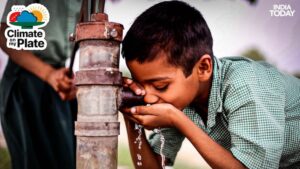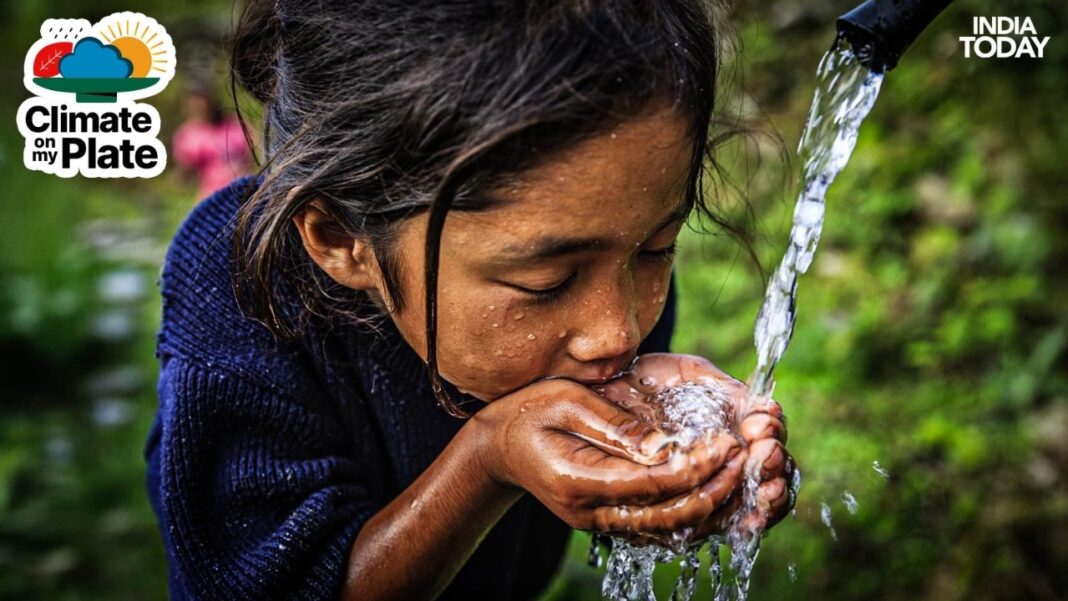
You turn on the tap. Water flows. That small, daily act of faith is one of the most taken-for-granted privileges in modern life.
Science says that luxury is quietly breaking down, and the process behind it has been running for decades.
Climate change did not schedule an appointment. It has already arrived.
This is the latest story in Climate on My Plate, India Today Science’s new series on how the climate crisis is reshaping the everyday things you eat, drink, buy and own. This week, it is the glass of water you pour without thinking.
WHAT DOES FRESHWATER STRESS ACTUALLY MEAN?
Five billion people, roughly two-thirds of the world’s population, will face at least one month of water shortages by 2050, according to the World Meteorological Organization. That figure is alarming on its own.
Only 0.5 per cent of water on Earth is usable freshwater, and climate change is burning through it fast. Over the past 20 years, global terrestrial water storage has dropped at a rate of 1 centimetre per year.

Freshwater stress is not simply about too little rain. It is a ratio, the gap between how much water a region uses and how much it can reliably access. When that gap widens, consequences follow quickly: crops wither, food prices rise, diseases spread, conflicts ignite.
In South India, interstate disputes over water sharing have triggered riots. Iran’s intensifying water protests are directly tied to climate-driven scarcity.
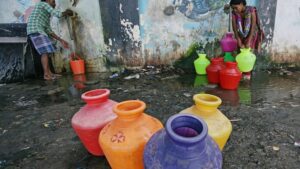
India already has its own Day Zero story. On June 19, 2019, Chennai officials declared that Day Zero had been reached, as all four main reservoirs supplying the city had run dry.

Water tankers that arrived sometimes carried water that was black and smelled of sewage. While the rich could afford their own solutions, the poor waited for government help.
A city of over 10 million people, which had flooded catastrophically just four years earlier in 2015, had run out of water. The same climate system that drowned it also drained it.
IS THE MONSOON BECOMING UNRELIABLE?
For India, the water question is inseparable from the monsoon question. About 75 per cent of the country’s annual rainfall arrives during the southwest monsoon between June and September. That system is now behaving in ways no weather model can predict.
Research from the Council on Energy, Environment and Water documented rainfall shifts across 55 per cent of India’s tehsils between 2013 and 2022.
Dry states such as Rajasthan, Gujarat and central Maharashtra received 10 to 30 per cent more southwest-monsoon rain than in the three preceding decades.

But around 11 per cent of tehsils, concentrated in the agriculturally critical Indo-Gangetic plains, saw rainfall fall by more than 10 per cent.
More rain somewhere and less elsewhere sounds like balance. It is not. Extreme rainfall events above 150 mm per day increased by 75 per cent in central India between 1950 and 2015.
Dry spells within the monsoon, those stretches of days or weeks mid-season when the rain simply stops despite it being peak monsoon, grew by 27 per cent between 1981 and 2011.

Nearly half of the season’s total rainfall now lands within 20 to 30 hours. Rain that arrives that fast does not recharge aquifers. Groundwater recharge is a slow process. Water needs time to seep through layers of soil and rock before it reaches the water table below.
When rain hammers down in a single violent burst, the ground simply cannot absorb it quickly enough. It runs off, floods roads, sweeps away topsoil and rushes into drains.
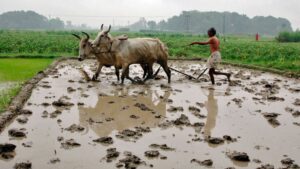
The aquifer beneath gets almost nothing. So a farmer in Maharashtra can watch his fields flood in July and still find his borewell dry by March. The annual rainfall total looks fine on paper. The ground tells a different story.
WHY IS INDIA’S GROUNDWATER DISAPPEARING?
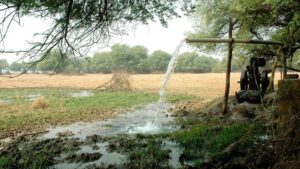
Below the surface, the picture is starker. India is the world’s largest consumer of groundwater, extracting around 241 billion cubic metres annually, more than a quarter of global withdrawal.
The damage is sharpest in the north-west.
Between August 2002 and October 2008, groundwater beneath Punjab, Haryana and Rajasthan dropped by more than 108 billion cubic metres, as measured by Nasa’s twin Grace satellites, roughly nine times the full capacity of Indira Sagar Dam, India’s largest reservoir.
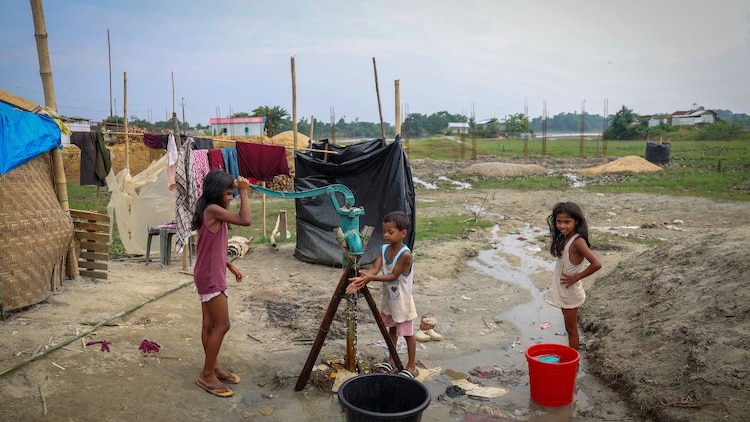
Around 120 million people in those regions now face the risk of severe shortages.
Punjab tells the most urgent part of that story. In central Punjab, the annual fall in the water table accelerated from 20 centimetres per year between 1973 and 2001, to 100 centimetres per year between 2000 and 2006.
Warming is pushing it further. A rise of just 1 degree Celsius in monsoon and winter temperatures could increase net groundwater depletion rates from 8.15 centimetres per year to 36.01 centimetres per year across India.

Delhi sits in the same stressed corridor. Several districts are already operating at or beyond critical extraction limits. The Central Ground Water Board’s 2024 assessment places Delhi among the over-exploited regions where extraction consistently exceeds replenishment.
The over-exploited classification covers the entire north-western cluster, including parts of Punjab, Haryana, Delhi and western Uttar Pradesh. Ninety per cent of rural India’s drinking water comes from groundwater, and 75 per cent of agriculture is groundwater-based. When the aquifer goes, so does everything built on top of it.
WHAT HAPPENS WHEN THE GLACIERS GO QUIET?
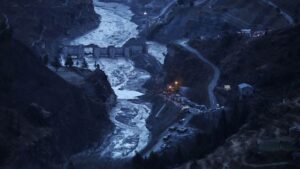
The Himalayan glaciers feed the headwaters of the Indus, Ganges and Brahmaputra. Glaciers do not feed rivers every single day. But in the dry months, when there is no rain, it is melting glacier ice that keeps rivers flowing. That seasonal lifeline is now fading fast.
Known as the Water Tower of Asia, the Himalayas hold the world’s largest freshwater reserve outside the polar regions. Glacier retreat across the region threatens more than 1.4 billion people who depend on those river systems.
The Gangotri Glacier in Uttarakhand has receded by more than three kilometres since the mid-20th century, retreating at an average of 16 to 18 metres per year. The pace has quickened since the 1990s, particularly across the eastern and central Himalaya.

The near-term effect is a paradox. As glaciers melt faster, river flows rise temporarily, giving the false impression of abundance.
But the overall glacier mass keeps shrinking. Once the ice is gone, river runoff becomes entirely dependent on rainfall.
Rivers that currently survive drought years on meltwater reserves will have nothing left to draw on.
WHAT DOES THIS COST?
The economics are not abstract. According to the World Resources Institute, 31 per cent of global GDP, roughly $70 trillion, will face high water stress by 2050, up from $15 trillion in 2010.
India sits at the top of that list alongside Mexico, Egypt and Turkey. Poor water management could cost India between 7 and 12 per cent of its GDP by 2050.
India has already experienced a preview. A shortage of water to cool thermal power plants between 2017 and 2021 resulted in 8.2 terawatt-hours of lost energy, enough to power 1.5 million Indian households for five years.
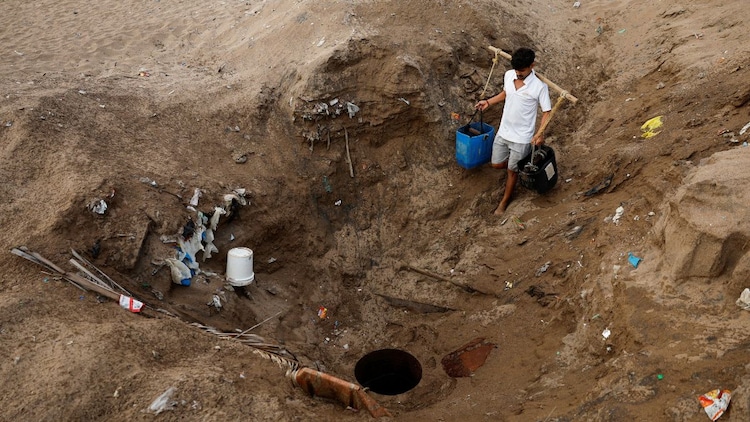
In Mumbai, water from a tanker truck can already cost 52 times more than piped water. That is not a future scenario. It is the price some people are paying today.
The next time the tap runs dry, it will not be a malfunction. It will be a forecast that came in on time.
#ClimateOnMyPlate