

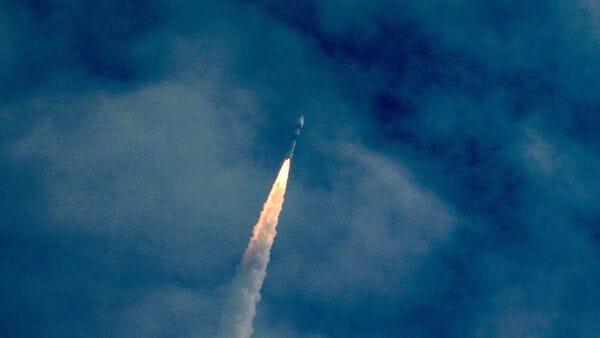
KID Capsule: The Lone Survivor of ISRO’s Failed PSLV Mission
In a remarkable turn of events, a small Spanish experimental capsule survived a major rocket failure during an Indian Space Research Organisation (ISRO) launch. The Kestrel Initial Demonstrator (KID) capsule, built by Orbital Paradigm, separated from the malfunctioning PSLV C62 rocket and transmitted crucial data before crash-landing.
Key Takeaways
- Lone Survivor: Orbital Paradigm’s KID capsule was the only payload to survive ISRO’s PSLV C62 mission anomaly.
- Data Transmission: It transmitted 190 seconds of valuable re-entry data before contact was lost.
- Technical Success: The capsule withstood extreme 28G forces and maintained safe internal temperatures.
- Mission Failure: The PSLV rocket suffered a deviation in its flight path near the end of its third stage.
What is the KID Capsule?
The Kestrel Initial Demonstrator (KID) is an experimental space capsule developed by Spanish company Orbital Paradigm. It serves as a small-scale prototype for a future reusable capsule named Kestrel.
As a demonstrator, KID was a basic vehicle. It lacked its own propulsion system and parachutes and was not designed to be recovered after landing. Its primary mission was to separate from the PSLV rocket’s fourth stage, survive atmospheric re-entry, and transmit data during the process.
Insights from the Surviving Capsule’s Data
Despite the mission failure, KID’s brief operation yielded significant engineering data. The capsule transmitted for about 190 seconds after separating from the rocket approximately 18 minutes after liftoff—an event likely triggered by the launch anomaly.
The data revealed:
- The capsule endured peak forces of around 28 Gs during its uncontrolled descent.
- Its thermal protection system successfully maintained a payload bay temperature of about 30°C.
- The exterior of the heat shield reached 85°C.
“To transmit the data it means KID had to separate undamaged from the launcher, switch on, and connect to the RF link,” said Orbital Paradigm CEO Francesco Cacciatore.
He explained the likely sequence: “The working theory we have is that KID fell back to Earth coupled to PSLV stage 4, and the thermal conditions triggered separation.”
While the data transmission marks a success for Orbital Paradigm’s first re-entry attempt, planned microgravity experiments were lost due to the rocket failure.
The PSLV C62 Mission Anomaly
ISRO’s PSLV C62 mission lifted off normally from Sriharikota, Andhra Pradesh. However, the agency soon reported an issue with the rocket’s third stage.
ISRO Chairman V Narayanan stated, “The PSLV is a four-stage vehicle with two solid stages and two liquid stages. The performance of the vehicle up to the end of the third stage was expected. Close to the end of the third stage we are seeing more disturbance in the vehicle and subsequently, there was a deviation observed in the flight path.”
The agency has initiated a detailed analysis of all mission data to determine the root cause of the failure.


