
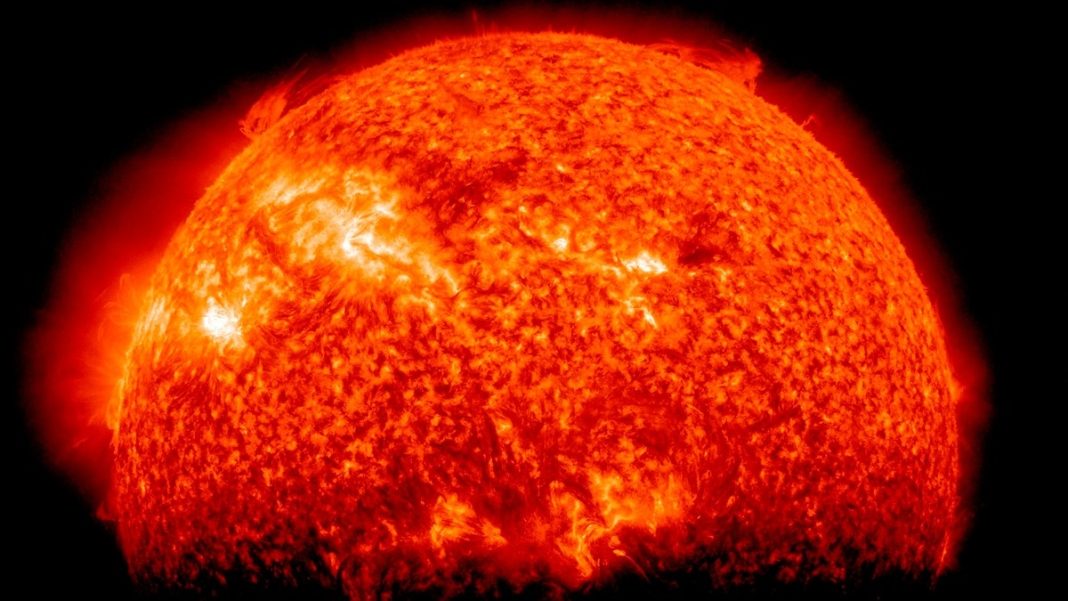
Do you know how loud the Sun is? 10,00,00,00,00,00,000 jet engines fired together

Every morning, the sun rises without a sound. Poets have written about its golden silence and composers have tried to capture it.

But here’s the thing we need to realise.

That silence is a gift. Because if the sound of the Sun could actually travel from the star to Earth, it would be the loudest thing imaginable. It would, in fact, be loud enough to kill.
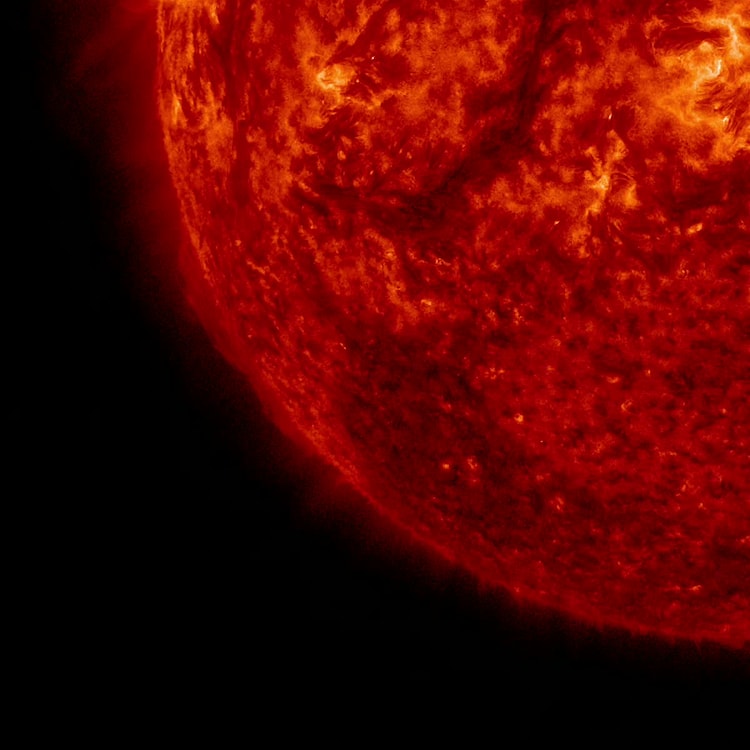
An image of the Sun captured using a telescope. (Photo: Nasa)

An image of the Sun captured using a telescope. (Photo: Nasa)

The Sun is, at its core, a colossal nuclear fusion reactor. Every second, it converts hundreds of millions of tonnes of hydrogen into helium, releasing staggering amounts of energy as heat, light, the lesser known form that is sound.

The sun roars, rumbles, and churns constantly. Its surface is a violent, seething ocean of plasma, bubbling with convection currents the size of continents. The noise generated is almost beyond comprehension.

HOW LOUD IS THE SUN?

Scientists estimate that the sound level at the surface of the Sun would be around 290 decibels.

For context, a jet engine at close range is about 140 decibels, already enough to rupture your eardrums. So mathematics would dictate that the sound made by the Sun is equivalent of 10,00,00,00,00,00,000 jet engines. Read that again.

A nuclear explosion registers around 210. If you are lucky, then at 290 decibels, you would just go deaf.

If not, then the shockwave from the loud sound would alone be enough to vaporise you.

So why don’t we hear any of it?
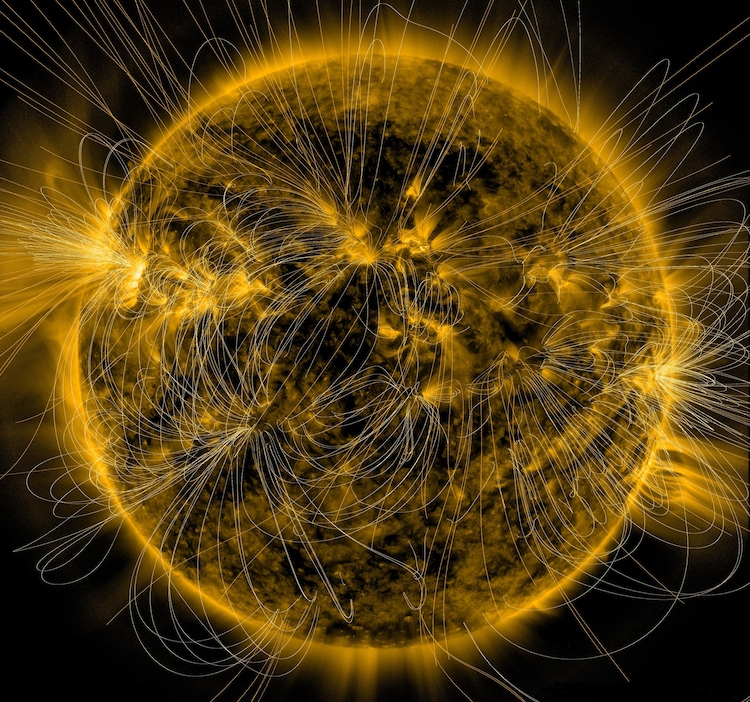
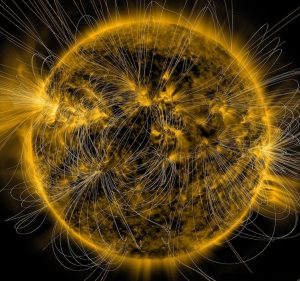
An illustration of the Sun's magnetic field. (Photo: Nasa)

An illustration of the Sun’s magnetic field. (Photo: Nasa)

WHY DON’T WE HEAR THE SUN?

The answer is actually a simple one.

Space is a vacuum and sound is a vibration. Vibrations need a medium, like air, water, or solid matter, to travel through. Between the Sun and Earth lies roughly 150 million kilometres of almost perfect emptiness.

No medium, no sound.

The cosmos, mercifully, works like the world’s best set of noise-cancelling headphones.

This doesn’t mean scientists can’t hear the sun.

Using instruments that detect pressure waves on the sun’s surface, a field called helioseismology, researchers have been able to convert solar vibrations into audio.

The result, when slowed down to a human-audible range, is an eerie, resonant hum. It’s something between a musical organ and a distant thunderstorm.

So the next time you see a quiet sunrise, enjoy it. The universe has done you a rather large favour.
Latest

Is haze over Delhi caused by petrol rain in Iran? Expert answers

In recent days, rumours circulating online have suggested that the haze could be linked to smoke or chemical fallout from refinery strikes in Iran, even claimin

From Tehran to tandoors: How the Iran war is turning off LPG knobs in Mumbai

While LPG cylinders are commonly seen as a primary fuel source in homes and kitchens, the fuel itself is not produced directly as a standalone product.

India’s submariners go deep. Their health data never surfaces

Sealed inside a steel tube at crushing depth, breathing manufactured air, eating off the same table where surgery will be performed if something goes wrong, Ind

Heatwave in plains, rain in Himalayas: Multiple systems to hit weather on Tuesday

A Western Disturbance moving across the northern regions is also expected to trigger significant weather activity in the Himalayan belt.

Mysterious object seen flying over European countries. Space agency investigating

Witnesses described an intensely bright object racing across the sky from the southwest to the northeast, leaving behind a glowing trail before breaking apart.

Topics

Arizona University student dies of alcohol poisoning after forced vodka hazing at fraternity party

US News: A horrific fraternity hazing incident at Northern Arizona University has claimed the life of 18-year-old freshman Colin Daniel Martinez, who died of a.

‘Level never seen before’: Trump warns Iran of fresh consequences over mines in Strait of Hormuz

Taking to Truth Social, the US leader warned of military action at a “level never before seen” if Iran did not remove any alleged mines in the key strait.

Meta Platforms to acquire AI social network Moltbook for Agentic AI chops

The team behind Moltbook will join Meta Superintelligence Labs—a newer AI division intended to supercharge the social-media giant's model development.

Candace Owens flags Erika Kirk’s US Air Force Academy board appointment; ‘what qualifies her?’

Candace Owens criticized Erika Kirk’s appointment to the United States Air Force Academy Board of Visitors, questioning her qualifications.

“Grieving widow”: Candace Owens reignites Erika Kirk feud while questioning Defense Department advisory role tied to Charlie Kirk’s legacy

US Streamers News: Erika Kirk’s name suddenly became a talking point online after she was appointed to the United States Air Force Academy Board of Visitors.

Elon Musk’s SpaceX weighs Nasdaq listing after biggest IPO of all time

SpaceX is seeking a valuation of around $1.75 trillion for the IPO, which would make it the sixth-largest company by market capitalisation in the US.

UK adopts first-ever definition of anti-Muslim hostility. What it means

UK Secretary of State for Housing, Communities and Local Government Steve Reed told lawmakers that adopting a clear description of anti-Muslim hostility was nec

US makes big claim on fuel prices, shares ‘unconditional surrender’ criteria

White House Press Secretary Karoline Leavitt told reporters the surge in fuel prices triggered by the conflict would be temporary and that the long-term outcome
spot_img

Related Articles

Popular Categories

spot_imgspot_img

