
Assam is drowning every year. India’s nuclear plan wants to fix that, and much more

Every monsoon season, Assam drowns. Floodwaters swallow villages, ruin crops, and contaminate the only water sources millions of people depend on.

Now, atomic science may have an answer, and it comes from the same organisation that builds India’s nuclear reactors.

WHAT IS BARC DOING TO FIX ASSAM’S WATER CRISIS?

The Bhabha Atomic Research Centre (BARC) has developed membrane-based water purification systems as a spin-off of its nuclear research.

These filters can strip out bacteria, arsenic, iron, fluoride and heavy metals from highly contaminated water; exactly the kind of damage monsoon flooding causes.
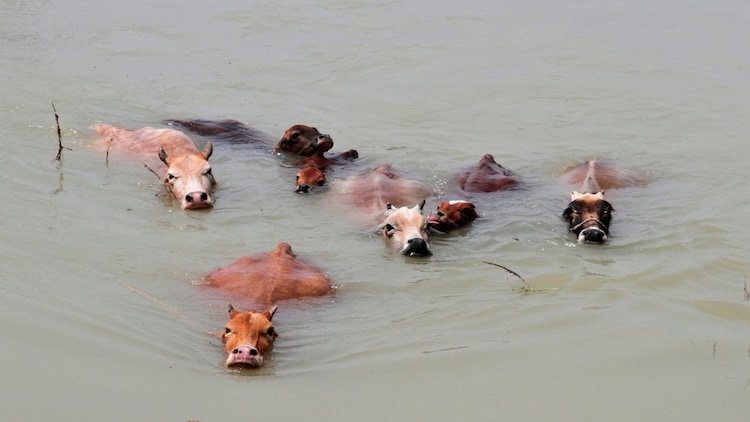
BARC's membrane-based filters, born from nuclear research, can remove arsenic, iron and bacteria from contaminated floodwater, with 56 companies already licensed across India. This can be hugely beneficial for Assam. (Photo: Reuters)

BARC’s membrane-based filters, born from nuclear research, can remove arsenic, iron and bacteria from contaminated floodwater, with 56 companies already licensed across India. This can be hugely beneficial for Assam. (Photo: Reuters)

Around 56 companies across India have already licenced the technology, and one licensee, AUA Solutions, is already based in Assam.

In Parliament this week, Minister of State Dr Jitendra Singh confirmed the technology is viable for flood-affected communities in India’s Northeast.

HOW MUCH NUCLEAR POWER IS INDIA BUILDING?

Water purification is just one corner of India’s nuclear ambitions. The country currently has 8.78 gigawatts of nuclear power capacity, and eight reactors are presently under construction.

Two of them, Units 3 and 4 at the Kudankulam Nuclear Power Plant in Tamil Nadu, India’s largest nuclear power station, are expected to be operational by 2026–27.

Meanwhile, the Prototype Fast Breeder Reactor (PFBR) at Kalpakkam is set to come online in September 2026. Unlike conventional reactors that consume fuel, a fast breeder reactor produces more fissile material (something which can undergo nuclear fission easily) than it uses, making it especially suited to running on thorium, the fuel at the heart of India’s long-term energy strategy.
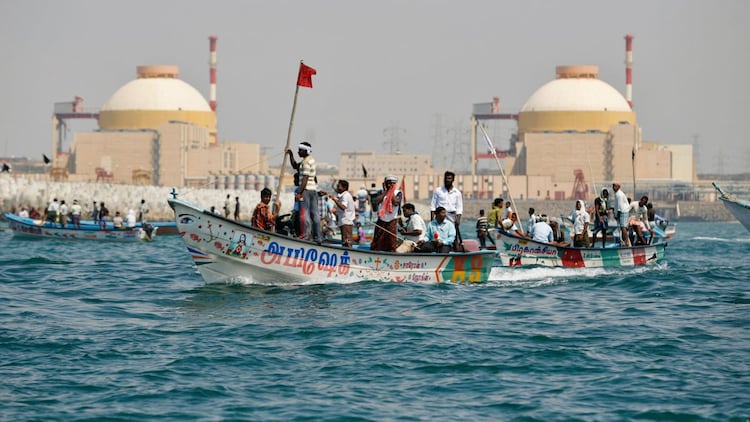
The Kudankulam Power Plant is India's largest nuclear power station. (Photo: Reuters)

The Kudankulam Power Plant is India’s largest nuclear power station. (Photo: Reuters)

Together, these projects will push total capacity to 8,780 megawatts, on the way to 22 gigawatts by 2031-32 and an ambitious 100 gigawatts by 2047.

To help get there faster, the government has waived customs duties on imported reactor components such as reactor pressure vessels, steam generators and turbines, making projects cheaper and quicker to build.

The Sustainable Harnessing and Advancement of Nuclear Energy for Transforming India (SHANTI) Act, 2025, has also opened the sector to private players for the first time, a landmark shift in a traditionally state-run programme.

ARE SMALL MODULAR REACTORS INDIA’S NEXT BIG THING?

Perhaps the most exciting development is the push for Small Modular Reactors (SMRs), which are compact, factory-built nuclear power reactors with a capacity of up to 300 Megawatts electric (MWe) per unit. These can go up almost anywhere.

Under the Nuclear Energy Mission announced in Budget 2025-26, Rs 20,000 crore has been earmarked for their development.
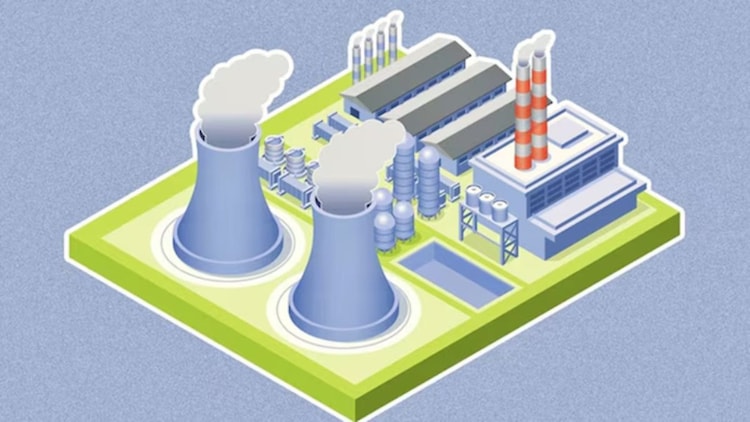
Small modular reactors like the BSMR-200, being developed jointly by BARC and NPCIL, could be constructed in five to six years and deployed at existing DAE sites across India. (Photo: Reuters)

Small modular reactors like the BSMR-200, being developed jointly by BARC and NPCIL, could be constructed in five to six years and deployed at existing DAE sites across India. (Photo: Reuters)

BARC and the Nuclear Power Corporation of India Limited (NPCIL) are jointly building three designs: the 220-megawatt Bharat Small Modular Reactor (BSMR-200), a smaller 55-megawatt version called SMR-55, and a high-temperature gas-cooled reactor for hydrogen production.

Lead units will come up at Tarapur in Maharashtra and Vizag in Andhra Pradesh, and construction is expected to take five to six years once financial approvals are in place.

IS INDIA SITTING ON A TREASURE TROVE OF RARE EARTH MINERALS?

India’s beaches hold more than sand. The Atomic Minerals Directorate for Exploration and Research (AMD), a unit of the Department of Atomic Energy (DAE), has mapped 1,309 million tonnes of heavy minerals along coastal stretches in Andhra Pradesh, Tamil Nadu, Odisha and Kerala.
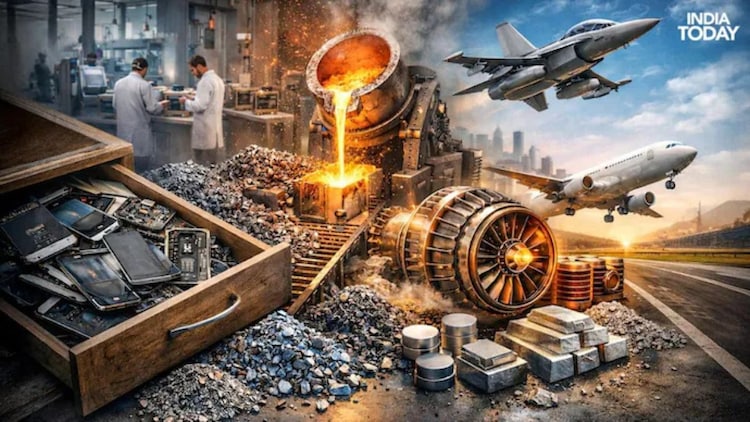
India's coastal beaches hold over 1,309 million tonnes of heavy minerals, including monazite. These are a critical source of rare earth elements and the thorium that could fuel India's future reactors. (Photo: Radifah Kabir)

India’s coastal beaches hold over 1,309 million tonnes of heavy minerals, including monazite. These are a critical source of rare earth elements and the thorium that could fuel India’s future reactors. (Photo: Radifah Kabir)

These include monazite, the key source of rare earth elements, and thorium. Dedicated Rare Earth corridors are now planned in four states to turn this geological wealth into a strategic industrial advantage, and to feed the very reactors India is racing to build.

WHAT DOES NUCLEAR SCIENCE HAVE TO DO WITH CANCER CARE?

The Tata Memorial Centre (TMC), which falls under the Department of Atomic Energy, runs 12 hospitals across the country, from Mumbai to Muzaffarpur, using radiation and nuclear medicine to treat thousands of cancer patients each year.
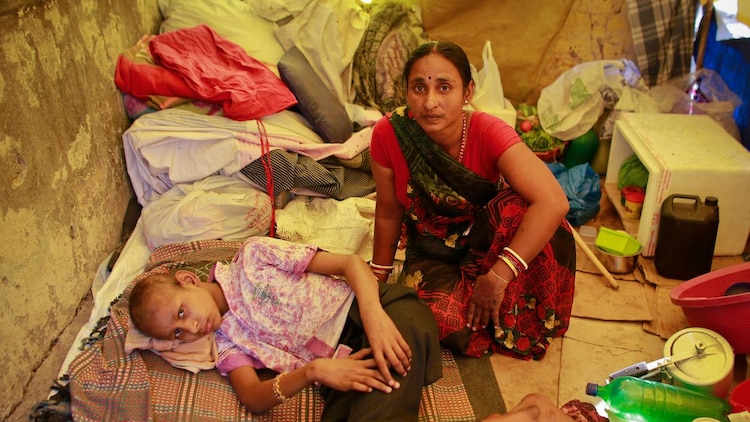
Raj Kishore Kumar, a 12-year-old cancer patient rests with his mother inside his pavement dwelling outside the Tata Memorial Hospital in Mumbai. (Photo: Reuters)

Raj Kishore Kumar, a 12-year-old cancer patient, rests with his mother inside his pavement dwelling outside the Tata Memorial Hospital in Mumbai. (Photo: Reuters)

A new 200-bed facility is coming up in Odisha. It is quietly one of India’s most impactful uses of atomic science, and one most people never connect to nuclear technology at all.

Latest

Nasa to launch Artemis-II mission to the Moon on April 1

Nasa said preparations are continuing at the Kennedy Space Centre, where engineers are completing final work on the rocket and spacecraft inside the Vehicle Ass

Isro reveals new details about SpadeX space docking mission

The satellites, SDX01, acting as the chaser, and SDX02, serving as the target, performed a series of precision manoeuvres to approach, dock, separate and manoeu

Too cold, too wet, too late: Baby birds are losing the climate game

A 60-year Oxford study tracking over 83,000 great tits finds that cold snaps and heavy rain stunt chick growth and cut survival odds. Breeding earlier in the se

Northwest India to face severe heat wave on Friday, Northeast to see rain

The IMD predicts severe heat wave conditions in Gujarat and Madhya Pradesh on March 13. Meanwhile, heavy rain and snowfall are expected in Arunachal Pradesh and

Eight lakh neurons played video games without a brain or body

Scientists grew 8,00,000 human neurons in a laboratory, connected them to video games, and watched them learn them in five minutes with no body, no senses, and

Topics

Planning to buy a 2-ton AC? Here are the top 10 options, starting at ₹33,000

Cooling large rooms during peak summer can be challenging. Here are 2-ton air conditioners that offer strong cooling, energy control, and useful features.

After 18 years, Shantanu Narayen prepares to hand over Adobe reins

The CEO who guided Adobe from boxed software to cloud subscriptions, wants to transition after laying the groundwork for an AI era

BuzzFeed flags ‘going-concern’ risks, explores options to stave off insolvency

In 2025, BuzzFeed had a loss of $57.3 million, as against its current market valuation of $27 million, meaning the company has negative net worth.

Adobe CEO Shantanu Narayen’s resignation shows how AI takes its toll

Adobe CEO Shantanu Narayen's resignation shows that guidance of steady revenue may no longer be enough to satisfy Wall Street without a clear AI agenda.

Dell agrees with Sam Altman on Pentagon, says: Any company doing business with the government can’t tell …

Tech News News: OpenAI CEO Sam Altman and Dell Technologies CEO Michael Dell may be on the "same page" about the Pentagon's decision to cancel Anthropic's dea

Kritika Kamra holds husband Gaurav Kapur close at their wedding reception; fans call them ‘classy, new favourite couple’

Kritika Kamra and Gaurav Kapur hosted a grand reception for industry friends on March 12. The newlyweds had fans praising their chemistry. 

Ashish Chanchlani admits Ekaki led to ‘huge loss’, reveals writing Stranger Things-like scene 3 years ago

Ashish Chanchlani's YouTube series Ekaki blends sci-fi, horror, and comedy, inspired by his fascination with aliens. 

Allu Sirish gushes about being in love with wife Nayanika Reddy: ‘Want to keep her as happy as her dad did’

In an interview with Hindustan Times, Allu Sirish speaks about his love for wife Nayanika Reddy, their honeymoon plans, and the kind of husband he wants to be.
spot_img

Related Articles

Popular Categories

spot_imgspot_img