

9.1 C
Delhi
Friday, January 16, 2026

30 species of sharks, other marine organisms under threat from deep sea mining

Several species of sharks and other marine creatures’ extinction risks could rise significantly due to deep-sea mining, says a new study.

The new study led by researchers at the University of Hawaii, and published in a journal named Current Biology, raised alarming concerns about the risk of extinction faced by around 30 different species. The risk arises from numerous marine habitats where deep-sea mining is slated to take place in the near future, endangering the regions.

According to the study, almost two-thirds of the species assessed are already under threat by human activities like overfishing. Climate change poses a major threat too.

The researchers of the study urged regulators and planners of deep-sea mining projects to take into account the risks posed to vulnerable organisms.

KEY FINDINGS

Out of the total assessed species, 30 species were found to be at immediate risk, making them susceptible to waste spread due to mining activities.

Amongst those, 25 species are also vulnerable to direct seafloor disturbance.

For 17 species, more than 50 per cent of their depth distributions fall within mining-affected zones.
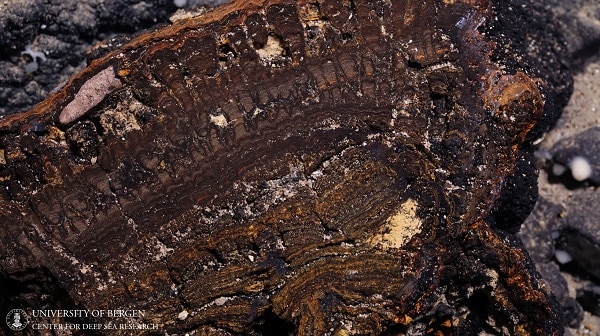
A view shows a cross-section of a manganese crust at the bottom of the Norwegian Sea, in this undated handout picture. University of Bergen, Centre for Deep Sea Research

Cross-section of a manganese crust at the bottom of the Norwegian Sea. (Photo by University of Bergen/ Reuters)

The study further estimated that 23 species are projected to suffer a 10 per cent increase in extinction risk when mining is added to existing issues.

For nine species, the projected risk increase is around 20 per cent.

The team behind the study ran bells about risk for sharks, a vertebrate species already at risk due to overfishing.

Species with more specialised life strategies, such as egg-laying skates and deep-living chimaeras, are particularly at risk. Given that many of these species are mobile and can traverse vast ocean expanses, effects from mining zones may ripple into ecosystems far from the immediate disturbance zones – a worrying prospect.

URGENT CALLS FOR CONSERVATION INTEGRATION

The team also argued that deep-sea mining should be deemed another stressor in regulatory frameworks and that conservation strategies must be planned keeping the endangered species in mind.
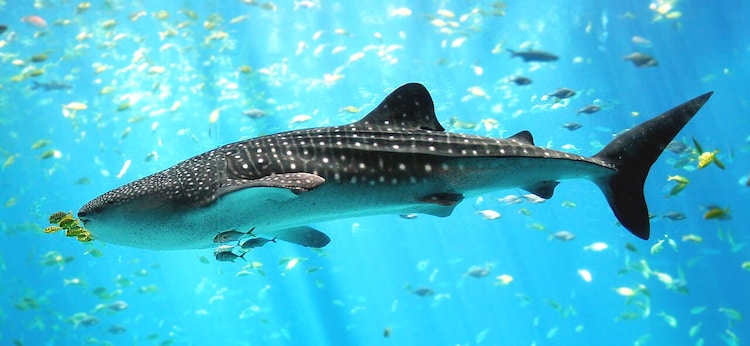
The whale shark, the world's largest fish, is classified as Endangered.

The whale shark, the world’s largest fish, is classified as Endangered. (Photo by AP)

To mitigate impacts, the authors recommended establishing monitoring programs in mining zones and incorporating sharks, rays, and chimaeras in environmental impact assessments. Protected or exclusion areas were also recommended.

The researchers stressed that the recommended measures need to be adopted by the International Seabed Authority protocols and by mining contractors, ensuring fair enforcement.

Aaron Judah, the lead author of the study, admitted that the list of species at risk may grow longer as more data and studies emerge.

Latest

ISRO Grounds PSLV After Second Consecutive Launch Failure

PSLV launches halted after January 2026 failure destroys 16 satellites. Investigation begins as ISRO's 2026 schedule faces major delays.

KID Capsule Survives ISRO PSLV Rocket Failure, Transmits Data

Spanish Orbital Paradigm's experimental KID capsule became the lone survivor of a failed ISRO launch, transmitting crucial re-entry data after the PSLV malfunctioned.

Flash Fog in Delhi: Science Behind the Sudden Zero-Visibility Event

Understand how a sudden 'flash fog' engulfed Delhi-NCR in minutes on Makar Sankranti 2026, its causes, dangers, and why meteorologists warn it may happen again.

Mysterious Dying Star Creates Colourful Cosmic Shockwave

Astronomers are puzzled by a white dwarf star ejecting gas and creating a vibrant, long-lasting shockwave in space, defying current scientific explanations.

PSLV-C62 Failure: Why 16 Satellites Were Lost After Launch

An ex-ISRO engineer explains the third-stage anomaly that caused the PSLV-C62 mission to fail, detailing the fate of its 16 satellites including the Anvesha Earth observatory.

Topics

India-Germany Trade Hits €30 Billion: A Strategic Partnership Evolves

Record trade sets the stage for deeper India-Germany collaboration in green tech, AI, and resilient supply chains as global dynamics shift.

SSC GD Constable Final Result 2025 Out: Check List and Next Steps

SSC has declared the GD Constable final result for 26,146 vacancies. Selected candidates must now prepare for document verification and medical tests.

6.0 Magnitude Earthquake Hits Oregon Coast, No Damage Reported

A significant 6.0 magnitude earthquake struck off the Oregon coast. Get the latest details on location, depth, and initial impact reports.

Billionaire Warns US Taiwan Chip Strategy Risks Chinese Invasion

Howard Lutnick says making Taiwan a semiconductor capital makes it a target for China, urging US to focus on domestic production instead.

Noida, Greater Noida Schools Closed Till Jan 17 Due to Cold Wave

Gautam Buddh Nagar district administration extends school closure for classes up to 8 due to severe cold and dense fog. Check details here.

Delhi AQI Hits 354: Air Quality ‘Very Poor’ Amid Fog and Cold Wave

Delhi's air quality deteriorates to 'very poor' with AQI at 354. IMD predicts dense fog and cold wave conditions for North India. Get the latest updates.

India’s Scramjet Success: Why Fighter Jets Still Use Conventional Engines

India joins the hypersonic club with scramjet tech. We explain why this breakthrough won't power fighter jets yet and what it means for missiles and space travel.

Mustafizur Rahman Visa Row: A Strategic Signal in India-Bangladesh Ties

How India's visa denial to a Bangladeshi cricketer reflects a broader, more assertive foreign policy under S. Jaishankar and impacts bilateral relations.
spot_img

Related Articles

Popular Categories

spot_imgspot_img