

Key Developments
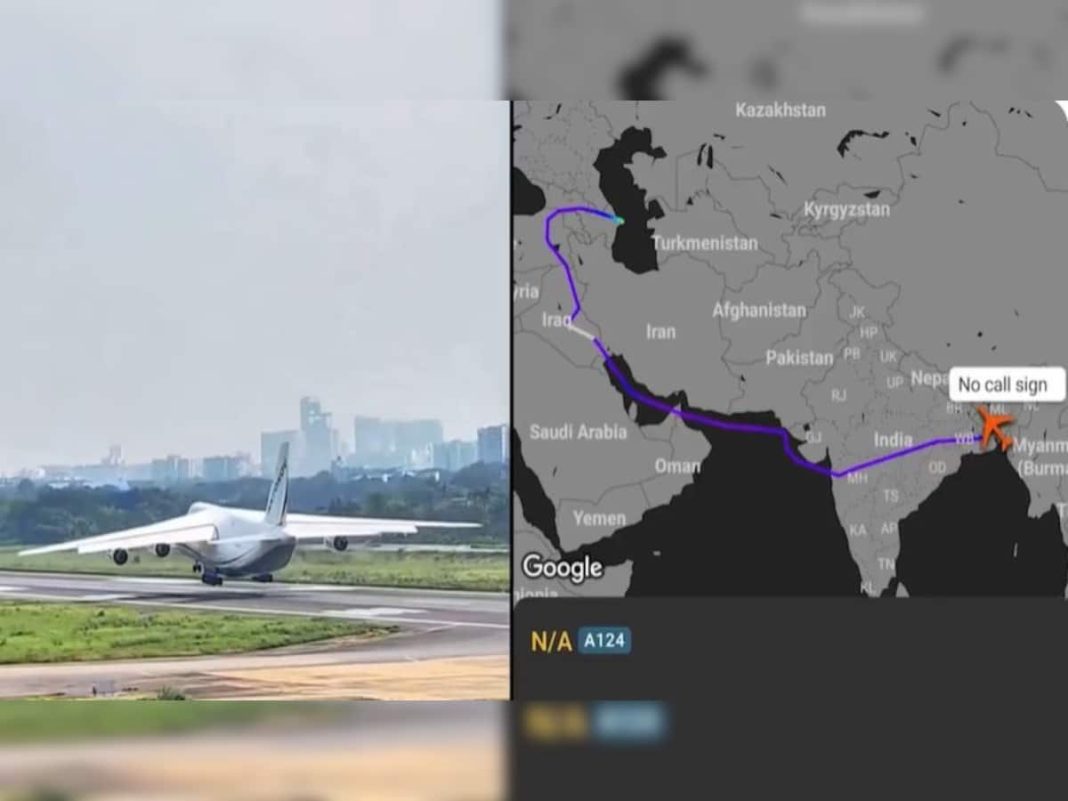
- Azerbaijani cargo plane lands in Dhaka via unusual route
- Bangladesh Navy Chief deepens ties with Pakistan at maritime conference
- US military aircraft and troops appear near India’s sensitive Siliguri Corridor
New Delhi is monitoring unusual military movements in Bangladesh involving multiple foreign powers near India’s strategically vital Siliguri Corridor.
Stealth Aircraft Movements
A massive Antonov AN-124 cargo plane from Azerbaijan landed in Dhaka without public disclosure of its cargo. The aircraft reportedly avoided Iranian airspace before arrival, a route often used for sensitive transfers. No official statement has clarified what it carried or why its route was kept discreet.
Bangladesh-Pakistan Naval Cooperation
Around the same time, Bangladesh Navy Chief Admiral Mustaq Ahmed visited the Karachi Shipyard during the Pakistan International Maritime Exhibition and Conference (PIMEC) 2025. His meetings focused on naval cooperation and maritime industry partnerships with Pakistan. Though described as routine, this outreach marks a new phase of defense engagement between Dhaka and Islamabad.
US Military Presence Near Strategic Corridor
Adding to the intrigue, a U.S. military C-130 Hercules aircraft landed at Shah Amanat International Airport in Chattogram. Soon after, more than a hundred American soldiers checked into a luxury hotel in the city. There has been no formal explanation for their presence.
What raises eyebrows is Chattogram’s location, which is less than 100 kilometres from India’s Siliguri Corridor – the narrow “chicken’s neck” stretch that connects the mainland to the Northeast.
Strategic Implications
This corridor is among India’s most critical strategic vulnerabilities. Any shift in foreign military activity near it triggers immediate concern. With Chattogram so close, observers in New Delhi worry that increasing U.S. and Pakistani presence in Bangladesh could alter the security balance around the Siliguri axis.
Security experts see these movements as part of a reorientation. Bangladesh appears to be building parallel military linkages: with Pakistan for shipbuilding and defense technology, the United States for training and logistics, and possibly with Azerbaijan for equipment supply.
For India, the timing is sensitive. The region already hosts growing rivalries among major powers in the Bay of Bengal. The new activity on its eastern edge adds another layer of uncertainty.
There is no clear sign of hostile intent so far. However, the arrival of foreign aircraft, naval collaboration, and movement of foreign troops near India’s strategic corridor has deepened unease in New Delhi. The question remains whether Bangladesh is positioning for military expansion or opening its doors to external powers in ways that could eventually test India’s eastern security shield.