Tommaso Cioni, Nancy Guthrie's son-in-law, has been subjected to speculations amid her kidnapping, though authorities clarified family members aren't suspects.
Warner Bros Discovery agreed to a $110 billion acquisition by Paramount Skydance after Netflix declined to match the offer, creating a media powerhouse set to r
International Business News: US stocks fell sharply on Friday as renewed fears around artificial intelligence-driven disruption, a stronger-than-expected inflat
International Business News: OpenAI has secured a massive $110 billion funding round, valuing the ChatGPT maker at $730 billion, as the artificial intelligence
Supriyo, who joined the TMC in 2021, is currently a minister in the Mamata Banerjee cabinet. Kumar served as the Director General of Police and earlier as the C
O Panneerselvam joined the MK Stalin-led DMK today after parting ways with the AIADMK, a shift that may significantly alter Tamil Nadu’s political landscape a
AAP chief Arvind Kejriwal and former Delhi Deputy Chief Minister Manish Sisodia were discharged in the Delhi excise policy case by the Rouse Avenue Court on Fri
The battle to lure the Chicago Bears is heating up as lawmakers in their home state of Illinois voted in favor of a measure that could pave the way for the team
Union Home Minister Amit Shah has begun a three-day tour of the Seemanchal region in Bihar comprising Kishanganj, Araria, Purnia and Katihar districts along the
Tech News News: SAP, the German multinational software company, employees have reportedly raised concerns over a newly introduced bonus system in the company. A
Tech News News: Microsoft has unveiled a AI capability called Copilot Tasks, an AI agent that the company says can perform tasks like scheduling appointments to
Tech News News: Microsoft and OpenAI have released a joint statement saying that new funding and expanded partnerships with Amazon, Nvidia and Softbank have no
If you’ve been holding your breath for the Galaxy S26 Edge, Samsung has an update for you. The company has confirmed that it is in no hurry to launch a sequel
Tech News News: The standoff between the Pentagon and AI company Anthropic has now has a new party – the US Congress. Senators from both sides of the aisle ar
Tommaso Cioni, Nancy Guthrie's son-in-law, has been subjected to speculations amid her kidnapping, though authorities clarified family members aren't suspects.
Warner Bros Discovery agreed to a $110 billion acquisition by Paramount Skydance after Netflix declined to match the offer, creating a media powerhouse set to r
International Business News: US stocks fell sharply on Friday as renewed fears around artificial intelligence-driven disruption, a stronger-than-expected inflat
International Business News: OpenAI has secured a massive $110 billion funding round, valuing the ChatGPT maker at $730 billion, as the artificial intelligence
Supriyo, who joined the TMC in 2021, is currently a minister in the Mamata Banerjee cabinet. Kumar served as the Director General of Police and earlier as the C
O Panneerselvam joined the MK Stalin-led DMK today after parting ways with the AIADMK, a shift that may significantly alter Tamil Nadu’s political landscape a
AAP chief Arvind Kejriwal and former Delhi Deputy Chief Minister Manish Sisodia were discharged in the Delhi excise policy case by the Rouse Avenue Court on Fri
The battle to lure the Chicago Bears is heating up as lawmakers in their home state of Illinois voted in favor of a measure that could pave the way for the team
Union Home Minister Amit Shah has begun a three-day tour of the Seemanchal region in Bihar comprising Kishanganj, Araria, Purnia and Katihar districts along the
Tech News News: SAP, the German multinational software company, employees have reportedly raised concerns over a newly introduced bonus system in the company. A
Tech News News: Microsoft has unveiled a AI capability called Copilot Tasks, an AI agent that the company says can perform tasks like scheduling appointments to
Tech News News: Microsoft and OpenAI have released a joint statement saying that new funding and expanded partnerships with Amazon, Nvidia and Softbank have no
If you’ve been holding your breath for the Galaxy S26 Edge, Samsung has an update for you. The company has confirmed that it is in no hurry to launch a sequel
Tech News News: The standoff between the Pentagon and AI company Anthropic has now has a new party – the US Congress. Senators from both sides of the aisle ar
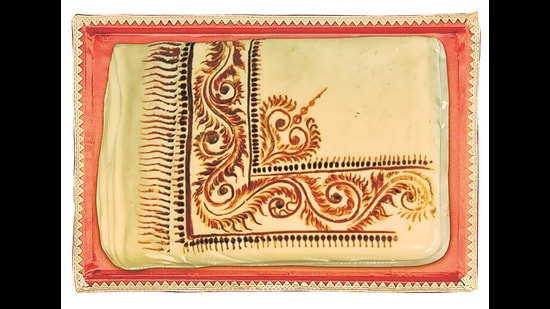
These concoction have such an elevated status in West Bengal that some, such as the tatwa mishti or wedding sweets, form part of the wedding trousseau. (Above) A platter of mishti made to resemble a woollen shawl. (Courtesy Jalbhara Surjya Kumar Modak)
How much meaning can a simple concoction of milk, sugar, rice flour and jaggery hold?
In West Bengal and Bangladesh, mishti, or sweetmeats, are ritual, emotion, heritage, craft, commerce, and, above all, full of contradictions. There’s a recipe for every occasion and budget, with prices ranging from a mere rupee to ₹1,000 a piece. There are rosogollas for election wins and good report cards. Chomchom for weddings. Fried bonde for Sunday breakfasts. Hollow melt-in-the-mouth batasha for the unexpected guest. Even conch-shaped sandesh as tributes to loved ones at a shraddha.
All Access. One Subscription.
Get 360° coverage—from daily headlines to 100 year archives.
E-Paper
Full Archives
Full Access to HT App & Website
Games
Already subscribed? Login
“The sociality of mishti goes beyond need, nutrition and logic,” says Ishita Dey, assistant professor of sociology at South Asian University, Delhi.
This obsession with sweets in Bengal can be traced back to the fact that the region has historically had an abundance of sugarcane. The growth and expansion of this crop’s cultivation, along with tapping of juices from Palmyra palm trees and the production of indigenous varieties of sugar and crystallised sugar sweets, such as monda, batasha or nakuldana, have all shaped the mishti culture, notes Dey.
Wooden sandesh moulds in the shapes of a fish and a conch shell.
The rich sweets tradition in this region also benefited from a robust patron-artisan relationship. “Origin stories of some of the most popular mishtis stem from a zamindar commissioning a new variety for a particular occasion or person,” she adds.
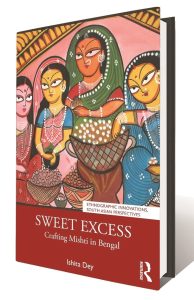
Dey’s new book, Sweet Excess: Crafting Mishti in Bengal (2026), traces dessert in this part of the world as a beloved cultural element, status symbol, celebration of excess.
Moving across sweetshops, domestic kitchens, fairs, festivals and recipe books, her book explores how caste, religion, science, ideas of heritage, and even law and policy, shape these foods.
The mishti industry, for instance, survived milk control orders in 1960s West Bengal, when the production of chhena (milk curd) was restricted. At the time, the state was grappling with food shortages, disrupted ration supply and rising food prices, as a cascading effect of the 1943 famine.
.
As a result, chhena production was halted. This was done to increase the supply of milk, an essential, in the state, when chhena and chhena-based products were deemed “wastage” and “diversion” of the resource, writes Dey in the book.
Following mass revolts, the Calcutta high court struck down the order within four months. Even today, sweetshop owners look back at this period as a particularly dark one, notes Dey.
It was a lesson one simply couldn’t ignore. Within about a month of the first pandemic-induced lockdowns in March 2020, sweetshops were allowed to reopen for fixed hours so milk, chhena, and sweet-making labour would not collapse.
What are some other interesting things she learnt about sweets?
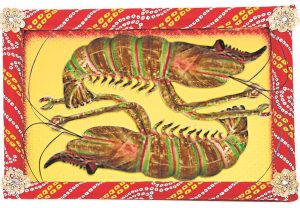
A tatwa mishti platter moulded to resemble prawns. (Courtesy Jalbhara Surjya Kumar Modak)
THE SWEETS INDUSTRY IS MARKEDLY GENDERED
Dey’s maternal grandfather owned a sweetshop in Howrah, but it was inherited by her maternal uncles (who, however, couldn’t run it. It eventually had to be shut down.) Her mother and aunts never stood a chance. “These businesses tend to hire male artisans as most of the work is done at night, to align with the supply chain of milk supply and chhena. Learning this taught me that studying mishti meant studying the politics of labour, gender and craft,” she says.
THE COLONIAL INFLUENCE
The widespread use of chhena in sweets, of course, is recent, dating to the arrival of the Portuguese and Dutch in the 16th century. Before this, granular chhena was used in savoury preparations, such as the fritters called chhena bora. Colonial contact introduced refined white sugar and new crystallisation techniques, which, when combined with chhena, transformed sweet-making. This chhena was smoother, ideal for shaping, soaking, moulding, and folding into desserts.
THE LEGENDS BEHIND THE NAMES
The syrupy, deep-fried Ledikeni was created by renowned sweetmaker Bhim Chandra Nag in 1856 to honour a visit by Lady Charlotte Canning, wife of then Governor-General Charles Canning. While similar sweets existed, dedicating the iconic, fat-bellied treat to the special guest gave it new meaning. The name stuck, and boxes of Ledikeni still fly off the shelves at his Bow Bazar shop, over 150 years on.
“Eventually, the sweetshop also made the Nehru sandesh to mark lawyer-activist Motilal Nehru’s visit to Kolkata in 1927-28 and Ashubhog, another sandesh, dedicated to mathematician and lawyer Ashutosh Mukherjee,” she adds.
The legends woven around the rosogolla are intriguing too.
They tell of innovative sweetmakers trying to stand out in a Kolkata that was yet to discover what is now, arguably, its favourite treat. Some trace its origins to the 16th-century Bhakti movement and to subsequent variants like gopalgolla and jatingolla – their recipes now lost to time.
Sweet-makers are now playing with modern flavours: lemon, coffee, strawberry, avocado. (Adobe Stock)
SPEAKING OF MISSING RECIPES…
Few formulations are written down, even today, says Dey. Master sweetmakers rely on smell, sight and touch to assess the freshness of whey, knead chhena to the right texture, gauge syrup consistency.
IS THAT A SHAWL?
These concoctions have such an elevated status in West Bengal that some, such as the tatwa mishti or wedding sweets, form part of the wedding trousseau.These large, decorative platters of customised sweets range from nolen gur-filled jolbhora sandesh, rosogolla, the crescent coconut-based chandrapuli, kheer kadam and mishti doi to kheer and chhena-based delicacies uniquely moulded into fish, butterflies, conch shells, brides and grooms, even palanquins.
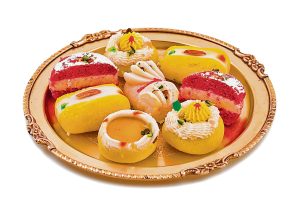
Priced between ₹1,000 and ₹5,000, these mishti platters are not just markers of status but also the creative canvas for sweetshops to showcase innovation. One of the most outlandish tatwa platters resembles an intricate woollen shawl, engraved with faux brown embroidery.
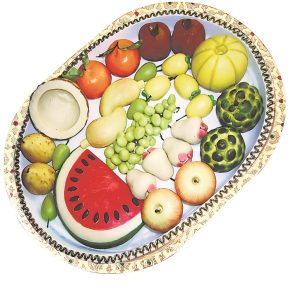
Tatwa mishti platters are not just markers of status but also a creative canvas for sweetmakers. (Above) A platter resembling a fruit salad. (Courtesy Jalbhara Surjya Kumar Modak)
A STICKY SITUATION
Today, other than experiments with new flavours such as gondhoraj lemon, coffee, avocado, diabetic/sugar-free, crystallisation techniques and shapes, the mishti industry is grappling with some worrying changes.
Nolen gur, that liquid gold jaggery, which was once only available in the winters, is now ubiquitous throughout the year.
Climate change and over-harvesting have led to a dip in quality, and in turn affected the production of nolen gur-based treats. Milk quality is slipping as well.
“Most significantly, the number of karigars is shrinking for a craft that takes decades to learn and perfect,” Dey adds.
Will these changes affect the diversity and quality of mishti? Could we risk losing certain variants altogether?
“Perhaps, yes. Maybe the bases will remain the same, and there will be more experimentation with form,” she says, adding, “Mishti is so integral to our lives that through famine, war, food control, we’ve found ways to innovate.”
Wooden sandesh moulds in the shapes of a fish and a conch shell.
.
A tatwa mishti platter moulded to resemble prawns. (Courtesy Jalbhara Surjya Kumar Modak)
Sweet-makers are now playing with modern flavours: lemon, coffee, strawberry, avocado. (Adobe Stock)
Tatwa mishti platters are not just markers of status but also a creative canvas for sweetmakers. (Above) A platter resembling a fruit salad. (Courtesy Jalbhara Surjya Kumar Modak)
'Dhurandhar' hit he ball out of the park and how when it comes to its box office. It crossed Rs 800 crore in India and Rs 1300 crore worldwide. Apart .
Telugu star Vijay Deverakonda once shared a powerful message about self-belief. According to him, money is a tool for survival, not a substitute for purpose.
NBA News: The Cleveland Cavaliers will be without Donovan Mitchell for their road game against the Detroit Pistons on February 27, 2026. He has been ruled out w
A pitch invasion turned messy as Lionel Messi was knocked over during Inter Miami’s Puerto Rico friendly. The Argentine star quickly got back up, shrugged it
The Kerala Story 2: Goes Beyond opened to low occupancy in parts of Kerala, with some screenings reportedly cancelled due to lack of audience. Advance booking o
AI layoff fears spark debate over EMIs exceeding ₹1 lakh, lifestyle costs, and housing risks; Experts advise higher down payments and financial buffers