

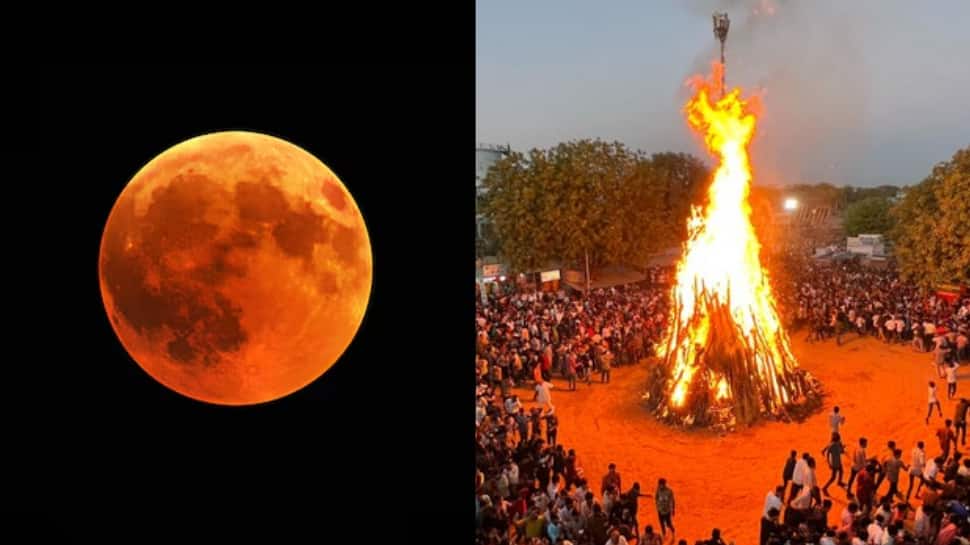
Lunar Eclipse 2026 on Holi: March 2026 brings with it a striking celestial alignment as a Total Lunar Eclipse (Chandra Grahan) coincides with the festival of Holi, a rare overlap of astronomy and tradition that has drawn curiosity among skywatchers and devotees alike.
This unusual combination of a festival and an eclipse is being discussed widely because such alignments are considered uncommon, both scientifically and culturally. While astronomers view it as a fascinating orbital event, traditional beliefs associate eclipses with periods of heightened spiritual sensitivity.
What Is a Total Lunar Eclipse?
A Total Lunar Eclipse occurs when the Earth comes directly between the Sun and the Moon, casting its shadow completely over the Moon. During this time, sunlight is filtered through Earth’s atmosphere, giving the Moon a reddish glow, often called the “Blood Moon” effect.
Unlike solar eclipses, lunar eclipses are safe to observe with the naked eye and are valued by astronomers as well as casual observers for their dramatic appearance.
Lunar Eclipse 2026: Date and Timings (India)
Date: March 3, 2026
Eclipse Begins: 03:20 PM
Maximum Eclipse: 06:33 PM to 06:40 PM
Eclipse Ends: 06:47 PM
Moonrise: 06:26 PM
Visibility in India: Visible, though in many places only the later phase will be seen after moonrise.
Because the Moon rises during the eclipse in several parts of India, viewers may witness only a brief window of the phenomenon.
Purnima Tithi (Phalguna Full Moon)
Purnima Begins: 05:55 PM – March 2, 2026
Purnima Ends: 05:07 PM – March 3, 2026
This full-moon day is traditionally associated with Holika Dahan and Holi celebrations.
Bhadra Kaal on Chandra Grahan 2026
Begins: 05:58 PM – March 2, 2026
Ends: 05:30 AM – March 3, 2026
Bhadra is generally avoided for performing Holika Dahan rituals according to traditional guidelines.
As per customary beliefs:
Sutak Kaal During Chandra Grahan 2026
Sutak Begins: Around 06:23 AM – March 3, 2026 (approximately nine hours before the eclipse)
Sutak Ends: After the eclipse concludes at 06:47 PM.
Sutak is traditionally regarded as a spiritually sensitive period during which certain activities are avoided.
Traditional Practices Observed During Sutak
According to religious customs followed in many households:
1. Temples may remain closed during the eclipse period.
2. Auspicious ceremonies such as weddings, engagements, or grah pravesh are generally postponed.
3. Idols at home are often covered.
4. Tulsi leaves or kusha grass are placed in stored food and water as a symbolic purification measure.
People may engage in mantra chanting, meditation, or quiet reflection instead of routine activities. These practices are based on faith traditions and vary from family to family.
Holika Dahan 2026: When To Perform the Ritual?
Due to the eclipse alignment, two possible time windows are discussed:
Early Morning Muhurat: 05:30 AM to 06:23 AM on March 3, before Sutak fully applies.
Evening Muhurat (Preferred by many): After 06:47 PM, once the eclipse ends.
Performing Holika Dahan after the eclipse is widely considered more appropriate, as it falls outside both Bhadra and Sutak influences.
Why This Coincidence Is Considered Special
The overlap of Phalguna Purnima, Holi festivities, and a Total Lunar Eclipse on the same day creates a rare blend of cultural celebration and astronomical spectacle. For scientists, it is an opportunity to observe celestial mechanics; for devotees, it is a moment of heightened symbolism, representing the interplay of light, shadow, renewal, and transformation, themes already central to the Holi festival.
FAQs
1. When will the Lunar Eclipse occur in 2026?
The Total Lunar Eclipse will take place on March 3, 2026, beginning at 03:20 PM and ending at 06:47 PM (IST), with the maximum phase occurring between 06:33 PM and 06:40 PM.
2. Will the Lunar Eclipse be visible in India?
Yes, the eclipse will be visible in India. However, since the Moon rises during the later stages, many regions will witness only a short duration of the eclipse after moonrise.
3. What is the Sutak Kaal for this Chandra Grahan?
Sutak Kaal is believed to begin approximately nine hours before the eclipse, starting around 06:23 AM on March 3, 2026, and ending after the eclipse concludes at 06:47 PM. During this time, auspicious activities are traditionally avoided.
4. When should Holika Dahan be performed in 2026?
Holika Dahan can be performed either in the early morning muhurat (05:30 AM to 06:23 AM) or in the evening after 06:47 PM, once the eclipse is over. Many consider the post-eclipse evening muhurat more suitable.
5. What precautions are traditionally followed during a lunar eclipse?
As per customary beliefs, people avoid shubh kaarya (auspicious ceremonies), keep temple doors closed, cover idols at home, add tulsi leaves or kusha grass to stored food, and spend time in prayer, meditation, or mantra chanting.
(This article is intended for your general information only. Zee News does not vouch for its accuracy or reliability.)


