

Key Takeaways
- Over 80% of AMD patients showed significant vision improvement with the PRIMA implant system
- Patients improved reading ability by 25 letters (5 lines) on standard eye charts
- The system combines a retinal chip with smart glasses using camera technology
- International trials across 13 sites demonstrated consistent success
A groundbreaking retinal implant has successfully restored central vision for people suffering from age-related macular degeneration (AMD), offering new hope for millions affected by this leading cause of blindness.
Breakthrough Results in Vision Restoration
More than 80% of patients across trial sites in the United States, Germany, UK, Netherlands and Italy showed significant improvement in central vision after one year of monitoring. With the implant, patients could read numbers and words at home and improved their reading ability by 25 letters—equivalent to five lines on a standard eye exam chart.
Most participants, aged over 50 years, achieved vision improvement to approximately half as good as standard 20/20 vision. “It’s the first time ever where it has been shown that vision can be restored in a blind retinal area that is important for daily life,” said Frank Holz, the study’s lead and chair of ophthalmology at the University of Bonn.
How the PRIMA System Works
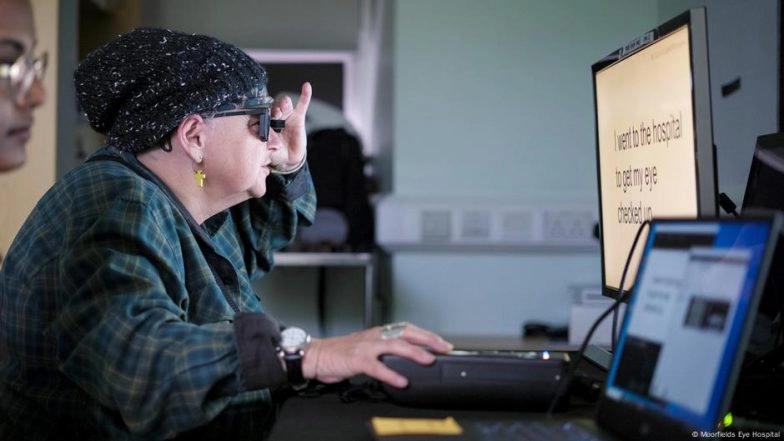
The PRIMA system consists of two key components: a pinhead-sized chip implanted in the retina and specialized smart glasses. The glasses use a mounted camera to transmit visual data to the implant, which beams the data to a handheld processor for enhancement before receiving higher-quality imagery back.
The images are converted to electrical impulses that utilize remaining retinal cells to send information to the brain. “It requires that the biocomputer—the biological wiring anterior to the chip—is still present,” Holz explained, referring to still-functioning cells in the eye.
International Collaboration Overcomes Challenges
Ophthalmologist Daniel Palanker from Stanford University collaborated with French eye expert Jose-Alain Sahel to develop the technology after meeting at a conference in 2012. Their partnership nearly collapsed when the original developer went out of business in 2024.
“I remember vividly the days not so long ago when everything was just about to die at the time when the study was almost complete,” Sahel recalled. US company Science Corporation has since acquired the technology and is seeking FDA approval in the US and CE certification in Europe.
Surgical Considerations and Patient Requirements
While the implantation surgery has been successfully performed by multiple surgeons worldwide, both researchers emphasized its complexity. “It’s a very complex surgery that needs good skills,” Sahel noted.
Patients must commit to a 12-month rehabilitation program including ongoing post-surgery reviews and training to use the camera and processor effectively. The technology requires patients to have some remaining functional retinal cells for the implant to work properly.
The international trial across 13 different sites demonstrated that the procedure can be consistently performed by various surgeons, increasing the potential for wider distribution to more centers and patients in the future.


