

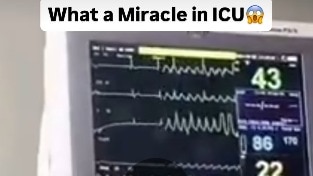
A video showing an intensivist performing cardiopulmonary resuscitation (CPR) on a patient for nearly 30 minutes has gone viral on social media. In the clip, the doctor continues chest compressions with focus and determination inside an intensive care unit (ICU), refusing to give up.
According to the post accompanying the video, the patient was eventually revived.
The footage has triggered strong emotional reactions online.
Many users have described it as a “miracle,” while others have questioned whether survival is even medically possible after 30 minutes of cardiac arrest.
However, India Today could not independently verify the authenticity of the video or confirm the claims made in the viral post.
WHAT HAPPENS DURING CARDIAC ARREST?
Cardiac arrest occurs when the heart suddenly stops beating effectively. When this happens, blood flow to the brain and other vital organs stops. Without oxygen, brain damage can begin within 4 to 6 minutes.
CPR is performed to manually pump blood through chest compressions. In hospital settings, this is combined with:
- Defibrillation (electric shock) if needed
- Oxygen support
- Emergency medicines such as adrenaline
- Advanced cardiac life support protocols
The goal is to restore a normal heartbeat, medically called “return of spontaneous circulation” (ROSC).
CAN SOMEONE SURVIVE AFTER 30 MINUTES OF CPR?
Doctors say yes, it is possible, especially in hospital settings like an ICU.
While survival chances decrease as time passes, several factors determine the outcome:
- The cause of cardiac arrest
- How quickly CPR was started
- The patient’s age and overall health
- Whether the rhythm was shockable
- Availability of advanced life support
In some cases, especially when the cause is reversible, such as certain heart rhythm disturbances, drug reactions, or hypothermia, doctors may continue CPR for an extended period.
Several critical care specialists say that in selected patients, resuscitation efforts can continue for 40 to 60 minutes if there is still a reasonable chance of recovery.
IS 30 MINUTES OF CPR “EXTREMELY RARE”?
Prolonged CPR is not routine, but it is not unheard of either.
In out-of-hospital cardiac arrests, survival rates are generally lower due to delayed treatment. However, in an ICU setting, where the patient is already monitored and medical teams respond immediately, outcomes can be better.
Doctors explain that stopping CPR too early may reduce survival chances. On the other hand, continuing for too long without signs of improvement may also indicate poor outcomes.
The decision is made carefully, based on medical guidelines and patient response.
WHY ICU SETTINGS MAKE A DIFFERENCE
An ICU is equipped for emergencies. Patients are already on monitors, so cardiac arrest is detected immediately. There is no delay in starting CPR.
In addition, doctors can:
- Intubate the patient quickly
- Deliver targeted medication
- Use advanced machines if required
This immediate response significantly improves survival chances compared to arrests that happen outside hospitals.
Beyond medical science, the viral video highlights the intense pressure doctors face in life-and-death situations. Performing chest compressions for 30 minutes is physically exhausting. It requires strength, coordination, and constant monitoring.
Many social media users praised the doctor’s persistence and dedication. While some call it a “miracle,” experts say such recoveries reflect skilled medical intervention, teamwork, and timely care.
Survival after 30 minutes of CPR is possible, especially in hospital settings with advanced life support.
While outcomes vary depending on the situation, doctors confirm that prolonged resuscitation efforts are sometimes justified, and in some cases, CPR has continued for up to an hour with successful revival.
The viral video may appear dramatic, but medically, it shows something important: that persistence, protocol, and prompt response can sometimes bring a patient back from the brink.