
Antarctica’s Ocean May ‘Burp’ Stored Heat, Delaying Climate Recovery
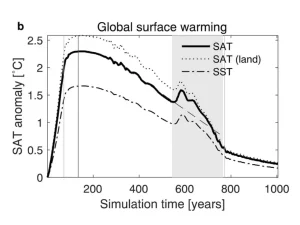
New research warns the Southern Ocean could abruptly release vast amounts of stored heat centuries after emissions are cut, causing a sudden warming pulse that could last over a hundred years.
Key Takeaways:
- The Southern Ocean has absorbed over 90% of Earth’s excess heat and a quarter of human CO2.
- Climate models suggest this heat could be released in a sudden ‘burp’ long after global cooling begins.
- The warming pulse would be strongest in the Southern Hemisphere and comparable to current human-driven rates.
- Scientists stress this underscores the urgency of cutting emissions now, not relying on future carbon removal.
How the Oceanic ‘Burp’ Works
The mechanism hinges on the ocean’s layered structure. As reported by Phys.org, surface water becomes colder and saltier as Antarctic sea ice forms, making it denser. Meanwhile, warm water remains trapped deep below.
Over centuries, this imbalance can destabilise the entire water column. “At some point, the water column becomes unstable, and that’s when we have the deep convection event,” explained Svenja Frey of the GEOMAR Helmholtz Centre. This event would allow the buried heat to rise rapidly to the surface.
The resulting warming would primarily be a thermal event, not a chemical one, though some CO2 might also be released.
Implications for Climate Policy
While this ‘burp’ scenario is a projection, not a certainty, it reveals potential long-term climate surprises. Climate researcher Kirsten Zickfeld notes Earth’s response to net-negative emissions is still poorly understood.
Crucially, the overall model still shows global temperatures falling due to carbon removal. “To be clear, in this scenario, removing atmospheric carbon significantly reduces global temperatures, even factoring in the burp,” a Live Science report states. “And the faster we move away from fossil fuels, the less CO2 we’ll have to remove down the line.”
Professor Ric Williams of the University of Liverpool adds a stark warning: “Rather than do negative emissions, it’s better not to do the positive emissions in the first place.” This finding reinforces that immediate, deep emission cuts are the most reliable climate strategy.