

Key Takeaways
- 2025 Antarctic ozone hole was the fifth smallest since 1992
- Hole broke up nearly three weeks earlier than usual
- Recovery attributed to Montreal Protocol’s success
- Full recovery to 1980s levels expected by late 2060s
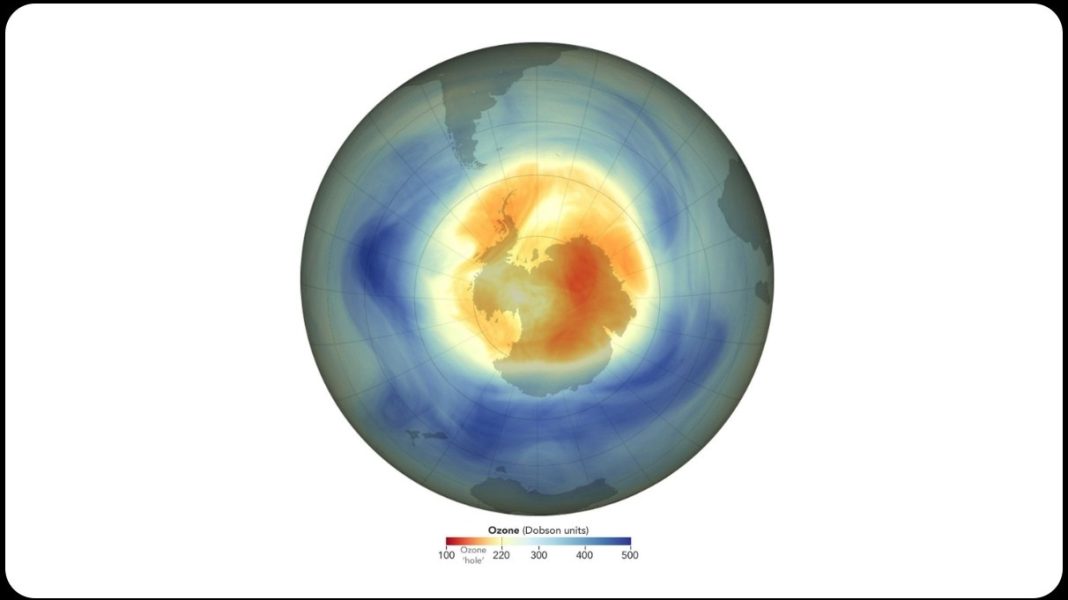
The Antarctic ozone hole reached its fifth smallest size since 1992 in 2025, confirming the ongoing recovery of Earth’s protective ozone layer. NASA and NOAA data show significant progress in reversing decades of damage caused by ozone-depleting chemicals.
Ozone Hole Size and Early Breakup
During peak depletion from September to October, the ozone hole averaged 18.71 million square kilometers. The largest single-day extent occurred on September 9, covering 22.86 million square kilometers – about 30% smaller than the record-largest hole observed in 2006.
This year’s ozone hole began breaking up nearly three weeks earlier than usual, indicating positive shifts in atmospheric conditions. The weakest ozone concentration measured was 147 Dobson Units on October 6, significantly higher than the record low of 92 Dobson Units in 2006.
Montreal Protocol Success Story
Scientists credit the 1987 Montreal Protocol and its amendments for this environmental turnaround. The international agreement phased out production of ozone-depleting chemicals like chlorofluorocarbons (CFCs).
Ozone-depleting substances in the Antarctic stratosphere have dropped by approximately one-third since peaking around the year 2000. Research indicates that without these reductions over the past 25 years, the 2025 ozone hole would have been more than a million square miles larger.
Monitoring and Future Projections
Continuous monitoring using NASA’s Aura satellite and NOAA’s NOAA-20 and NOAA-21 satellites, complemented by weather balloon measurements, tracks the recovery progress. The ozone layer, located 7-31 miles above Earth’s surface, protects against harmful ultraviolet radiation that causes skin cancer, cataracts, and crop damage.
Factors like stratospheric temperatures, weather patterns, and polar vortex strength influence the ozone hole’s size annually. This year’s weaker polar vortex contributed to the smaller hole. Long-term projections indicate the Antarctic ozone layer should recover to 1980s levels by the late 2060s.
This progress demonstrates how international cooperation and scientific monitoring can successfully address global environmental challenges.