

Key Takeaways
- 13 new bush frog species discovered in Northeast India
- Largest vertebrate species discovery in India in over a decade
- Species found across 8 states including Arunachal Pradesh, Meghalaya, Assam
- Study published in international journal Vertebrate Zoology
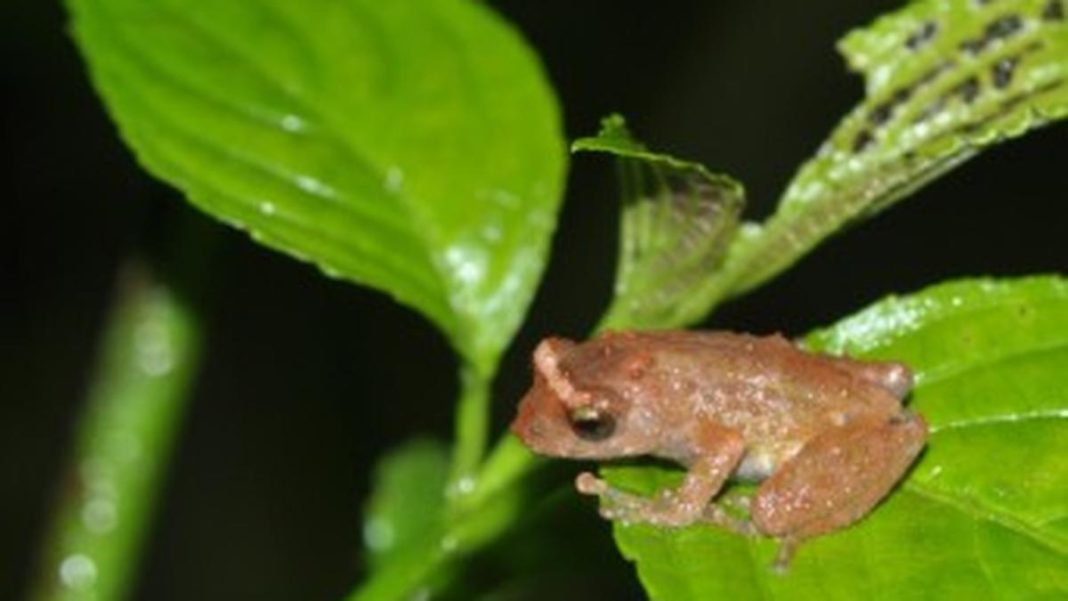
In a major breakthrough for Indian biodiversity, researchers have documented 13 new species of bush frogs from Northeast India. This represents the highest number of vertebrate species described in a single publication from India in over a decade.
Research Details and Distribution
The taxonomic revision was conducted by scientists from the Wildlife Institute of India (WII) in Dehradun, with contributions from international researchers. The findings were published in the latest issue of Vertebrate Zoology, an international scientific journal.
The distribution of these new species spans across eight northeastern states:
- Arunachal Pradesh: 6 species including Eaglenest bush frog, Arunachal bush frog, and Dibang Valley bush frog
- Meghalaya: 3 species including Narpuh bush frog and Mawsynram bush frog
- Assam, Mizoram, Nagaland, Manipur: 1 species each
Protected Area Discoveries
Seven species were located within protected wildlife areas, while the Khonoma bush frog was found in a community-protected forest in Nagaland’s Khonoma village. Significant discoveries were made in Namdapha Tiger Reserve, Eaglenest Wildlife Sanctuary, and Mehao Wildlife Sanctuary.
According to the study, “Bush frogs, currently in the genera Raorchestes and Philautus, are poorly documented from northeast India when compared to the Western Ghats of southwestern India… Before the study, there were 82 species of bush frogs known from India, 15 of which were from the northeastern region.”
Research Methodology and Significance
The comprehensive study employed integrated acoustics, genetics, and morphological analysis, requiring re-examination of century-old museum collections from the Indo-Burma region. Researchers covered 81 localities across eight states, including 25 protected areas.
One researcher explained, “The integrated acoustics, genetics, and morphology of the amphibians entailed revisiting the status of century-old museum collections from the Indo-Burma region.”
The study successfully addressed three critical conservation shortfalls: Linnean (identifying species before extinction), Wallacean (mapping distributions), and Darwinian (establishing evolutionary relationships). This represents a significant advancement in amphibian conservation research in India.