

The Kerala High Court on Thursday stayed the release of The Kerala Story 2 after a petition challenging the film’s censor certificate was filed earlier this week. During the hearing, a single-judge bench of Justice Bechu Kurian Thomas directed that the film cannot be released on February 27, its originally scheduled release date. The court also questioned the censor board for issuing a U/A certificate to the film and said it appears that the board had failed to apply its mind while clearing the film’s release.
As reported by Live Law, the High Court in its order observed: “Prima facie, these guidelines do not appear to have been borne in mind by the Censor Board of Film Certification (CBFC) while granting certification, and there is a manifest disregard of the applicable law that necessitates this Court to interfere.”
The court further noted, citing the Supreme Court’s ruling in Atul Mishra v Union of India, that it is “constitutionally impermissible” for anyone — State or non-State actors — to vilify or denigrate any community through mediums such as speeches, memes, cartoons or visual arts.
The bench also recorded that the petitioners’ apprehensions must be viewed in the context of the film being a sequel, referring to the Supreme Court’s observations in S Rangarajan v P Jagjivan Ram that while one film may not significantly alter attitudes, “continual exposure to films of a similar character will produce a change.”
Pronouncing its order, the Kerala High Court allowed applications seeking to place additional documents on record and made strong observations against the grant of certification. The court held that “dissemination of content capable of impacting law and order cannot fall within the ambit of freedom of speech and expression.”
It further noted a “manifest disregard of applicable law,” observing that the CBFC had failed to “abide by the guidelines” while granting the certificate.
“Kerala is known for communal harmony”
Emphasising that Kerala is known for its communal harmony, the court said “several relevant factors were not considered by the censor board.” While acknowledging that courts ordinarily refrain from interfering with a film’s release, particularly at the eleventh hour, the bench termed the present matter a “special case” warranting judicial intervention.
Meanwhile, India Today learnt that the filmmakers are set to approach a larger bench of the Kerala High Court against the single-judge order staying the film’s release. An appeal is likely to be filed as early as today, with the producers requesting an early release of the detailed order to enable them to challenge it without delay. Sources indicate that the team is racing against time, given the film’s scheduled February 27 release, and is seeking urgent relief to prevent further disruption to its theatrical plans.
What did the petition say?
During the hearing on Wednesday, the court observed that the petitioners’ concerns were “probably genuine.” The matter was taken up after a biologist, Sreedev Namboodiri, raised serious objections, alleging that the film’s trailer portrayed Kerala in an extremely negative light and could have wider social consequences.
In his petition, Namboodiri said that the teaser “shocked his conscience” by portraying Kerala in a manner that could harm the state’s reputation. He argued that the content has the potential to stigmatise an entire region and misrepresent its social fabric.
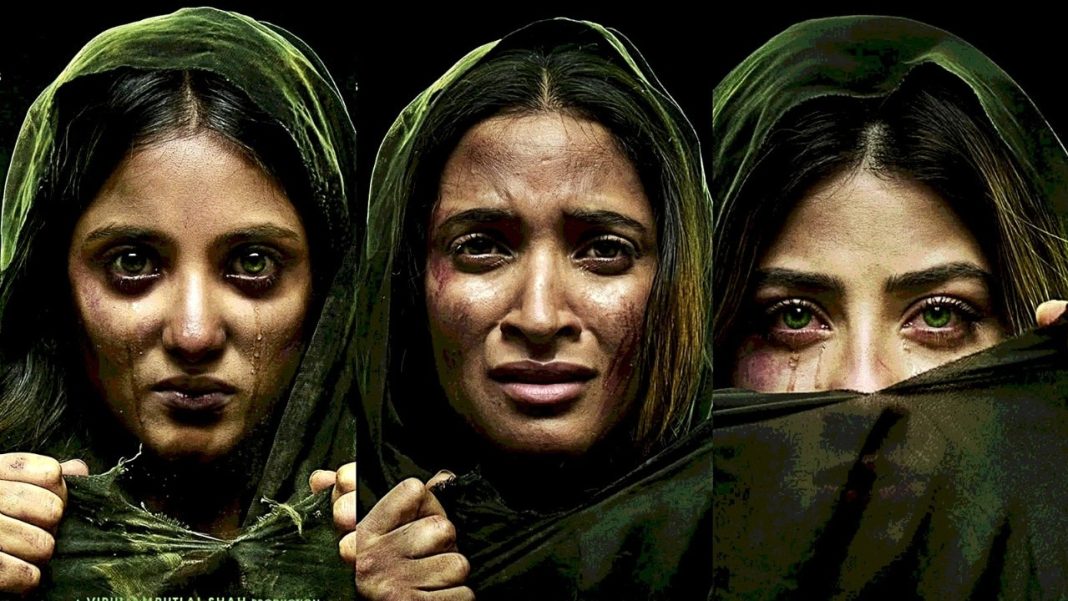
The petitioner further claimed that the trailer narrates the stories of three women from Kerala, Madhya Pradesh and Rajasthan who allegedly fall into the trap of terrorist groups that “weaponise romance” to convert unmarried women and alter the country’s demographic composition.
According to the plea, statements made directly to the camera by the characters in the teaser could have the potential to create a law-and-order situation.
Namboodiri also objected to the film’s title, contending that it unfairly associates the alleged incidents exclusively with Kerala. The petition argued that while the trailer itself references stories from other states, branding the film as ‘The Kerala Story’ falsely suggests that such incidents originated in Kerala and later spread elsewhere.
The petition warned that the trailer and title together “have the potential to stigmatise an entire regional population, disturb public order, and incite communal and regional disharmony.”
Acting on the plea, the Kerala High Court issued notices to the Ministry of Information and Broadcasting (I&B), the CBFC, and the film’s producer.
All about The Kerala Story 2
Directed by Kamakhya Narayan Singh and produced by Vipul Amrutlal Shah, The Kerala Story 2 claims that young Hindu women are lured into interfaith marriages, then assaulted, stripped of their rights, and forced to convert to Islam. The film’s content snowballed into a controversy after the release of its trailer.
The trailer introduces three Hindu women from different parts of India who choose to marry Muslim men against their families’ wishes. The narrative then follows their gradual disillusionment: portraying them as isolated from their customs and eventually trapped in loveless, violent marriages.
It also frames the film as a cautionary tale, positioning the story as a warning aimed particularly at young women, suggesting that romantic relationships across faiths can lead to loss of identity, faith and autonomy.
The Kerala Story 2 features Ulka Gupta, Aditi Bhatia and Aishwarya Ojha in the lead roles.
The scene that sparked debate
At the heart of the controversy is a scene in which one of the women is shown being forcibly fed beef. The image has become one of the most widely discussed moments from the trailer.
In India, beef consumption is not merely a dietary issue but a politically charged one. For Hindus, the cow holds religious significance, and several states have laws regulating or banning cow slaughter. Over the years, incidents related to beef consumption have triggered protests, violence and legal disputes.
By depicting a Hindu woman being forced to eat beef, the trailer invokes a symbol that extends beyond food: touching upon questions of identity, faith and coercion. Critics argue that the scene is designed to provoke an emotional reaction.