Key Takeaways
- 21 states plus Washington D.C. are in or near recession
- Major economies like Illinois, Georgia, and Washington are at high risk
- California and New York’s stability is crucial for national economic health
- Southern states show strongest growth but momentum is slowing
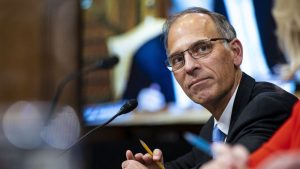
More than 20 state economies are either in recession or dangerously close to one, according to Moody’s Analytics Chief Economist Mark Zandi. The analysis reveals a divided national economic landscape with states accounting for nearly one-third of U.S. GDP facing significant downturn risks.
State Economic Status Breakdown
As of late August, Zandi’s assessment shows 21 states and the District of Columbia either in recession or at high risk. Another 13 states are merely “treading water” while only 15 states show economic expansion.
“State-level data makes it clear why the U.S. economy is on the edge of recession,” Zandi stated on X. “Based on my assessment of various data, states making up nearly a third of U.S. GDP are either in or at high risk of recession, another third are just holding steady and the remaining third are growing.”
He added that recession-affected states are geographically widespread, though the broader Washington D.C. area stands out due to government job cuts.
Major State Economies at Risk
Several economically significant states are among those facing recession threats:
- Illinois (3.85% of U.S. GDP)
- Georgia (3.03%)
- Washington (3.02%)
- New Jersey (2.93%)
- Massachusetts (2.73%)
- Virginia (2.66%)
Stable and Growing Economies
States identified as “treading water” include California (14.5% of U.S. GDP), New York (7.92%), Ohio (3.14%), and Michigan (2.44%). The expanding economies featured Texas (9.41%), Florida (5.78%), Pennsylvania (3.54%), and North Carolina (2.86%).
“Southern states are generally the strongest, but their growth is slowing,” Zandi observed. “California and New York, which together account for over a fifth of U.S. GDP, are holding their own, and their stability is crucial for the national economy to avoid a downturn.”
Government Shutdown Impact
Zandi’s analysis has gained prominence during the ongoing government shutdown, which has already delayed the September jobs report and threatens to postpone next week’s consumer price index release.
The Bureau of Labor Statistics announced it’s recalling furloughed workers to prepare the CPI report, now scheduled for October 24.
Meanwhile, inflation continues above the Federal Reserve’s 2% target, increasing recently as tariffs take effect. Despite inflation concerns, Fed policymakers cut interest rates last month for the first time in 2025 amid weakening labor market signals.