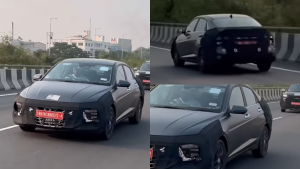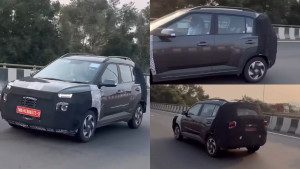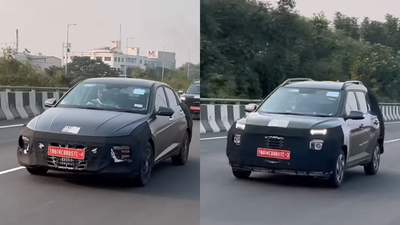
Hyundai Motor India is getting ready to launch the facelifted versions of the Hyundai Verna sedan and the Hyundai Exter micro SUV. Both models made their debut back in 2023 and are now due for a mid-cycle update. The Verna facelift is expected to arrive first, with the updated Exter likely to follow at a later stage. Neither model will undergo a generational change and will continue to be based on the same platform. Instead, they are expected to receive cosmetic updates, minor interior revisions, additional features and other small improvements.
As mentioned before, the Hyundai Verna facelift will make its debut first and is expected to be launched sometime by June 2026.
As seen in the image, the car is heavily camouflaged, making it difficult to determine details of the updated design. However, it will feature a completely redesigned front and rear end.
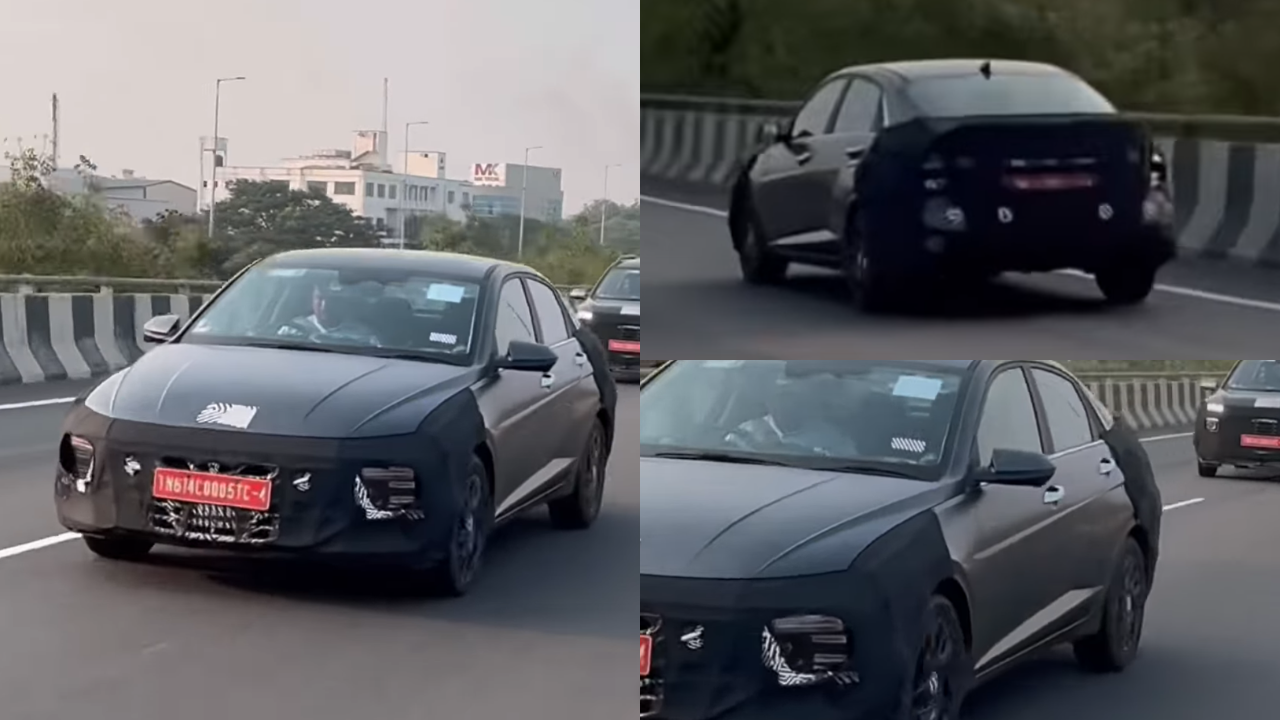
Twill retain the current model’s full-width LED light bar. The headlamp units positioned below appear larger and may incorporate the indicators. The front bumper seems to feature new diagonal elements beside the headlights, similar to those seen on the Hyundai Sonata.
From the sides, the main visible change is a revised set of 16-inch diamond-cut alloy wheels. On the 1. 5-litre turbo variants, these wheels may feature a blacked-out finish similar to the current model. The rear section of the test vehicle is also heavily camouflaged, but expected updates include revised LED lighting signatures and a redesigned bumper.
There are no details of the Interior. However, the cabin could receive minor updates such as new trim elements and an updated colour theme. The sedan may also adopt the dual 12.3-inch displays seen on the Hyundai Venue, along with its redesigned three-spoke steering wheel. Mechanically, the Verna facelift is likely to continue with the existing powertrains – a 115 hp 1.5-litre naturally aspirated petrol and a 160 hp turbo-petrol engine. Both engines come with a 6-speed manual gearbox, while the NA version also offers a CVT and the turbo variant gets a 7-speed dual-clutch automatic.
Alongside, the Exter facelift has also spied testing. The overall silhouette of the Hyundai Exter appears similar to the existing version. It continues with the H-shaped, high-mounted LED daytime running lights, while the square projector headlamps seem largely unchanged. However, the front bumper may receive minor revisions, and the grille on the camouflaged vehicle appears taller and more upright. At the rear, most design elements remain hidden under camouflage. The tail lamps appear similar to the current model and retain the H-shaped lighting pattern. A connecting light bar between the tail lamps could be introduced as part of the update.
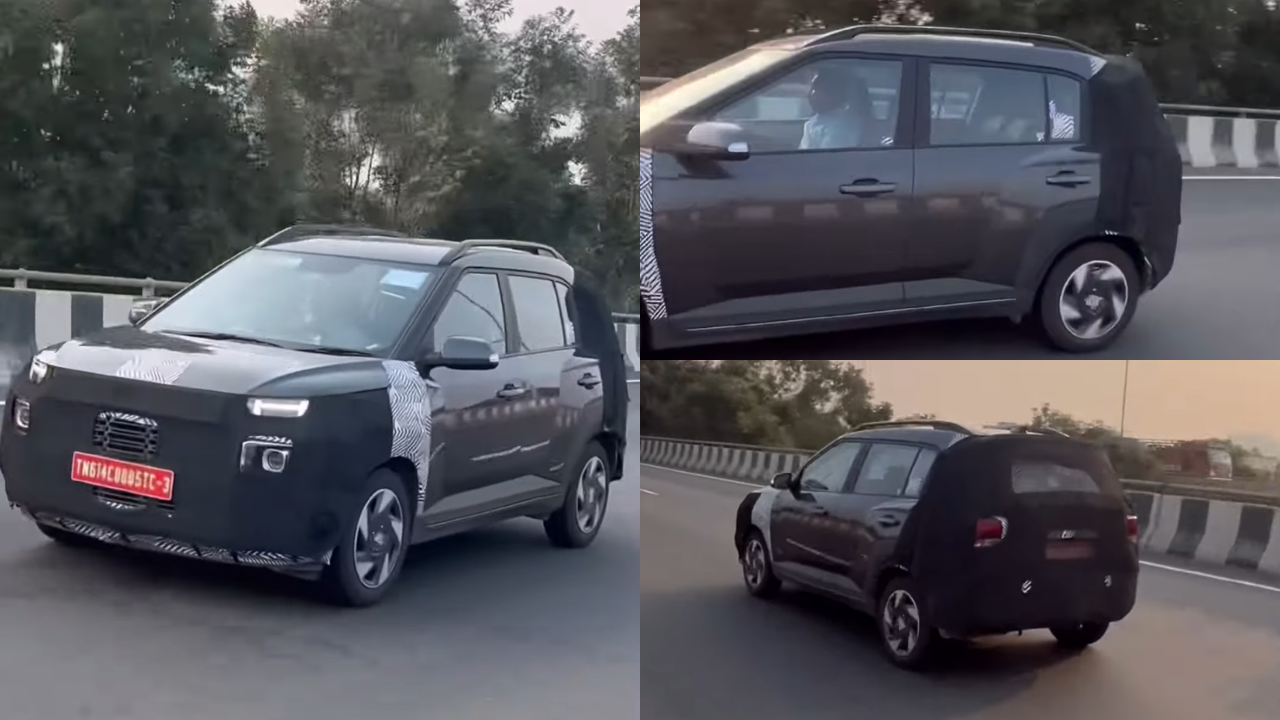
Moving inside, the overall cabin layout is expected to remain largely the same, although Hyundai may revise the equipment list. Possible additions include a larger infotainment touchscreen with new Ui, ventilated seats and much more. Mechanically the new Exter is expected to remain same, a 1.2-litre, four-cylinder, NA petrol engine with 83hp of power and 114Nm of torque. In the CNG spec, this engine makes 69hp and 95.2 Nm of torque and is only available with the 5-speed manual gearbox.