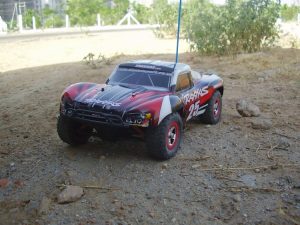

Nearly 12 years ago, we were on a trip to a faraway land when my eyes locked onto a little truck. It sat in a showcase at a hobby store, and it was love at first sight. It was the Traxxas Slash 4WD 1/16 short course truck in 1/16 scale, finished in a striking red and black livery.
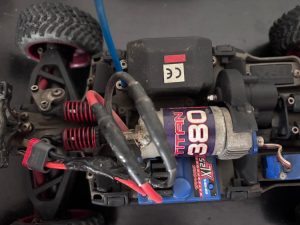
The moment we pulled off the body, I was blown away. It was powered by the mighty 12T 550, Titan motor and featured horizontal suspension with oil-filled shocks, along with a flat chassis built to absorb serious punishment. The excitement only grew when we learned it was water-resistant and ready for mud-plugging, thanks to its incredibly grippy tyres. And the best part? It was Ready-to-Run.
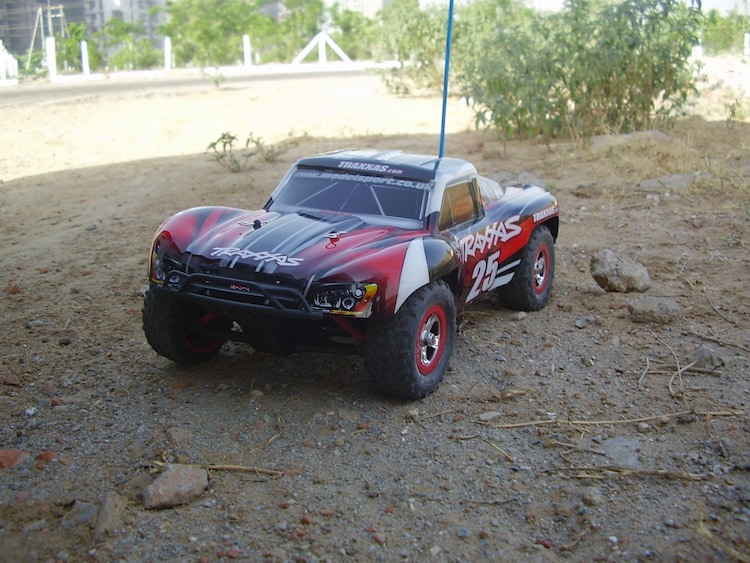
Needless to say, I picked it up. From that day on, the Slash became my go-to machine for fun. Dirt, mud, gravel, or tarmac, this truck was unstoppable and an absolute joy to drive.
But as career took centre stage, the Slash was eventually resigned to a display case. Very recently, I brought it back out, and, unsurprisingly, it wasn’t in the best of health. So I decided to resurrect it and relive those glory days.
Step 1 was to give it a thorough clean
Years of hard running had taken their toll. Grime had settled deep into the chassis, the shock absorbers had leaked dry, and the suspension components were crying out for lubrication. Then came a painful realisation, I had left the battery pack plugged in all those years. A complete no-no when it comes to RC storage. Unsurprisingly, the battery was completely dead.
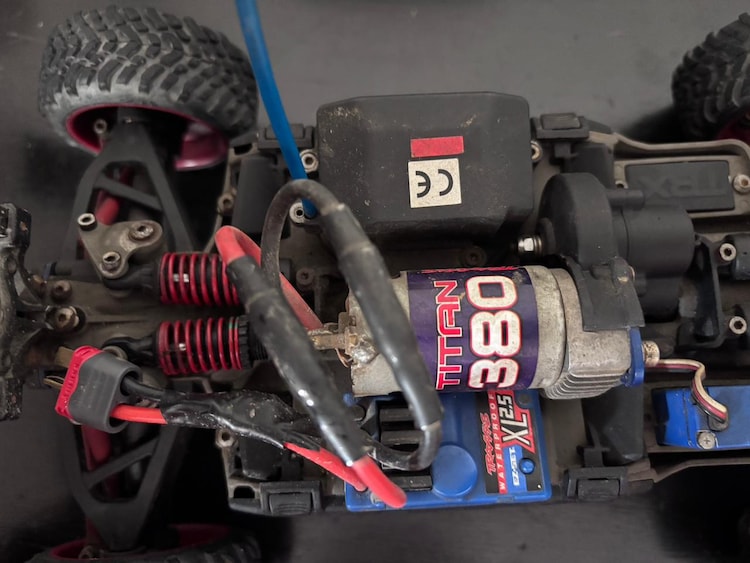
A closer inspection revealed more trouble. The TRX battery connectors had rusted, and with the slightest tug, one of them snapped clean off the cable. It was clear, this truck needed serious attention.
I started by giving the chassis a thorough clean, carefully working through layers of dirt and debris. A bit of WD-40 helped loosen rusted spots, but it was a time-consuming process. Suspension arms, shafts, linkages, almost every component needed to be checked and refreshed.
Once the cleanup was done, I borrowed a battery from another RC car and plugged it in. Eureka, the ESC lit up. There was hope.
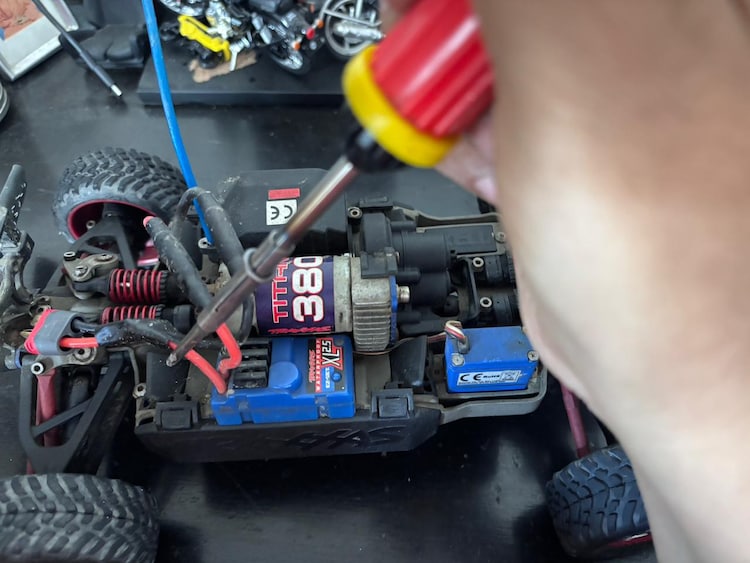
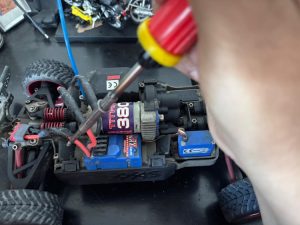
I immediately ordered a fresh set of connectors online and waited for the parts to arrive. A week later, with the new connectors in hand, I called up a close friend, a fellow RC enthusiast. That Sunday, we carefully resoldered the connectors, making sure every joint was solid.
With everything back in place, we connected a fully charged 2S battery. To our delight, the ESC powered up and the transmitter paired perfectly. But the celebration was short-lived as only the steering worked. The motor refused to respond.
For a moment, it felt like my beloved Traxxas Slash 4WD 1/16 was finally dead.
Sometimes you need to resort to the old ways!
Many years ago, when I first bought the truck, it came with an owner’s manual — one that I had carefully preserved all this time. I distinctly remembered a troubleshooting section buried somewhere in those pages. So, after all these years, I pulled it out and began flipping through it.
Sure enough, there it was, a section explaining how to reset the ESC.
We followed the steps. Failed.
We tried again. Failed.
And then we tried again and again.
Just when we were about to give up, we decided to give it one last shot.
Long press the ESC button.
The light blinked red once — we reversed the throttle on the transmitter.
It blinked twice — we applied forward throttle.
Then a beep.
Something had changed.
With cautious excitement, we squeezed the throttle once more, and suddenly, the old Traxxas Slash 4WD 1/16 roared back to life.
Eureka. Gold at last.
Testing our old truck again
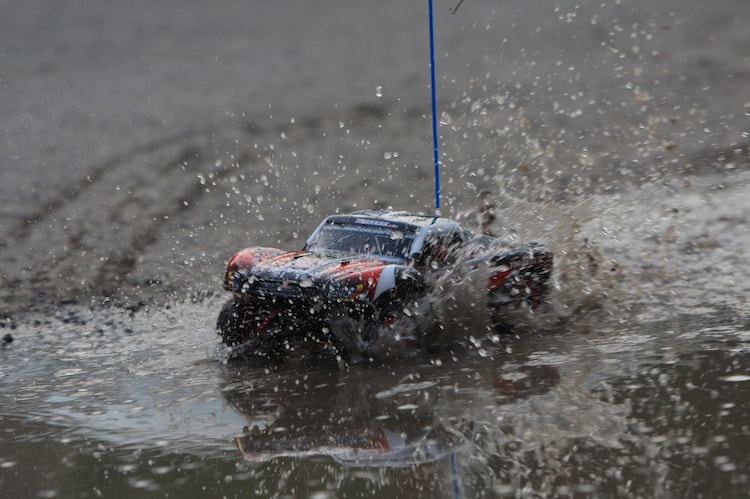
We quickly reassembled the truck — body back on, tyres bolted in place, and a fresh set of eight AA batteries loaded into the transmitter. Then, we headed out.
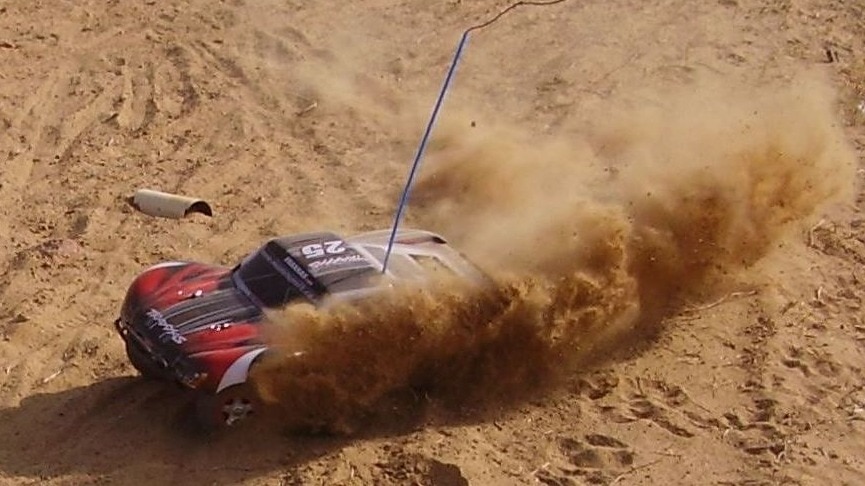
A quick blip of the throttle — and the Slash shot off into the distance.
It immediately felt more powerful, and we soon realised why: we were now running a modern, higher-output battery. The difference was unmistakable. It accelerated harder, took jumps with ease, and landed confidently back on its wheels every time. It was so fast that the mudflaps I’d added later were torn off clean as the rear squatted hard every time the power came on. Even with the added punch, the brakes held up remarkably well.
Our old Traxxas Slash 4WD 1/16 wasn’t just alive — it was thriving.