
31.1 C
Delhi
Tuesday, March 3, 2026

SpaceX debris now threatens our air: Can Isro’s Netra protect India?

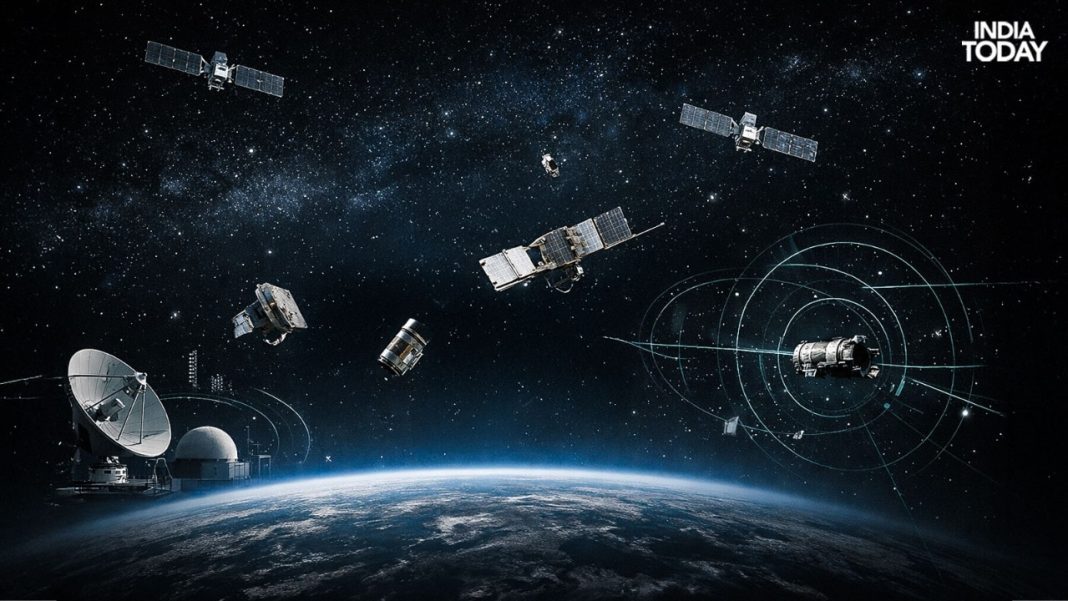
When you look at the night sky, the shimmering trail of SpaceX’s Starlink satellites might look like a sign of progress. But beneath that glow, a double-edged sword is hanging over our planet.

On the one hand, we face a collision crisis in space. On the other, we are literally breathing in the remains of dead satellites.

For a long time, the world thought that burning up old space junk in the atmosphere was a clean way to get rid of it. Science suggests we were wrong.

As tech giants like SpaceX prepare to launch even more massive structures, Isro is racing to keep India’s interests safe, and to prevent the Kessler Syndrome.
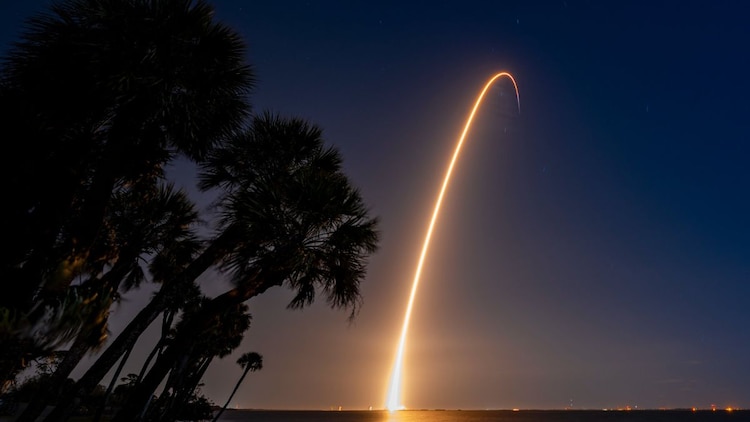
Space junk is no longer just an orbital risk. New research shows SpaceX re-entries are polluting our air with toxic lithium. This is an image of SpaceX's Falcon 9 launching 29 Starlink satellites from Florida on March 2. (Photo: X/@SpaceX)

Space junk is no longer just an orbital risk. New research shows SpaceX re-entries are polluting our air with toxic lithium. This is an image of SpaceX’s Falcon 9 launching 29 Starlink satellites from Florida on March 2. (Photo: X/@SpaceX)

The scale of this expansion is set to explode, with SpaceX recently announcing a massive surge in its second-generation Starlink Mobile satellites.

Starting in mid 2027, each Starship launch will carry 50 of these V2 satellites, aiming to deploy 1,200 units within just six months for global 5G coverage from space.

These satellites boast 100 times the data density of previous versions, turning the sky into a high-speed digital grid.

WHAT IS KESSLER SYNDROME?

Imagine a single car crash on a busy highway that causes every other car to pile up for miles. In space, this is called Kessler Syndrome. It is a domino effect where one collision between two satellites creates thousands of pieces of shrapnel. Each piece moves at 28,000 kilometres per hour, which is faster than a bullet.
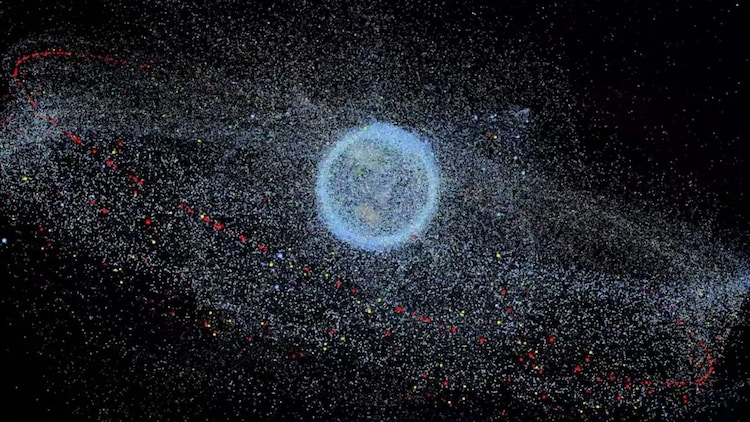
A picture showing how a single satellite collision can trigger a massive chain reaction of debris. This phenomenon is known as the Kessler Syndrome. (Photo: Esa)

A picture showing how a single satellite collision can trigger a massive chain reaction of debris. This phenomenon is known as the Kessler Syndrome. (Photo: Esa)

These fragments then hit other satellites, creating even more debris. Eventually, the space around Earth becomes a permanent graveyard of junk. This would destroy the invisible infrastructure we use every day, such as UPI payments, weather alerts for farmers, and NavIC, which is the Indian version of GPS.

HOW DOES ISRO’S PROJECT NETRA WORK?

To stop this chain reaction, Isro created Project Netra, which stands for Network for Space Object Tracking and Analysis. Based in Bengaluru, this is India’s first independent shield against orbital accidents.

It works like a high-tech security system for our satellites. The system functions as a multi-layered surveillance net that combines ground-based sensors with advanced computational power.

Isro’s Netra helps scientists track 50,000 space alerts every year. (Photo: India Today/Ayushi Srivastava)

Isro’s Netra helps scientists track 50,000 space alerts every year. (Photo: India Today/Ayushi Srivastava)

First, it utilises a sophisticated network of optical telescopes and high-power radars, such as the Multi-Object Tracking Radar at Sriharikota, to monitor the low-Earth orbit environment. These sensors are capable of detecting and cataloguing objects as small as 10 centimetres from thousands of kilometres away.

Once the data is collected, it is processed in Bengaluru. There, indigenous algorithms and artificial intelligence simulate the future paths of these objects.

In early 2026, Isro is processing over 50,000 alerts every year about objects getting too close to our satellites. If the AI detects a high probability of a collision, known as a conjunction, Netra triggers a red alert.

This allows Isro engineers to execute a Collision Avoidance Manoeuvre by firing the satellite thrusters to move it into a safe zone. By maintaining this constant vigil, Netra ensures India does not have to rely on foreign agencies to protect its critical space assets.

HOW DOES SPACEX POLLUTE THE AIR?

We used to think satellites just vanished when they fell back to Earth. However, a study published on February 19, 2026, in the journal Communications Earth & Environment proves otherwise.

Researchers at the Leibniz Institute found a tenfold spike in lithium 96 kilometres above Earth. This was directly linked to a SpaceX Falcon 9 re-entry.
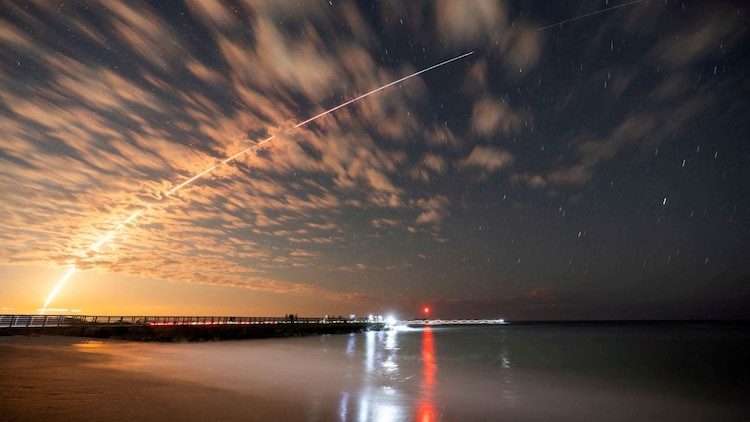
The SpaceX Falcon 9 rocket carrying Starlink satellites after launching from Cape Canaveral, Florida on February 26, 2025. (Photo: Reuters)

The SpaceX Falcon 9 rocket carrying Starlink satellites after launching from Cape Canaveral, Florida on February 26, 2025. (Photo: Reuters)

SpaceX satellites use aluminum-lithium alloys. When they burn up, they release 30 kilograms of lithium per rocket. In nature, the world only gets 80 grams of lithium a day from falling meteors.

These metallic clouds stay in the sky for decades. They can erode the ozone layer, which protects us from the Sun’s harmful rays.

WHY ARE ORBITAL AI DATA CENTRES A RISK TO THE ATMOSPHERE?

The problem is about to get much bigger. SpaceX has recently filed with the Federal Communications Commission (FCC) to launch one million new satellites. These are not just for the internet; they are orbital AI data centres. Elon Musk wants to move power-hungry AI processing into space to save electricity on Earth.

Elon Musk aims to launch a million orbital AI data centres into space. These will be supercomputers. (Photo: India Today)

Elon Musk aims to launch a million orbital AI data centres into space. These will be supercomputers. (Photo: India Today)

If one rocket caused a massive lithium spike, a million satellites falling back to Earth over time could create an atmospheric crisis. As these massive satellites de-orbit, they turn the sky into a crematorium for heavy metals.

Isro’s Netra is now more important than ever. It does not just track junk; it helps India hold global companies accountable for the mess they leave behind.
Latest

World’s largest acidic geyser bursts into red colours. Know the science behind

This lively show from Echinus reminds people why Yellowstone draws millions of visitors each year, as its unique hot springs and geysers offer a rare glimpse in

Moon to turn red today during rare lunar eclipse. How to watch Blood Moon

This is the first total lunar eclipse of the year, and India is positioned to catch the latter stages as the Moon rises in the evening.  Read to find out how t

Rare lunar eclipse to illuminate skies tonight, paint the Moon blood-red

A rare total lunar eclipse will turn the Moon blood red tonight. Know the science behind a Blood Moon, and find out the exact timings and the best ways to watch

Snow likely in Jammu and Kashmir on Tuesday, humidity to prevail over South

India will face a warm Tuesday with temperatures four to six degrees Celsius above normal in northwest regions. The IMD predicts light snow for Jammu and Kashmi

Satellite images reveal massive tanker jam in Strait of Hormuz: What caused it?

A digital fog of war has descended on the Strait of Hormuz. GPS jamming and signal spoofing are creating a massive tanker jam in the world's busiest oil route f

Topics

Odisha Board 10th Result 2026: BSE Odisha to announce Class 10 results likely by May second week

The Board of Secondary Education, Odisha, will likely announce...

US Embassies in Saudi, Kuwait, Bahrain, Jordan shut as Iran conflict escalates

The United States has closed multiple embassies and ordered the evacuation of non-emergency personnel across parts of the Gulf after Iranian drone attacks targe

Magnitude 4.3 earthquake hits Iran’s Gerash amid escalating Israeli-US attacks

The earthquake comes amid raging regional hostilities as the US and Israel have escalated attacks against Iran. There were no immediate reports of significant d

India trims gas supply to industries after Qatar halts LNG production

Qatar halted its LNG production on Monday as Iran continued strikes in the Gulf in response to Israeli and US attacks. The situation has disrupted energy shipme

The Kerala Story 2’s illegal broadcast by cable operators barred by Madras HC

The Kerala Story was released in theatres on Saturday after the Kerala High Court lifted a stay on its release.

China’s HQ-9B air defence fails twice in a year: After Op Sindoor, it’s Iran now

China's HQ-9B air-defence system, advertised as a flagship military hardware, is now under scrutiny after apparent failures in Iran and Pakistan, raising questi

Tony Fadell says iPod is back as users have again started using it

Tony Fadell says the iPod is quietly making a comeback as users rediscover the distraction-free music player. Instead of streaming apps, many are turning to old

Hero retains top spot in February sales as Honda narrows gap

India’s two-wheeler market clocked strong double-digit growth in February 2026, led by Hero MotoCorp, which stayed ahead of Honda Motorcycle & Scooter India i
spot_img

Related Articles

Popular Categories

spot_imgspot_img