Success stories often begin with ambition, but some begin with observation, a quiet moment when someone notices a different life unfolding just a few steps away. For Dadasaheb Bhagat, that moment arrived not in a classroom or startup incubator, but while cleaning offices at one of India’s largest technology companies. What he saw there reshaped the direction of his life.
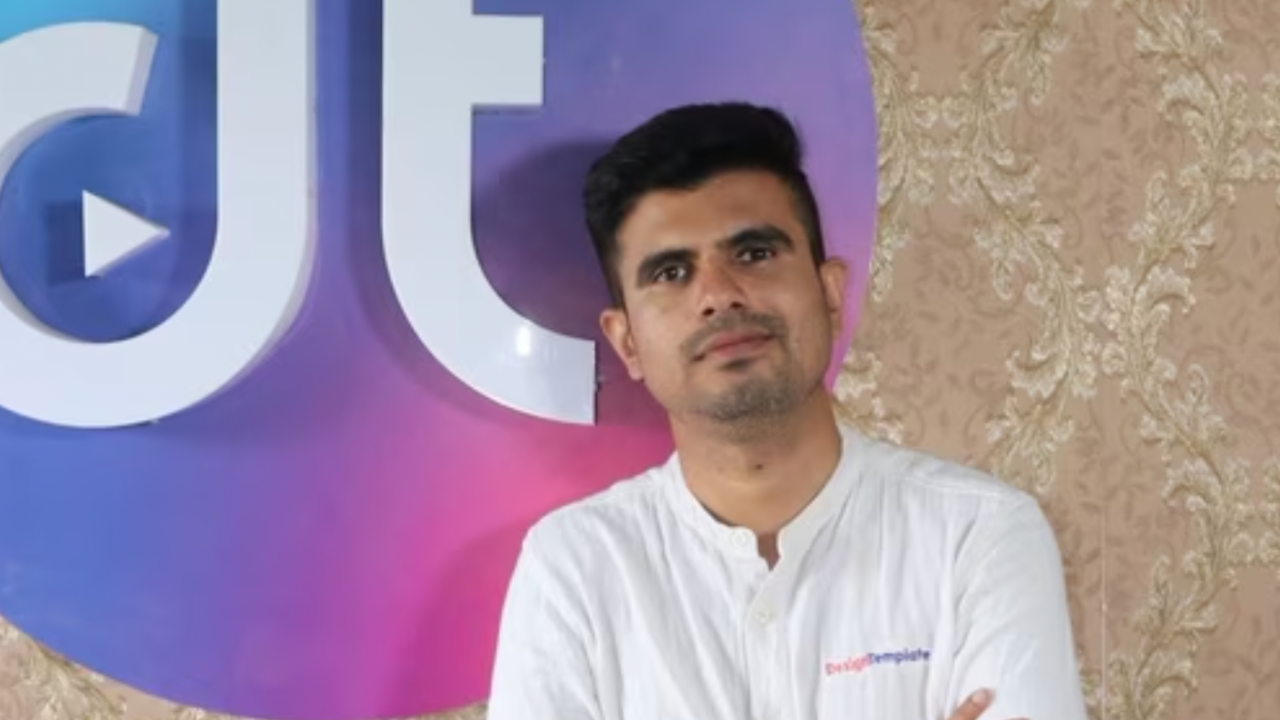
Today, Bhagat is the founder of Design Template, a fast-growing creative platform frequently compared to global design giant Canva. His journey from earning ₹9,000 a month as an office boy at Infosys to building a technology-driven company is not simply a story of entrepreneurship; it is a story about curiosity, persistence and the courage to reinvent oneself without conventional advantages.
Scroll down to read more.
Growing up where opportunity was scarce
Bhagat was raised in Maharashtra’s Beed district, a region frequently affected by drought, where agriculture was unpredictable and financial stability was rare. In his family, education was not seen as a pathway to upward mobility but as a luxury many could not prioritise. He completed schooling only up to Class 10 and later pursued a basic ITI course, typically leading to factory or manual jobs.

Like numerous young individuals hailing from rural regions of India, he made the move to Pune in pursuit of better employment opportunities. Initially, he secured a job that paid a modest sum of ₹4,000 per month. While this amount was sufficient for basic survival, it was far from adequate to lay the groundwork for a promising future. When he learned about a position for an office boy at Infosys, which offered a more attractive salary of ₹9,000, the choice seemed remarkably straightforward.
The increase in salary was not just a slight boost; it represented a significant leap forward in his career aspirations. However, the true defining moment came after he officially joined the company.
Learning by watching
Bhagat’s responsibilities were routine: cleaning spaces, managing errands and assisting at the company’s guesthouse. But the environment exposed him to something new. Every day, he watched employees working on computers, solving problems creatively rather than physically exerting themselves.
The contrast stayed with him.
He realised that knowledge-based skills could transform not only income but dignity and independence. When he approached employees for guidance, many told him corporate roles typically required formal degrees, something he did not have. However, conversations introduced him to graphic design and animation, fields where skill and creativity could sometimes outweigh academic credentials.
The thought suddenly brought back a long-buried memory from Bhagat’s past. During his childhood spent at a boarding school, he had dedicated countless hours to closely watching a temple painter who worked nearby. He would quietly absorb the intricate techniques of the craft while developing a genuine, natural interest in the art of drawing. What he had once dismissed as merely a childhood pastime now resurfaced in his mind as a potential avenue for his professional future.
Reinventing himself after work hours
Determined to change direction, Bhagat began learning graphic design while continuing his demanding job. Days were spent studying; nights were spent working. Within a year, he transitioned from cleaning offices to working on computers professionally, a shift that symbolised more than a job change; it marked a change in identity.
Instead of opting for conventional corporate positions that necessitated formal degrees, he made a bold decision to take on a riskier path: freelancing.
In the initial stages of this journey, he experienced a degree of instability, which was influenced by financial insecurities and a lack of resources. However, the freelancing landscape afforded him the flexibility to experiment freely, gain insights into client requirements, and notice a recurring dilemma: design work frequently demanded repetitive effort to produce similar visual outcomes. This key observation would eventually play a pivotal role in shaping his unique entrepreneurial vision.
Building an idea in unlikely circumstances
The COVID-19 pandemic disrupted Bhagat’s growing business, forcing him to shut his Pune office and return to his village. For many entrepreneurs, the moment meant retreat. For Bhagat, it became a period of focus.
Village life reduced expenses but introduced new obstacles: unreliable electricity and weak internet connectivity. To work around these limitations, he and his team set up a small workspace on a hill near a cowshed where mobile signals were stronger.
From this improvised setup, the foundation of Design Template emerged, a platform offering ready-to-use creative templates designed to simplify visual content creation.
The idea was rooted in accessibility. Bhagat wanted designers, students and small businesses, especially in India, to create professional visuals without expensive software or advanced technical expertise.
At the same time, he began training local youth in graphic design, extending opportunity beyond his own success and demonstrating how digital skills could reshape rural employment.
Recognition and national attention
As the platform experienced remarkable growth, Bhagat’s distinct and unconventional journey began to attract the attention of a variety of media outlets as well as notable leaders within the industry. His significant appearance on the highly popular show Shark Tank India marked a pivotal moment in his career, during which he skillfully secured an impressive investment of ₹1 crore from Aman Gupta, the co-founder of boAt, in exchange for a 10 percent equity stake in his burgeoning venture.
Reflecting on this transformative experience, Bhagat later shared how both overwhelming and affirming it felt; it served as a tangible confirmation that an innovative idea conceived within the constraints of rural limitations could indeed flourish and compete on a substantial national platform.
A larger vision beyond personal success
At present, Design Template proudly positions itself as a distinctive Indian alternative within the expansive global design ecosystem, which is largely dominated by various international platforms.
Bhagat’s vision and ambition stretch far beyond just establishing a profitable enterprise; he seeks to enhance the accessibility of digital creativity for Indian users by innovatively developing tools that are specifically tailored to suit the local needs, languages, and business environments.
His extraordinary journey courageously challenges a deeply entrenched belief that genuine innovation is an exclusive privilege granted only to those who have completed prestigious educational programs or who benefit from the perks associated with urban living.
Instead, it vividly portrays that through exposure to varied experiences, a curious and open-minded perspective, and steadfast determination, one can discover opportunities even in the most unexpected and unlikely environments. Transitioning from facing challenges in a drought-stricken village to successfully founding a technology startup, Bhagat’s story encapsulates a simple yet profound understanding: the path to transformation frequently arises not from having abundant resources at one’s disposal, but rather from the deliberate choice to extract valuable lessons from the circumstances one encounters, even when that initial backdrop consists of maneuvering around with a mop in the narrow corridors of a guesthouse.