28.1 C
Delhi
Sunday, February 22, 2026

Artemis-II Moon launch on March 6: Why is Nasa saying it’s a test flight?

Nasa is preparing to send humans back to the lunar vicinity for the first time in over five decades. The Artemis II mission, scheduled for launch on March 6, 2026, from the Kennedy Space Center, is not just a trip down memory lane.

While it will carry a crew of four, the space agency is adamant about calling it a test flight. This 10-day journey is designed to push the boundaries of modern technology before we commit to a full-scale landing.

WHY IS ARTEMIS II CALLED A TEST FLIGHT?

Although it looks like a mission from the Apollo era, Artemis II is a complex trial of the Space Launch System (SLS) and the Orion spacecraft.

Since this is the first time humans will board these new vehicles, Nasa must ensure that the life-support systems work perfectly under the stresses of deep space.
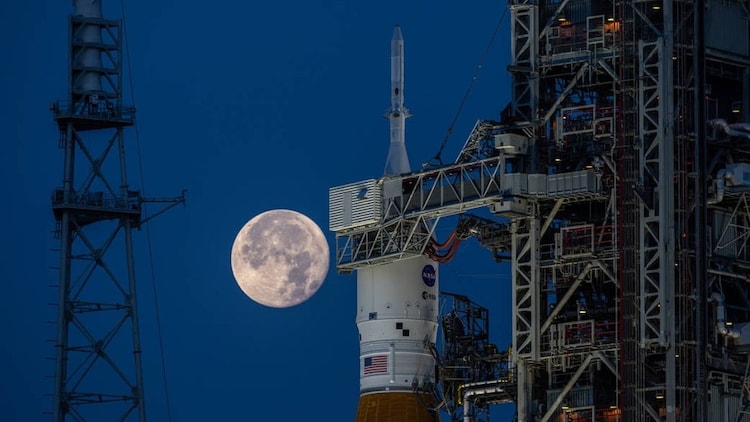
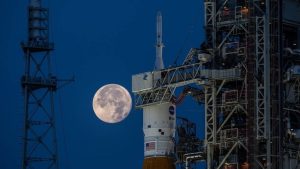
The massive Space Launch System rocket stands ready at Kennedy Space Center for its historic March 6 lift-off. (Photo: Nasa)

The massive Space Launch System rocket stands ready at Kennedy Space Center for its historic March 6 lift-off. (Photo: Nasa)

For the first 24 hours, the crew will stay in high-Earth orbit to test the manual piloting and oxygen levels. Only after every system passes this high-stakes exam will they fire the engines to head for the Moon.

WHAT WILL THE CREW DO DURING THE MISSION?

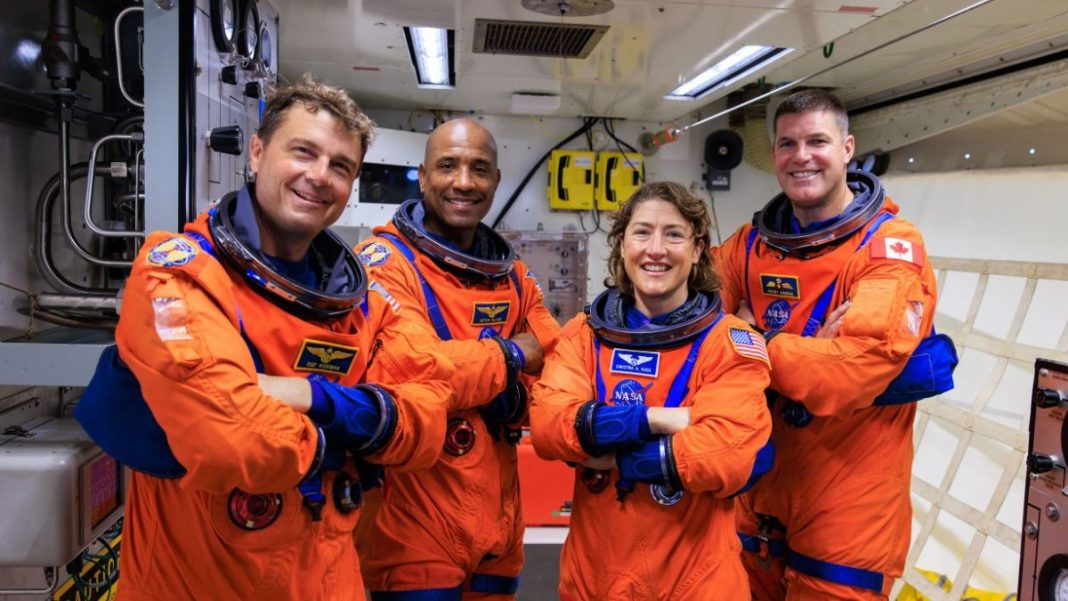
The crew, consisting of Commander Reid Wiseman, Pilot Victor Glover, Mission Specialist Christina Koch, and Canadian Space Agency astronaut Jeremy Hansen, will not actually land on the lunar surface.

Instead, they will perform a lunar flyby. They will travel 7,600 kilometres beyond the far side of the Moon, further than any human has ever gone.
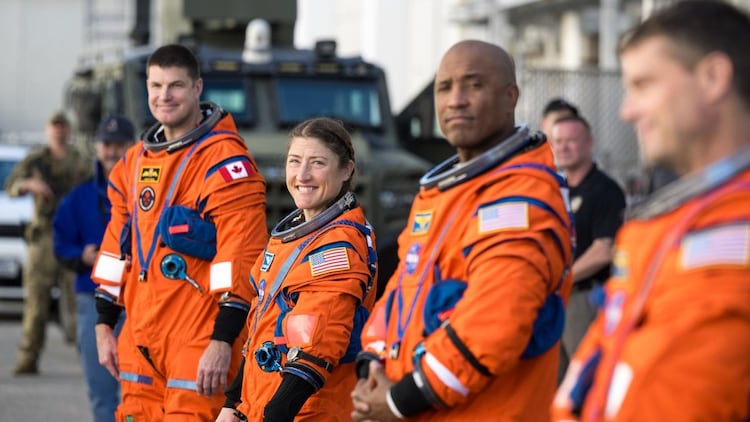
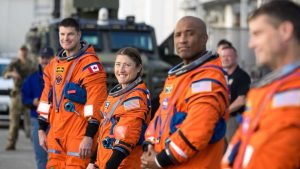
Commander Reid Wiseman and his crew will be the first humans to see the lunar far side since 1972. (Photo: Nasa)

Commander Reid Wiseman and his crew will be the first humans to see the lunar far side since 1972. (Photo: Nasa)

During this time, they will monitor radiation levels and test deep-space communication tools. This data is essential for the Artemis III mission, which aims to land the first woman and the first person of colour on the Moon.

HOW DOES THE FREE-RETURN TRAJECTORY WORK?

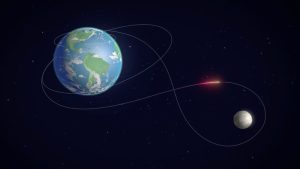
Safety is the priority for any test flight. Artemis II will use a free-return trajectory, a clever path that uses the gravity of the Moon to naturally pull the spacecraft back to Earth.
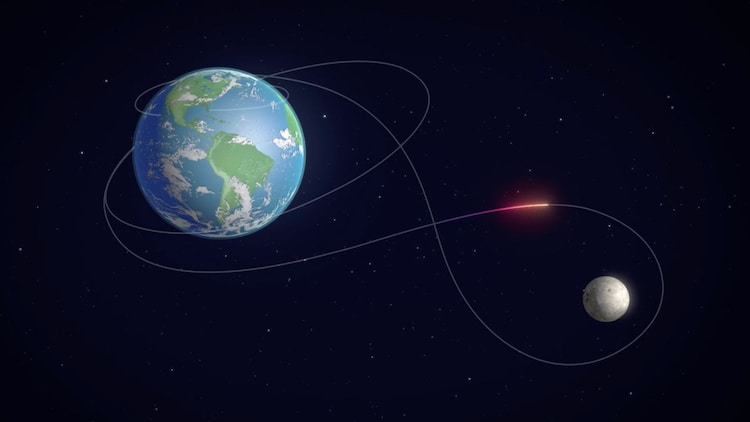
The Orion spacecraft will test its critical life-support systems while orbiting Earth before heading to the Moon. (Photo: Nasa)

The Orion spacecraft will test its critical life-support systems while orbiting Earth before heading to the Moon. (Photo: Nasa)

If the engines fail during the lunar loop, the laws of physics will act as a cosmic safety net, ensuring the crew returns home without needing extra fuel. This mission will pave the way for a permanent human presence on the lunar surface.
Latest

Total lunar eclipse to grace skies in March. How is it different from a partial one?

Ever wondered why some eclipses turn the Moon red while others just make it look bitten? Here is the science behind total and partial lunar eclipses.

NASA moon rocket hits another snag – will it impact March launch? Here’s what the space agency said

Officials said the flow of helium to the rocket’s upper stage was disrupted overnight, disrupting the launch as solid helium is a critical requirement for lif

Moon launch postponed: Nasa to remove Artemis-2 rocket from pad due to new leak

Nasa is preparing to roll the Artemis-II rocket back to the Vehicle Assembly Building after a helium flow issue. This technical glitch will likely cancel the pl

Floating effortlessly: Shubhanshu Shukla shares what weekend looks like in space

Astronaut Shubhanshu Shukla describes the surreal experience of floating effortlessly during a busy day on the International Space Station. He shares how microg

Meet Roman Space Telescope: Nasa’s eye in sky that will look for 1 lakh alien worlds

Nasa has completed the assembly of the Nancy Grace Roman Space Telescope. This mission will map the universe 100 times faster than Hubble.

Topics

US moving troops across Middle East bases amid escalating tensions with Iran

Similar troop movements have been observed at multiple US installations across the Middle East, including Bahrain, home to the Navy’s 5th Fleet, as well as in

‘Decision made to attack Iran’: Former CIA officer John Kiriakou claims US strike imminent

Former CIA officer John Kiriakou has claimed that a final decision has been reached by the United States to initiate a military strike against Iran early next w

Ram Gopal Varma says Toxic-Dhurandhar 2 clash isn’t north vs south, but ‘treating audience like dumb vs respecting them’

Ram Gopal Varma took to social media to share a note addressing the big-screen clash between Yash’s Toxic and Ranveer Singh’s Dhurandhar: The Revenge.

Is Trump eying to assassinate Khamenei? US troops’ movement intensifies in Portugal and Gulf bases

US-Iran tensions escalate with Trump’s 10-15 day uranium enrichment ultimatum nearing deadline, as reports claim US eyes assassinating Supreme Leader Ayatolla

Cover Story newsletter: Putin’s forever war

Deputy editor Edward Carr reveals how The Economist crafts weekly covers on Putin, Ukraine, and the modern Robin Hood state

Erika Kirk ‘affair’: Debunking bizarre cheating rumors and boyfriend buzz; ‘Candace Owens needs to…’

Erika Kirk has faced intense public scrutiny ever since she became the Turning Point USA CEO and now bizarre claims have been made about her having an affair.

Indian Matchmaking’s Sima Taparia shares dating advice for Indian couples: ‘In 2-3 months, give a yes or no’

Sima Taparia advises Indian couples to decide on a match within 2-3 months, saying it's enough time to determine compatibility.

IND vs SA Super 8 weather & pitch report from Ahmedabad: Advantage South Africa

IND vs SA pitch and weather report: Ahmedabad set for a high-scoring clash with heavy dew likely to influence the result.
spot_img

Related Articles

Popular Categories

spot_imgspot_img