
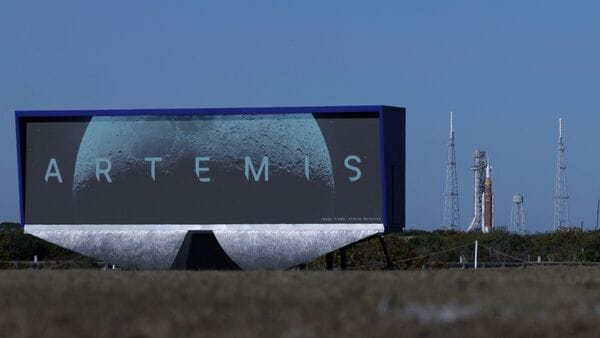
Teams of the National Aeronautics and Space Administration (NASA) “successfully fueled” the Artemis II rocket during a prelaunch test for the lunar mission on February 19.
This was the second wet dress rehearsal for the Artemis II mission, days after issues with a liquid hydrogen leak thwarted the attempt on February 3.
This step holds significance as a formal launch date will not be set until after a successful rehearsal and data reviews is done.
The “wet dress rehearsal” was a pre-launch test to fuel the rocket, designed to identify and resolve any issues before attempting a launch, NASA said.
On its second attempt, NASA said it successfully fueled its SLS (Space Launch System) rocket and demonstrated the launch countdown for Artemis II on Thursday during a wet dress rehearsal at the agency’s Kennedy Space Center in Florida.
More than 700,000 gallons of liquid propellant were loaded into the rocket during the process.
A closeout crew was sent to the launch pad to demonstrate closing the Orion spacecraft’s hatches. Engineers also completed two runs of terminal count — the final phase of the launch countdown. The Artemis II crew also observed part of the test from the Launch Control Center at NASA Kennedy.
During the test, NASA teams closely monitored liquid hydrogen fueling operations, which proved challenging during previous tests.
In the early part of the countdown, teams experienced “a loss of ground communications”. They used a backup system while the primary was offline. “Engineers isolated the equipment that caused the issue,” NASA said.
What next for Artemis Mission II?
As engineers review data from the wet dress rehearsal, the Artemis II crew is preparing to enter quarantine late Friday, Feb. 20, in Houston.
A 14-day quarantine will limit the crew’s exposure to illness before launch.
Although NASA has not set the official date for the Artemis II launch, the quarantine preserves flexibility in the March launch window, NASA said.
Over the next several days, technicians will use cranes to set up temporary access platforms on the mobile launcher. The platforms will allow them to reach the upper left and right segments of the SLS solid rocket boosters and core stage intertank to service the flight termination system and retest it to meet Eastern Range safety requirements.
The closeout crew also will practice closeout operations once more, adding to the team’s proficiency.


