
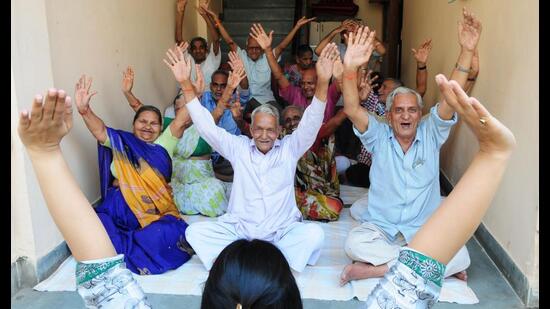
Anita is trying to hold down a job, manage her family and look after her 93-year-old mother. Her mother was diagnosed with dementia three years ago, and since then it’s been a blur of medications, doctor visits, and watching her suffer the quiet indignities of incontinence — the soiled sheets, the embarrassment, and her life being reduced to the four walls of her room. She is one of millions of Indians silently holding together a care system that the state hasn’t really given a thought to.
This year’s Union Budget had something to say to Anita. Not all of it was good.
The Budget made a welcome announcement: The training of lakhs of caregivers. It is a step elder care experts have long argued for. As India ages rapidly and family structures shrink, the need for a skilled care-giving workforce is no longer a matter of debate. Yet, in the very same budget, the government increased the basic customs duty on adult diapers — a product that could help preserve the dignity of millions of older Indians. Taken together, these two measures expose a deeper fault line in India’s approach to ageing. We are attempting to address the capacity building aspect of care-giving, while overlooking the everyday material realities that make care humane and sustainable.
India is ageing faster than public discourse acknowledges. By 2036, nearly one in six Indians will be over 60. For many older adults, the challenge is no longer just living longer, but living with dignity, autonomy, and minimal dependence. Caregiver training is essential-care work cannot remain informal, invisible, and undervalued. In the absence of paid caregivers, families — most often women like Anita — absorb the burden, frequently at the cost of their own health, income, and lives.
But care-giving does not occur in isolation. It unfolds within homes, supported — or constrained — by tools and products that make daily care workable. This is where our policy coherence begins to fray.
Adult diapers are not lifestyle products. They are assistive, dignity-preserving essentials. For an older person living with incontinence, they could be the difference between her stepping out of her house, travelling, or visiting a doctor without fear or humiliation. They are as fundamental to autonomy as spectacles, walking sticks, or hearing aids. Despite this, adult diapers remain expensive in India, poorly covered by insurance, and deeply stigmatised. Raising customs duty on them sends an unfortunate signal: That the everyday material needs of ageing remain peripheral to economic policymaking.
The consequences extend far beyond mobility. India is home to an estimated 8.8 million people living with dementia, a number expected to rise sharply. Incontinence is common in the later stages of the disease, making dignity-preserving products not optional, but essential. Without them, older adults experience repeated soiling of clothes, and bedding. This increases physical care work, but more importantly, it introduces strain into households already stretched for time, space, and emotional resilience. What begins as a health issue quietly becomes a point of friction — between spouses, between parents and adult children, between caregivers and those they care for. Older adults internalise shame and withdraw; caregivers experience fatigue, frustration, and burnout. These are not dramatic failures that make headlines, but slow, invisible breakdowns that define everyday ageing in India.
These products reduce care-giver burden, ease household tensions, and preserve self-respect. Making them more expensive moves in precisely the wrong direction.
India has confronted a similar issue before. When menstrual hygiene products were recognised as essentials, taxation on sanitary napkins was removed. The fiscal impact was modest, but the social signal was transformative: Dignity and biological realities should not be taxed. Incontinence is no more a choice than menstruation is. Ageing deserves the same clarity of thought.
Countries such as Japan, Germany, and Singapore treat assistive products as infrastructure — subsidised, tax-exempt, and integrated into care systems. India’s approach remains fragmented. Caregiver training sits in one silo; taxation in another; health and social care elsewhere. The solution is not complicated: Remove duties and GST on assistive products, recognise elder care as economic infrastructure, and build a coherent ageing strategy centred on dignity, not just pensions and hospitals.
Anita will keep showing up for her mother regardless. But millions like her cannot afford a budget that trains hands, but taxes dignity. Dignity cannot be a peripheral issue — it is how one in six Indians should age.
Barkha Deva, is ex-associate director, RGICS, and an independent policy consultant. The views expressed are personal


